Historic Fountains
Lucerne, Switzerland
Discover the historic fountains of Lucerne's Altstadt, Switzerland. Explore their rich history, cultural significance, and artistic details.
Overview
Stepping into Lucerne's Altstadt, or Old Town, is like entering a living museum, where history whispers from frescoed facades and cobblestone streets. Among its most charming and historically significant features are the numerous historic fountains. More than 200 public fountains grace the city, with a significant concentration found within the picturesque Old Town. These aren't just decorative elements; they are vital historical landmarks, artistic marvels, and still today, a source of refreshing, high-quality spring water for thirsty travelers and locals alike.
History & Cultural Background
The story of Lucerne's fountains dates back to the Middle Ages, when access to clean drinking water was a pressing concern. While the city was surrounded by the beautiful Lake Lucerne and the Reuss River, their waters were not always suitable for consumption. To address this, Lucerne's council initiated the development of a sophisticated spring water supply network as early as the 15th century. Water was piped from the slopes of Mount Pilatus, specifically from sources around the Krienbach, ensuring a clean and continuous flow to the city's inhabitants.
These fountains quickly became more than just water sources; they were central to daily life and social interaction. Before modern plumbing systems emerged in the 19th century, residents, particularly women, would gather multiple times a day at the fountains with jugs and buckets, transforming these spots into lively meeting places where news and gossip were exchanged. This historical significance is preserved in their intricate designs, many of which depict figures, coats of arms, or scenes that reflect the city's rich past, guilds, and traditions.
What Makes It Special
What truly sets Lucerne's historic fountains apart is their dual nature as both functional utilities and exquisite works of art. Each fountain column, carved basin, and sculpted figure tells a unique story, offering a tangible connection to centuries of Lucerne's heritage. Unlike many city fountains that draw from treated tap water, a remarkable 130 of Lucerne's historic fountains continue to be fed directly by pure mountain spring water, originating from Mount Pilatus. This ancient network operates without electricity, relying on natural gravity, and represents a marvel of medieval engineering that still provides some of the best drinking water in the world. Visitors are encouraged to drink directly from these fountains, a refreshing and authentic experience.
Stories, Fun Facts & Local Details
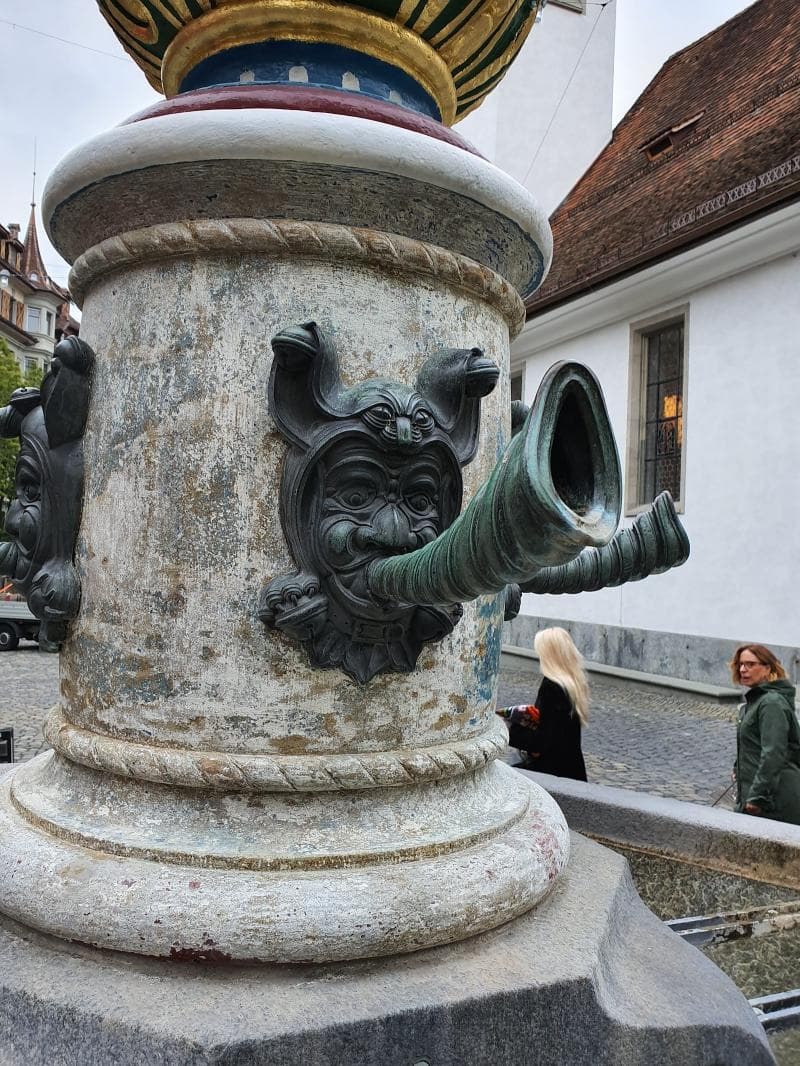
As you wander through the Altstadt, several fountains stand out, each with its own captivating narrative. The Fritschi Fountain on Kapellplatz, though rebuilt in 1918, embodies one of Lucerne's most enduring legends. It is dedicated to Brother Fritschi, a legendary carnival figure whose grave is said to lie beneath the fountain. The fountain is adorned with colorful masks representing Fritschi, his wife, a nursemaid, and a servant, topped by a standard bearer. Each year during Lucerne's vibrant Fasnacht (Carnival), the Fritschi Fountain becomes a focal point, with traditions like the 'Fritschi Thursday' parade where oranges and sweets are thrown to onlookers.
Another must-see is the Weinmarkt Fountain, often considered the prettiest in the city. Dating back to 1481, it was crafted by Konrad Lux and originally stood with a hexagonal basin, later replaced by an octagonal one in the 16th century. The fountain's column is crowned by a statue of Saint Maurice, the patron saint of infantry, surrounded by six armored warriors representing a historical military drill. The original column is so precious that it's now preserved in the History Museum, with a faithful replica standing proudly in the square today.
On Hirschenplatz, you will find the charming Gänsemännchenbrunnen, or 'Little Goose Man Fountain.' This cheerful figure, holding two geese, is a copy of a 16th-century artwork from Nuremberg, adding a touch of playful humor to the historical square. These fountains were the original social media of their time, providing not just water, but also gathering spots for community life and the exchange of stories.
Visitor Perspective
Exploring the Historic Fountains of Lucerne's Altstadt offers a delightful journey through time and culture. As you navigate the car-free lanes of the Old Town, you'll encounter these artistic and functional masterpieces at almost every turn. They serve as natural landmarks, guiding you through squares like Weinmarkt, Kapellplatz, and Hirschenplatz, each offering unique architecture and atmosphere. The ease of refilling your water bottle with fresh, cold spring water directly from these ancient sources provides a refreshing break and a genuine connection to Lucerne's heritage. It's an immersive experience that allows you to drink in the history and art of this enchanting Swiss city, one fountain at a time.
Coordinates: 8.3064, 47.0505
View on Google Maps💬 How Travelers Describe This Place
Based on community votes
Must See
910Unique
658Interesting
589Beautiful
374Photogenic
90
Traveler Stories
Discover memorable experiences shared by travelers who have visited this place.
No traveler stories yet.
Be the first traveler to share what made this place memorable.

Tour
By
Spot
Discover amazing places around the world. Your journey starts here.
Explore
© 2026 TourBySpot. All rights reserved.