Historic Boats
Tallinn, Estonia
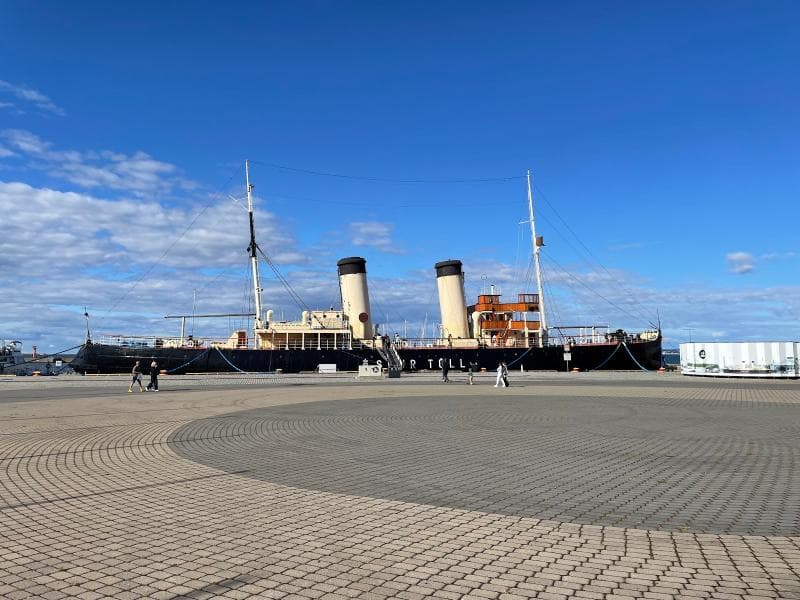
Explore historic boats like the submarine EML Lembit and icebreaker Suur Tõll at Seaplane Harbour in Tallinn, Estonia. Discover rich maritime history.
Overview
Nestled within the striking Seaplane Harbour (Lennusadam) in Tallinn, Estonia, lies a captivating collection of historic vessels that offer a tangible journey through maritime history. This unique sub-spot of the Estonian Maritime Museum is not merely a display of old ships but an immersive experience set against the backdrop of an architecturally significant seaplane hangar. The primary stars of this maritime tableau are the formidable submarine EML Lembit and the grand icebreaker Suur Tõll, each a sentinel guarding tales of naval prowess, tumultuous political changes, and technological innovation. Visitors can explore these magnificent machines both inside and out, gaining a profound appreciation for their scale and storied past.
The Seaplane Harbour itself, opened in spring 2012 as part of the Estonian Maritime Museum, transformed former seaplane hangars into a world-class exhibition space. These hangars, originally built between 1916 and 1917 for Peter the Great's Naval Fortress, are remarkable for their unsupported concrete shell domes, a marvel of early 20th-century engineering.
History & Cultural Background
The historic boats at Seaplane Harbour bear witness to Estonia's turbulent 20th century. The submarine EML Lembit, a Kalev-class mine-laying vessel, was constructed in 1936 by Vickers-Armstrongs in Barrow-in-Furness, United Kingdom, specifically for the Estonian Navy. Its creation was notably supported by public donations, including scrap metal, making it a symbol of national fundraising.
Lembit's service history reflects the shifting geopolitical landscape; it served with the Estonian Navy until 1940, then was incorporated into the Soviet Navy after Estonia's occupation. It continued service with the Soviet Baltic Fleet, earning the nickname 'Immortal submarine' and even influencing Soviet submarine design with its innovative pressure-tight anti-aircraft gun storage shaft.
The icebreaker Suur Tõll, an even older vessel, was built in 1914 by AG Vulcan in Stettin, Germany, for the Russian Empire, originally named Tsar Mikhail Feodorovich. Over its long career, it sailed under no fewer than four flags and five names, including Volynets (Soviet Russia), Wäinämöinen (Finland), and finally Suur Tõll (Estonia). Its transfer to Estonia in 1922, following the Treaty of Tartu, was a significant moment for the newly independent nation, ensuring vital winter navigation for Tallinn.
What Makes It Special
The EML Lembit holds the distinction of being one of the few surviving pre-World War II submarines globally and, until its dry-docking in 2011, was considered the oldest submarine still afloat in the world. Its presence indoors within the Seaplane Harbour allows visitors an unparalleled opportunity to explore its cramped interior, from the torpedo room to the control room and crew quarters. This provides a rare, tangible insight into the lives of submariners.
Suur Tõll is celebrated as the largest preserved pre-war steam icebreaker in the world. Its sheer size and the intricate steam engines below deck are awe-inspiring. Unlike many museum ships, Suur Tõll retains much of its original internal arrangements and even late Jugendstil interior in the officers' rooms, offering an authentic glimpse into early 20th-century maritime engineering and naval life. Its journey through various national ownerships makes its survival and restoration all the more remarkable, symbolizing resilience through historical upheaval.
Stories, Fun Facts & Local Details
The EML Lembit's story is particularly poignant. It was funded largely by public contributions, reflecting a strong sense of national pride and foresight in interwar Estonia. During its Soviet service, it gained legendary status, being the only pre-World War II Estonian warship to return to Estonia after Soviet rule, becoming a powerful symbol of the country's regained independence. It was honorarily recommissioned as 'Estonian Navy vessel nr.1' in 1994.
Suur Tõll, named after a mythological giant hero from Estonia's Saaremaa Island, has a narrative as robust as its hull. It famously participated in the evacuation of Tallinn in 1941 during World War II, safely carrying hundreds of passengers through perilous waters. Its rescue from being sold for scrap metal in 1987 by the Estonian Maritime Museum and subsequent extensive renovation highlights a strong commitment to preserving national heritage. The vessel's numerous name changes — from Tsar Mikhail Feodorovich to Volynets, Wäinämöinen, and finally Suur Tõll — reflect the many historical currents it navigated.
Visitor Perspective
A visit to the Historic Boats at Seaplane Harbour is an active and engaging experience. For many, the highlight is boarding the EML Lembit submarine. Guests can navigate its narrow passageways, peer into the periscope, and imagine the confined conditions in which its 32-man crew lived and worked. It's a stark reminder of the realities of undersea warfare and life.
Equally captivating is exploring the icebreaker Suur Tõll. Visitors can wander its spacious decks, explore the captain's bridge, the engine room with its massive triple-expansion steam engines, and the various living quarters and officer's mess. The tactile experience of being on board these historic vessels, feeling their immense scale, and seeing their intricate workings up close is profoundly impactful, offering a deeper connection to the maritime past of Estonia and the Baltic Sea region.
Coordinates: 24.738308, 59.450433
View on Google Maps💬 How Travelers Describe This Place
Based on community votes
Must See
673Photogenic
336Interesting
219Unique
186Beautiful
80
Traveler Stories
Discover memorable experiences shared by travelers who have visited this place.
No traveler stories yet.
Be the first traveler to share what made this place memorable.

Tour
By
Spot
Discover amazing places around the world. Your journey starts here.
Explore
© 2026 TourBySpot. All rights reserved.