Historic Barracks
Split, Croatia
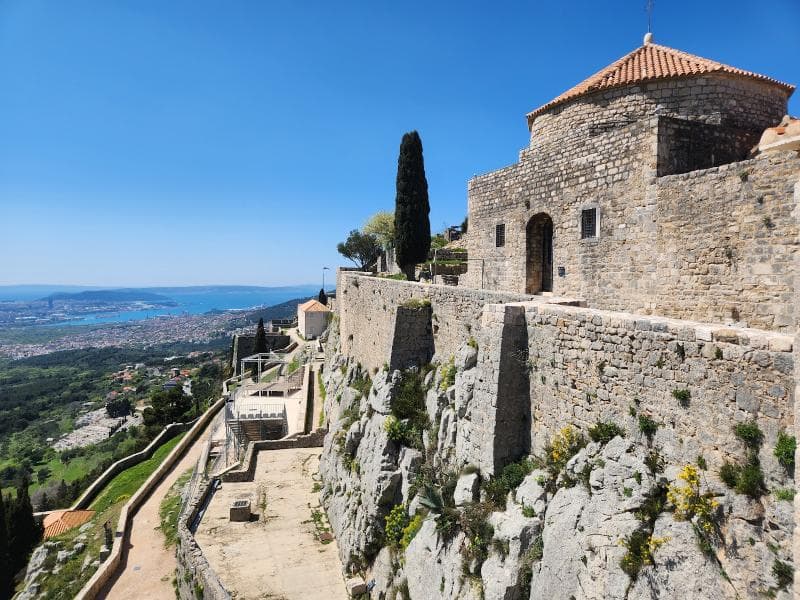
Explore the Historic Barracks at Klis Fortress in Split, Croatia, an essential part of its military history and a testament to past garrisons.
Overview
Nestled within the formidable stone walls of Klis Fortress, a historical gem perched dramatically above Split, Croatia, lies the enduring remnants of the Historic Barracks. These structures, specifically the artillery barracks, stand as a testament to the fortress's layered military past, providing a tangible link to the lives of soldiers stationed here centuries ago. While perhaps not as grand as the fortress's towering bastions or gates, the barracks offer a unique perspective on daily military life and the strategic evolution of this crucial stronghold. They are strategically positioned near the second entrance, offering visitors a glimpse into the logistical heartbeat of the fortress under Austrian rule.
History & Cultural Background
The history of Klis Fortress stretches back over two millennia, with roots in Illyrian times, followed by Roman, Croatian, Ottoman, Venetian, and finally, Austrian occupations. Each era left its indelible mark, transforming the fortress to meet the demands of contemporary warfare. The Historic Barracks, particularly the artillery barracks, date back to the first half of the 19th century, a period when the Austrian Empire held control over the region. During this time, the fortress played a vital role in the Austrian defense network, necessitating robust infrastructure to house troops and munitions. These barracks were constructed to support the artillery positions, highlighting the advanced military engineering and organization of the era. Their presence underscores the continuous strategic importance of Klis, acting as a crossroads between the Mediterranean and the Balkan hinterland, a role it maintained through various empires.
What Makes It Special
What makes the Historic Barracks truly special is their silent testimony to the everyday existence of soldiers within a constantly contested fortress. Unlike the more dramatic defensive structures, the barracks reveal the human element of military life—where soldiers rested, ate, and prepared for duty. While only the ground floor of these 19th-century Austrian-built structures remains today, the upper story having been ruined in 1931, their presence is a powerful reminder of the logistical needs of a major fortification. Visitors can walk through the same spaces where Austrian artillerymen once lived, imagining their routines and the sounds of a busy military garrison. It's a place that brings the larger, epic history of Klis down to a human scale, offering a moment of quiet reflection amidst the grandeur of the fortress.
Stories, Fun Facts & Local Details
Although specific stories about the daily lives within these particular barracks are scarce, their existence connects directly to the broader narrative of Klis Fortress as a symbol of resilience. The fortress has been a royal seat for Croatian kings, a bastion against Ottoman invasions led by figures like Petar Kružić and the Uskoks, and a strategically vital point for Venetians and Austrians. The barracks, built by the Austrians, represent one of the later chapters in this long and complex history of adaptation and defense. It's a fun fact to consider that even after centuries of warfare and shifting powers, the basic need for housing soldiers remained constant, albeit with evolving architectural styles and materials. The ground floor that stands today allows visitors to literally step into a piece of this ongoing military legacy, offering a tangible sense of the past that complements the panoramic views and dramatic defensive walls.
Visitor Perspective
For the curious traveler, encountering the Historic Barracks provides an enriching dimension to the Klis Fortress experience. Located along the path near the second entrance, these ruins are an integral part of exploring the three defensive sections of the fortress. As you navigate the uneven stone paths and staircases of Klis, pausing at the barracks offers a momentary step back into the 19th century. Visitors can appreciate the functional architecture and envision the lives of the soldiers who once inhabited these quarters. It’s an opportunity to connect with the past on a more intimate level, moving beyond the grand narratives of battles and rulers to consider the daily realities of those who served within the fortress walls. The barracks, though partially ruined, help complete the picture of a living, working military outpost that adapted through centuries of change, culminating in the Austrian period of its long and illustrious history.
Coordinates: 16.523, 43.5605
View on Google Maps💬 How Travelers Describe This Place
Based on community votes
Beautiful
915Interesting
873Photogenic
422Must See
123Unique
53
Traveler Stories
Discover memorable experiences shared by travelers who have visited this place.
No traveler stories yet.
Be the first traveler to share what made this place memorable.

Tour
By
Spot
Discover amazing places around the world. Your journey starts here.
Explore
© 2026 TourBySpot. All rights reserved.