Hintze Hall & Blue Whale Skeleton
London, United Kingdom
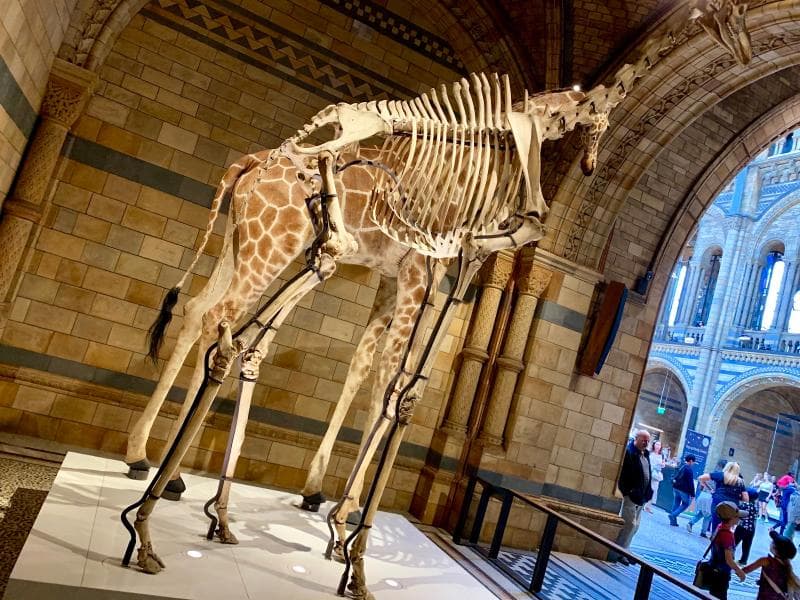

Discover Hintze Hall and the majestic Blue Whale Skeleton (Hope) at the Natural History Museum in London, UK – a symbol of conservation.
Overview
Step into the magnificent Hintze Hall at the Natural History Museum in London, United Kingdom, and prepare to be awestruck. This grand central hall is not just an entrance; it is a monumental space that encapsulates the museum's mission of connecting visitors with the natural world. Suspended majestically from its soaring ceiling is 'Hope,' the 25.2-meter (83-foot) skeleton of a juvenile female blue whale, a breathtaking testament to the immense scale of life on Earth. Hope dominates the space, appearing to dive through the air in a dramatic lunge-feeding pose, immediately drawing the eye upwards and setting the tone for the wonders held within the museum's walls. This iconic display, unveiled in 2017, replaced the beloved 'Dippy' the Diplodocus, marking a symbolic shift towards emphasizing the urgency of protecting our planet's biodiversity.
History & Cultural Background
The Natural History Museum building itself is a masterpiece of Victorian architecture, designed by Alfred Waterhouse and completed in 1881. It stands as a prime example of Romanesque Revival style, often described as a 'cathedral of nature.' The building's intricate terracotta facade and interior carvings feature a myriad of plants and animals, reflecting the museum's purpose and its vast collections from the moment you approach. For nearly four decades, from 1979 until 2017, Hintze Hall was famously home to 'Dippy,' a cast of a Diplodocus skeleton. Dippy became an iconic figure, greeting millions of visitors and sparking a fascination with prehistoric life. The decision to replace Dippy with Hope was a strategic one, aiming to update the museum's central narrative. It sought to highlight living science and contemporary environmental concerns, offering a powerful symbol of conservation for the 21st century.
The story of 'Hope' begins in March 1891 when this young blue whale became stranded near Wexford Harbour, Ireland. She was approximately 10 to 15 years old at the time of her death. The Natural History Museum acquired her skeleton for a sum between £250 and £256, recognizing its immense scientific value. For many years, from 1934, her skeleton was displayed in the museum's Mammal Hall. Her move to Hintze Hall in 2017 involved meticulous conservation and articulation, presenting her in a dynamic, life-like posture.
What Makes It Special
The blue whale skeleton, 'Hope,' is special not only for its colossal size – blue whales are the largest animals known to have ever existed on Earth – but also for the profound message it conveys. Measuring over 25 meters and comprising 221 bones weighing 4.5 tonnes, Hope is suspended in a dramatic, almost theatrical pose, as if frozen mid-motion while feeding. This dynamic presentation contrasts with the more static display of its predecessor, Dippy, and instantly captures the imagination. Beyond its impressive physical presence, Hope serves as a global symbol of hope for the future of our planet. Blue whales were hunted to the brink of extinction during the 20th century, with their numbers dwindling dramatically before international conservation efforts began in 1966. Their gradual recovery demonstrates humanity's capacity to protect species, making Hope a powerful emblem of conservation and resilience.
Stories, Fun Facts & Local Details
- The blue whale skeleton's name, 'Hope,' was deliberately chosen by the museum to embody a message of optimism regarding conservation and the future of the natural world.
- Before Hope, the central display in Hintze Hall was 'Dippy' the Diplodocus, a dinosaur cast that captivated visitors for nearly 80 years. The switch was met with mixed reactions, but ultimately aimed to bring a more contemporary and urgent message to the forefront.
- Blue whales, like Hope, do not have teeth; instead, they have baleen plates made of keratin, which they use to filter plankton from seawater. Scientists can study these plates, along with ear wax, to learn about a whale's age, diet, and hormone levels.
- The intricate architecture of Hintze Hall includes 162 decorated ceiling panels featuring botanical illustrations of plants like coffee, tobacco, and cotton, reflecting Victorian-era scientific interests.
- The building's architect, Alfred Waterhouse, wanted the museum itself to be an exhibit, incorporating elements of the natural world into its very fabric, from the sculpted terracotta animals on its exterior to the details inside.
Visitor Perspective
A visit to Hintze Hall is, for many, the quintessential Natural History Museum experience. Stepping through the grand main doors, visitors are immediately enveloped by the sheer scale and beauty of the space. The gaze is naturally drawn upwards to Hope, gracefully suspended, creating an immediate 'wow' moment. It's a profoundly impactful sight that encourages reflection on the vastness of nature and humanity's role within it. Hintze Hall acts as a central hub within the museum, with various pathways leading off to different galleries focusing on dinosaurs, mammals, Earth sciences, and more. It serves as an orienting point, allowing travelers to gather their bearings before delving deeper into the museum's extensive collections. The museum offers free admission, making this awe-inspiring sight accessible to everyone. Visitors are advised to allocate several hours to explore the museum and consider visiting during weekdays or early mornings for a quieter experience.
Coordinates: -0.17639, 51.49611
View on Google Maps💬 How Travelers Describe This Place
Based on community votes
Unique
670Beautiful
655Photogenic
594Must See
266Interesting
166
Traveler Stories
Discover memorable experiences shared by travelers who have visited this place.
No traveler stories yet.
Be the first traveler to share what made this place memorable.

Tour
By
Spot
Discover amazing places around the world. Your journey starts here.
Explore
© 2026 TourBySpot. All rights reserved.