Hilltop Views
Lyon, France
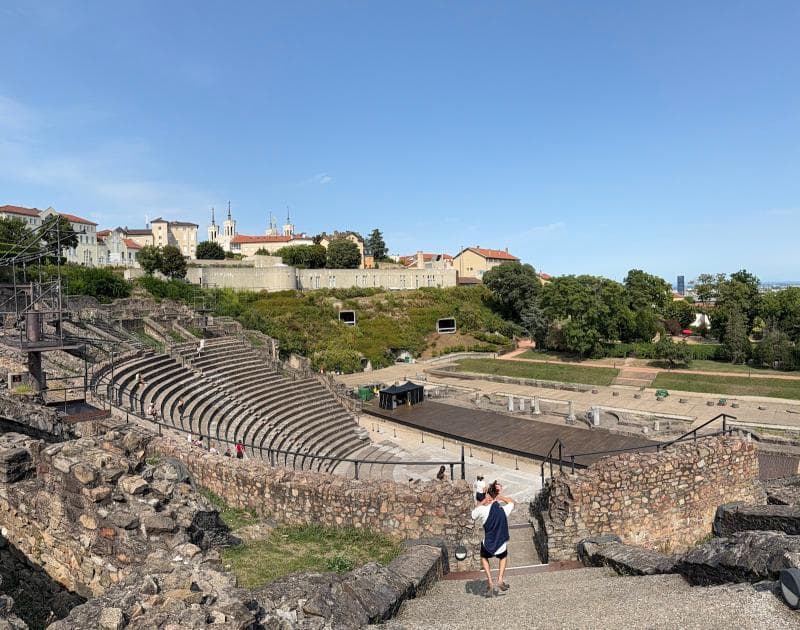
Discover the 'Hilltop Views' at Théâtres Romains De Fourvière in Lyon, France. Explore ancient Roman history and panoramic cityscapes from this UNESCO site.
Overview
Perched majestically on Fourvière Hill in Lyon, France, the 'Hilltop Views' from the Théâtres Romains De Fourvière offer an unparalleled panorama that seamlessly blends ancient history with the vibrant modern cityscape. This iconic site provides visitors with a breathtaking vantage point over Lyon, revealing the graceful confluence of the Saône and Rhône rivers, the architectural tapestry of the Presqu'île, and key landmarks like the Opera House and the impressive Basilica of Notre-Dame de Fourvière. On exceptionally clear days, the distant peaks of the Alpine foothills add a dramatic backdrop to this sweeping vista, showcasing the region's natural beauty.
More than just a viewpoint, Fourvière is a significant archaeological park, home to the remarkably preserved Ancient Theatre and its smaller companion, the Odeon. These Roman structures are part of Lyon's designated UNESCO World Heritage Site, underscoring their immense historical and cultural importance. Exploring this hilltop allows for a dual experience: delving into the heart of Roman Gaul while simultaneously admiring the dynamic evolution of Lyon stretching out below.
History & Cultural Background
Fourvière Hill holds the very foundations of Lyon's past. It was here, in 43 BC, that the Roman city of Lugdunum was established, quickly rising to prominence as the capital of Roman Gaul. The Ancient Theatre, a testament to Roman architectural prowess, was constructed around 15-20 AD under the reign of Emperor Augustus. Initially designed to accommodate approximately 4,700 spectators, it was later expanded in the 2nd century during Emperor Hadrian's rule, increasing its capacity to an impressive 10,000 people.
Adjacent to the grand theatre lies the Odeon, built in the early 2nd century. This smaller, more intimate venue was reserved for select performances, such as musical concerts and scholarly lectures. The archaeological complex also includes the subtle remnants of a Roman temple, believed to have been dedicated to the goddess Cybele. After the 3rd century, the site fell into disuse and became a source for building materials. However, its historical significance was recognized in the 19th and 20th centuries, leading to extensive excavations and careful restoration, bringing these magnificent ruins back to life.
What Makes It Special
What truly sets the 'Hilltop Views' of Fourvière apart is the unique juxtaposition of profound ancient history with a living, breathing urban landscape. Visitors can walk among the ancient stones where Roman citizens once gathered for entertainment, then turn to gaze upon a modern metropolis. The Ancient Theatre itself is a marvel, not only for its preservation but also for its continued use as a cultural venue. Each summer, it hosts the internationally renowned 'Nuits de Fourvière' festival, where contemporary music, dance, and theatrical performances breathe new life into the historic setting.
The engineering genius of the Romans is evident in the theatre's remarkable acoustics, allowing a voice to carry clearly without modern amplification – a detail that deepens the connection to its original purpose. Its status as a UNESCO World Heritage Site further cements its importance, acknowledging its outstanding universal value. This blend of past and present creates a compelling narrative, offering visitors a tangible link to Lyon's two-millennia-long story.
Stories, Fun Facts & Local Details
The very name 'Fourvière' is steeped in history, thought to derive from the Latin 'Forum Vetus,' meaning 'Old Forum,' a nod to its central role in ancient Lugdunum. Beyond the Roman theatres, Fourvière Hill is also famously crowned by the Basilica of Notre-Dame de Fourvière, a significant 19th-century landmark that, like its ancient neighbors, provides incredible city views from its esplanade.
A popular and enjoyable way to ascend the steep Fourvière Hill is via the funicular, a historic railway that adds a charming element to the journey. From the various viewing points around the Roman theatres and the basilica, it's a local secret that on a particularly clear day, you might just catch a glimpse of the majestic Mont Blanc in the far distance, a truly spectacular sight. Imagine the echoes of gladiatorial contests or poetic recitals as you sit on the same stone tiers where ancient spectators once marvelled. This immersive experience allows you to share a moment with history, occupying the exact spot as those who lived two thousand years ago.
Visitor Perspective
Visiting the Théâtres Romains De Fourvière offers a wonderfully accessible journey through time. The site is generally open for exploration, allowing visitors to freely wander through the tiers of seating, inspect the stage, and appreciate the scale of the ancient structures. While the theatres themselves are often free to enter, guided tours are available and highly recommended to enrich your understanding of their historical context and archaeological significance.
For those eager to delve even deeper into Lyon's Roman past, the adjacent Lugdunum Museum houses an extensive collection of artifacts, providing invaluable insights into Gallo-Roman civilization. Whether you're a history enthusiast, a culture seeker, or simply looking for the perfect spot to capture stunning photographs of Lyon, the 'Hilltop Views' from Fourvière provide an unforgettable experience, blending educational discovery with breathtaking scenic beauty. It's a place where every glance is a connection between epochs.
Coordinates: 4.81972, 45.75972
View on Google Maps💬 How Travelers Describe This Place
Based on community votes
Beautiful
996Interesting
673Must See
585Unique
143Photogenic
80
Traveler Stories
Discover memorable experiences shared by travelers who have visited this place.
No traveler stories yet.
Be the first traveler to share what made this place memorable.

Tour
By
Spot
Discover amazing places around the world. Your journey starts here.
Explore
© 2026 TourBySpot. All rights reserved.