Hiking Trails
Dubrovnik, Croatia
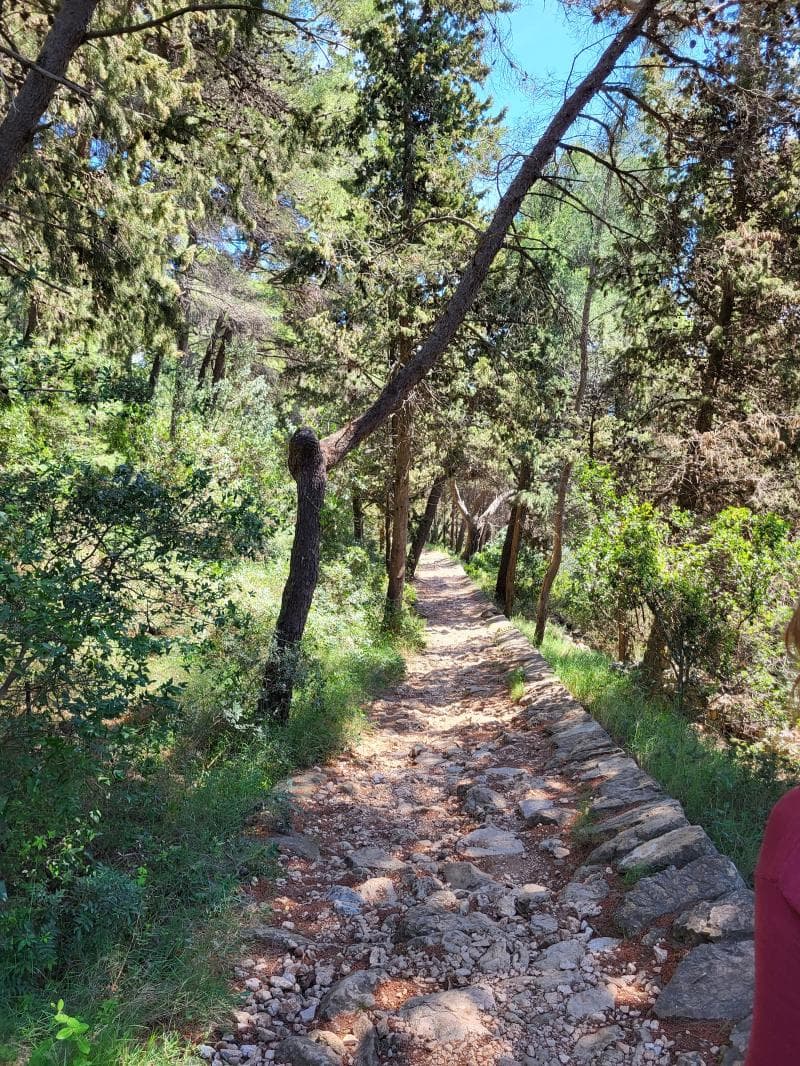
Explore the scenic hiking trails of Mount Srđ in Dubrovnik, Croatia, offering panoramic views of the Old Town and Adriatic Sea, rich history, and cultural significance.
Overview
Mount Srđ, a prominent yet modest mountain peak rising 412 meters (1,352 ft) directly behind the historic walled city of Dubrovnik, Croatia, offers an unforgettable hiking experience. Part of the Dinaric Alps mountain range, Srđ presents hikers with panoramic vistas that stretch across the shimmering Adriatic Sea, encompassing the iconic Old Town, the verdant Lokrum Island, and even the distant Elaphiti Islands on clear days.
The primary hiking trail to the summit is a popular alternative for those seeking an active ascent rather than taking the cable car. This well-maintained path, approximately 2.1 kilometers (1.3 mi) one way from its main trailhead, involves an elevation gain of around 255 meters (836 ft). The hike is generally considered easy to moderate in difficulty, taking anywhere from 40 minutes to 1.5 hours to reach the top, depending on one's pace and stops for photography. The trail features a distinctive zig-zag pattern, winding its way through Mediterranean vegetation.
The trailhead is conveniently located on Jadranska Cesta, the main road above Dubrovnik, and is typically a 20-25 minute walk from the Old Town's gates. It is clearly marked, often as 'Staza Prema Utvrdi Imperial' in Croatian.
History & Cultural Background
The history of Mount Srđ is deeply intertwined with that of Dubrovnik itself. The mountain's name is believed to derive from Saint Sergius, one of Dubrovnik's earliest patron saints. Interestingly, the city of Dubrovnik itself is said to owe its name to the 'dubrava,' the dense oak forests that once covered Srđ's slopes.
Strategically, Srđ has always been a vital defensive outpost. At its summit stands Fort Imperial, a formidable structure built by the French in 1810 during the Napoleonic Wars. This fort was crucial in overseeing and defending the city, a military principle applied across occupied Europe. Its strategic significance was dramatically highlighted during the 1991-1995 Croatian War of Independence, specifically during the devastating Siege of Dubrovnik. Fort Imperial served as a critical frontline command post, bearing the scars of the conflict. Today, the fort houses the Museum of the Croatian War of Independence, offering a sobering and poignant insight into this recent chapter of the city's past, through photographs, documents, and personal accounts.
Culturally, the hiking path itself holds significance, featuring the Stations of the Cross spaced along its ascent, offering a spiritual dimension to the physical journey.
What Makes It Special
Hiking the trails of Mount Srđ is more than just a physical activity; it is an immersive journey that combines stunning natural beauty with profound historical resonance. The unparalleled panoramic views are arguably the main draw, particularly breathtaking at sunrise or sunset when the sky paints vibrant hues over the red-tiled roofs of the Old Town and the sparkling Adriatic.
Unlike the swift cable car ride, the hike offers a 'genuinely earned' perspective from the summit, fostering a deeper connection with the landscape and the city below. The trail winds through lush Mediterranean vegetation, providing a constantly evolving visual feast. Furthermore, the hike is completely free, making it an accessible and rewarding adventure for budget-conscious travelers. The clear line of sight, extending to the Elafiti Islands some 35 miles away on a good day, underscores the mountain's commanding position.
Stories, Fun Facts & Local Details
Beyond the sweeping views, Mount Srđ holds numerous fascinating details. The large white stone cross that stands proudly at the summit is not the original; it was destroyed during the 1991-95 war and later rebuilt, symbolizing resilience. Similarly, the popular Dubrovnik Cable Car, first established in 1969, also suffered extensive damage during the siege and was out of operation for almost two decades before its restoration and reopening in 2010.
An interesting historical tidbit about Fort Imperial is that it was reportedly completed on Napoleon Bonaparte's birthday, August 15th. The mountain's very name, Srđ, and its connection to the oak forests (dubrava) that once covered its slopes, directly link to the naming of Dubrovnik itself.
Hikers should be aware that the trail can be rocky and exposed to the sun, especially during warmer months. It is crucial to wear sturdy footwear and carry ample water to ensure a comfortable and safe ascent.
Visitor Perspective
For those planning to hike Mount Srđ, timing is key. To avoid the peak heat and crowds, it is highly recommended to undertake the ascent either early in the morning or in the late afternoon, aiming to catch a spectacular sunset from the top. The trail's difficulty is generally described as easy to moderate, with a consistent uphill incline that, while demanding, does not require technical climbing skills.
Hikers frequently praise the sense of accomplishment gained from reaching the summit on foot, often considering it a more fulfilling experience than simply riding the cable car. Many choose to hike up and then take the cable car down, or vice versa, to enjoy both perspectives. A visit to the Museum of the Croatian War of Independence within Fort Imperial is highly recommended for a powerful and educational experience, offering deep historical context to the panoramic views.
Coordinates: 18.11, 42.65
View on Google Maps💬 How Travelers Describe This Place
Based on community votes
Photogenic
692Beautiful
674Must See
503Interesting
261Unique
49
Traveler Stories
Discover memorable experiences shared by travelers who have visited this place.
No traveler stories yet.
Be the first traveler to share what made this place memorable.

Tour
By
Spot
Discover amazing places around the world. Your journey starts here.
Explore
© 2026 TourBySpot. All rights reserved.