Hidden Streets
Edinburgh, United Kingdom
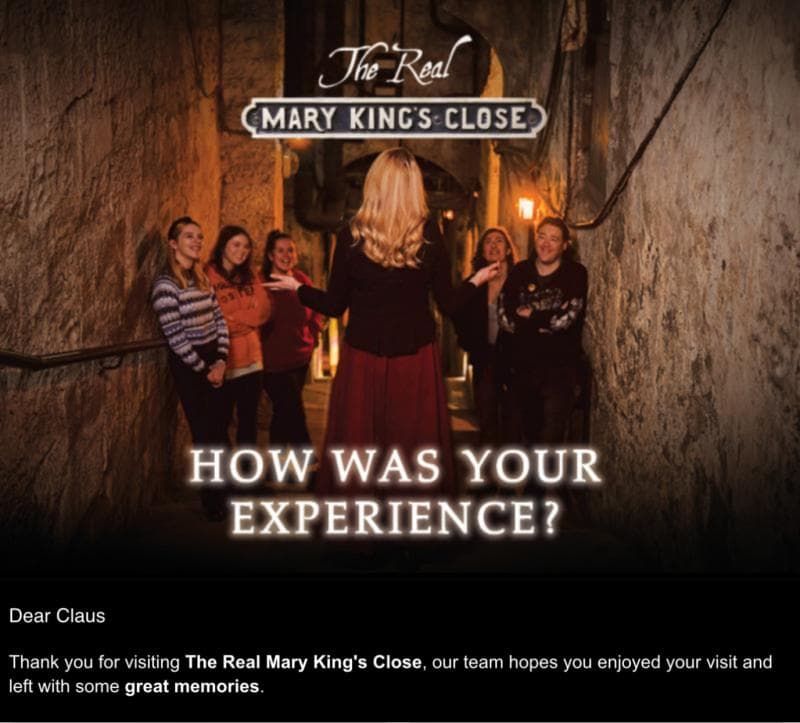
Explore The Real Mary King's Close in Edinburgh, UK. Delve into hidden 17th-century streets, discover plague history, and hear ghost stories like Annie's.
Overview
Deep beneath the bustling Royal Mile in Edinburgh, United Kingdom, lies a preserved subterranean world known as The Real Mary King’s Close. Far from being a mere alleyway, this historic site is a labyrinthine network of streets, homes, and passageways that were once a vibrant part of 17th-century Edinburgh. Buried and built over centuries ago, it now offers a unique glimpse into the city's past, presenting an authentic and compelling narrative of the lives of its former residents.
Visitors to The Real Mary King’s Close embark on a guided tour, stepping directly into the 'hidden streets' that time forgot. The experience transports one back to an era of cramped living, devastating plagues, and enduring mysteries, all brought to life by character guides who share the personal stories of those who lived and died within these walls.
History & Cultural Background
Edinburgh in the 17th century was a city bursting at its seams, confined by defensive walls. With no room for outward expansion, buildings grew upwards, creating towering tenements and a dense network of narrow thoroughfares known as 'closes' and 'wynds'. Mary King's Close was one such bustling artery, named after Mary King, a successful merchant burgess and textile merchant who owned property and lived there in the 1600s. Her status as a voting citizen and trader was notable for a woman of her time.
A pivotal moment in its history occurred in 1753 when the Royal Exchange, now the City Chambers, was constructed directly above parts of the Close. This development led to the lower sections of Mary King's Close and neighbouring closes being retained as foundations, effectively burying and sealing them beneath the new city infrastructure. For centuries, these 'hidden streets' remained largely forgotten, shrouded in rumour and urban legend, until they were eventually reopened to the public in 2003.
The Close also holds a poignant history linked to the Great Plague of 1645. Edinburgh's crowded conditions made it particularly vulnerable, and the plague spread rapidly through its narrow confines. Stories, some perhaps exaggerated by time, tell of victims being sealed within their homes during desperate attempts to contain the disease. The enduring atmosphere, coupled with tales of past suffering, contributes to the site's reputation for hauntings, a reputation that dates back to the 17th century.
What Makes It Special
The Real Mary King's Close is exceptional because it offers an authentic, preserved slice of 17th-century urban life. Unlike many historical sites that have been heavily reconstructed, this subterranean complex contains original stonework and structures, allowing visitors to walk on the very same streets and through the very same rooms that people inhabited hundreds of years ago. It is Edinburgh's only preserved 17th-century street, making it a unique historical asset.
Its 'hidden' nature, literally beneath the modern city, creates an unparalleled sense of stepping back in time. The architectural marvel of an entire street and its buildings being subsumed by later construction is a powerful testament to Edinburgh's layered history. The tours are led by knowledgeable character guides, often dressed in period attire, who breathe life into the past, telling engaging stories from the perspective of former residents. This storytelling approach weaves together history, culture, and personal narratives, creating a deeply immersive and memorable experience.
Stories, Fun Facts & Local Details
Among the many tales echoing through Mary King's Close, the story of 'Annie' is perhaps the most well-known. Legend tells of a young girl's spirit, believed to have died from the plague in the Close, who lost her doll. Visitors often bring toys, trinkets, and even money to leave in 'Annie's Room' as gifts, hoping to bring comfort to her spirit. These offerings are regularly collected and donated to local children's charities, turning a poignant ghost story into a charitable act.
Another fascinating detail of Old Town life, though not exclusive to Mary King's Close, is the cry of 'Gardyloo!' – a warning shouted before residents would empty their chamber pots from windows onto the street below. This vividly illustrates the unsanitary and challenging conditions of daily life in the crowded 17th-century city. The close was also known to be a place where various social classes lived in close proximity, from wealthy merchants and lawyers in multi-story 'high' houses to poorer families in more basic 'low' houses, reflecting the dense urban environment.
Even the reputation for hauntings has a scientific theory: biogas from the nearby Nor Loch, a stagnant and polluted body of water, might have seeped into the closes, creating eerie lights and potentially causing hallucinations, contributing to early ghost stories.
Visitor Perspective
Visiting The Real Mary King's Close offers an hour-long journey that is both educational and atmospheric. Tours delve into the cramped, dark, and often humid chambers where residents once lived, providing a visceral understanding of their existence. The experience is designed to be informative rather than overtly frightening, focusing on historical accuracy and personal stories. While some ghost stories are shared, the emphasis is on the human history.
Due to the nature of the underground environment, with uneven surfaces and narrow passages, visitors should be prepared for some physical effort. It is generally advised that the tour might not be suitable for those with severe claustrophobia or breathing difficulties. Photography is typically not permitted inside the Close to preserve the atmosphere and historical integrity. To ensure entry, especially during peak seasons, it is highly recommended to book tickets in advance.
Coordinates: -3.1905063, 55.949921
View on Google Maps💬 How Travelers Describe This Place
Based on community votes
Must See
639Beautiful
569Interesting
476Photogenic
465Unique
128
Traveler Stories
Discover memorable experiences shared by travelers who have visited this place.
No traveler stories yet.
Be the first traveler to share what made this place memorable.

Tour
By
Spot
Discover amazing places around the world. Your journey starts here.
Explore
© 2026 TourBySpot. All rights reserved.