Heydar Aliyev Center
Baku, Azerbaijan
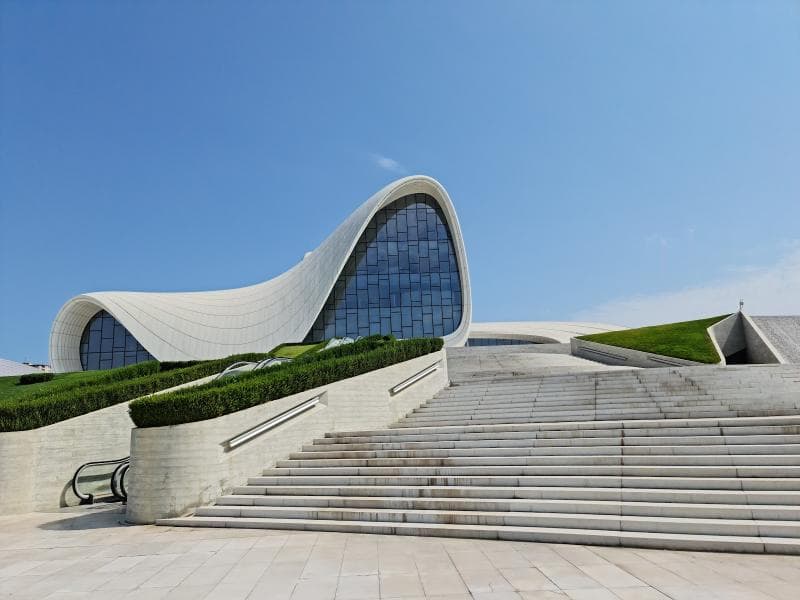
Explore the Heydar Aliyev Center in Baku, Azerbaijan—an architectural masterpiece by Zaha Hadid, known for its fluid design and cultural exhibitions.
Overview
The Heydar Aliyev Center, nestled in the vibrant city of Baku, Azerbaijan, stands as a breathtaking emblem of modern architecture and cultural dynamism. Designed by the visionary Iraqi-British architect Zaha Hadid, this iconic complex is instantly recognizable for its distinctive, flowing, and curvilinear form, which purposefully eschews sharp angles, creating a seamless aesthetic that merges with its surrounding landscape. Completed in 2012, it functions as a primary cultural hub, housing a museum, exhibition halls, and a grand auditorium, all contributing to the intellectual and artistic life of the city.
History & Cultural Background
The Center is named after Heydar Aliyev (1923–2003), who served as the first secretary of Soviet Azerbaijan and later as the president of the independent Azerbaijan Republic. Its conception in 2007 was part of Azerbaijan's broader vision to modernize Baku's infrastructure and architecture, consciously moving away from the rigid, monumental styles inherited from the Soviet era. The building symbolically represents Azerbaijan's forward-looking aspirations, its attachment to both its past and future, and its desire to establish a unique national identity on the global stage. The official soft-opening ceremony took place on May 10, 2012, marking Heydar Aliyev's 89th anniversary.
What Makes It Special
What truly sets the Heydar Aliyev Center apart is its groundbreaking architecture. Zaha Hadid's design is a remarkable feat of engineering and aesthetics, characterized by its fluid, continuous surface where the plaza, walls, and roof appear to fold and blend without interruption. There is not a single straight line in its design, a deliberate choice that reflects a departure from conventional geometry. The undulating, wave-like structure, often described as emerging from the landscape, was made possible through advanced construction techniques using materials like Glass Fibre Reinforced Concrete (GFRC) and Glass Fibre Reinforced Polyester (GFRP), allowing for complex double-curved forms. This architectural marvel has garnered international acclaim, winning the Design Museum's Design of the Year Award in 2014, making Hadid the first woman to receive this honor. It stands as a symbol of progress and openness, housing diverse functions including a 1,000-seat auditorium, temporary exhibition spaces, and a museum.
Stories, Fun Facts & Local Details
Zaha Hadid, affectionately known as the 'Queen of the Curve', considered the Heydar Aliyev Center to be one of the closest realizations of her theoretical visions into a built reality. The building's white color is not merely aesthetic; it symbolizes a bright future for Azerbaijan and serves to highlight the building's specific decorative elements as light plays across its surfaces. The inspiration for its flowing forms draws from historical Islamic architecture, establishing a continuous and fluid relationship between the building's interior and its surrounding public plaza. Inside, visitors can explore the 'Mini Azerbaijan' exhibition, featuring miniature depictions of the country's significant architectural and historical landmarks, and even a unique collection of classic cars, some of which were once used by Heydar Aliyev himself. The building was also featured in the documentary series 'Extreme Engineering' and praised on 'The Grand Tour', further cementing its status in popular culture.
Visitor Perspective
For a curious traveler, the Heydar Aliyev Center offers a multifaceted experience. The exterior, its surrounding public plaza, and park can be explored freely, providing ample opportunities for stunning photographs, especially during sunrise or sunset when the light transforms its appearance. To delve deeper into its cultural offerings, entry tickets are required for the interior exhibitions and museum. Inside, you'll discover the Heydar Aliyev Museum, which chronicles the life and legacy of the former president through interactive displays and historical artifacts. Beyond this, the center hosts a wide array of rotating temporary exhibitions showcasing Azerbaijani art, history, and culture, alongside international contemporary works. The interior design continues the fluid lines of the exterior, featuring curved walls, natural wood surfaces, and polished white stone. The center is typically open from Tuesday to Sunday, with Mondays being its closed day.
Coordinates: 49.86763, 40.39584
View on Google Maps💬 How Travelers Describe This Place
Based on community votes
Photogenic
601Beautiful
486Interesting
448Unique
210Must See
141
Traveler Stories
Discover memorable experiences shared by travelers who have visited this place.
No traveler stories yet.
Be the first traveler to share what made this place memorable.
Things to see at Heydar Aliyev Center



Tour
By
Spot
Discover amazing places around the world. Your journey starts here.
Explore
© 2026 TourBySpot. All rights reserved.