Hall Of Gold
Astana, Kazakhstan
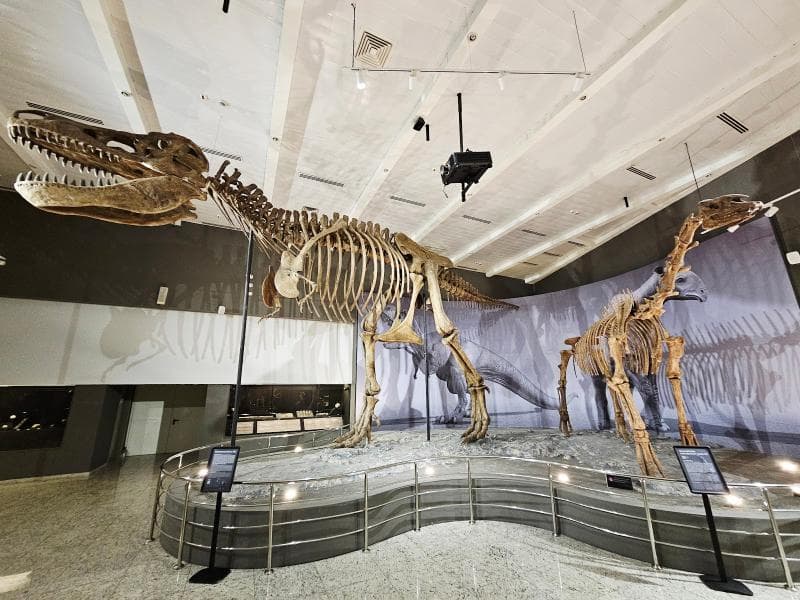
Explore the Hall of Gold at the National Museum of the Republic of Kazakhstan in Astana, home to the legendary 'Golden Man' and ancient nomadic treasures.
Overview
The National Museum of the Republic of Kazakhstan in Astana is a monumental institution, recognized as one of the largest and most modern museum complexes in Central Asia. Established on July 2, 2013, and opened in 2014, it stands proudly on Independence Square, harmoniously integrated into the capital's architectural ensemble. Within its vast expanse, the 'Hall of Gold' emerges as a paramount exhibition, a treasure trove showcasing Kazakhstan's rich history and cultural heritage. This dedicated space is not just one hall, but often presented as two distinct 'Gold Halls' (Gold Hall No. 1 and Gold Hall No. 2), each offering a unique journey through time. These halls collectively present an outstanding archaeological collection, spanning from the Bronze Age through to the Early Middle Ages, with the legendary 'Golden Man' as its undisputed star.
History & Cultural Background
The genesis of the National Museum, and by extension its magnificent Hall of Gold, can be traced to the visionary initiative of Kazakhstan's First President, Nursultan Nazarbayev, as a cornerstone of the state program 'Cultural Heritage'. The story of the 'Golden Man' itself is a captivating chapter in this heritage. Discovered between 1969 and 1970 in the Issyk burial mound, located near Almaty, this remarkable find was unearthed by a team of Soviet archaeologists led by Kemal Akishev. The individual, a Saka warrior from the 4th or 5th century BCE, was found adorned in an astonishing array of over 4,000 gold pieces. This discovery profoundly impacted the understanding of the ancient Saka people, nomadic tribes who inhabited the Eurasian steppe. The 'Golden Man' quickly transcended its archaeological significance to become a powerful national symbol of an independent Kazakhstan, representing the nation's deep historical roots and ancient statehood.
What Makes It Special
The 'Hall of Gold' at the National Museum of the Republic of Kazakhstan is a truly special destination due to the unparalleled magnificence and historical depth of its exhibits. Divided into two distinct sections, it offers a comprehensive narrative of ancient craftsmanship and nomadic artistry. Gold Hall No. 1 meticulously displays authentic artifacts from ancient metallurgical centers across Kazakhstan, including intricate gold jewelry, formidable weapons, fine ceramics, everyday household items, and complex ritual complexes. These pieces offer a glimpse into the sophisticated material culture of early civilizations. Gold Hall No. 2 continues this enthralling journey, focusing on the rich Saka-Sarmatian artistic heritage and the broader cultural landscape of nomadic civilizations across Eurasia. Here, visitors can admire significant finds from renowned archaeological sites such as Berel, Shilikty, Eleke Sazy, Araltobe, Urzhar, and Taksai.
A defining characteristic of these collections is the prevalence of the 'animal style' art, a unique artistic phenomenon where images of animals like argali, snow leopards, eagles, and horses are not merely decorative but serve to express profound cosmological, religious, and socio-political ideas of ancient societies. The centerpiece, the 'Golden Man', is an awe-inspiring spectacle: a warrior's attire comprising over four thousand individual gold ornaments. His towering, conical headdress, approximately 70 centimeters tall, is intricately decorated with motifs of winged horses, trees of life, and mythical mountains, reflecting the deep worldview of the nomadic peoples. Beyond the Golden Man, other notable artifacts include the Kargaly Hoard Gold Ring and the ancient Golden Argali, dating back to the 7th century BCE. The halls are further enhanced by reconstructed dioramas of burial complexes and ancient metallurgical workshops, offering vivid, lifelike representations of the past.
Stories, Fun Facts & Local Details
The discovery of the 'Golden Man' was, in a twist of fate, an accidental find during excavations for a new automotive base, a stroke of archaeological luck that unveiled a treasure untouched for millennia. This groundbreaking discovery not only enriched museum collections but fundamentally reshaped historical perceptions of the Saka people, revealing a complex social structure, a powerful political system, and even evidence of an ancient writing system, challenging previous assumptions about their societies. Interestingly, for a period, the identity of the 'Golden Man' was a subject of scholarly debate, with some historians speculating it might have been a warrior woman due to certain burial artifacts. While recent DNA analysis has suggested the individual was male, the existence of elite female burials among Scythian-Saka cultures is also recognized, adding layers to the understanding of ancient nomadic societies. Such is its significance that the 'Golden Man' is often affectionately referred to as the 'Tutankhamun of Kazakhstan'.
The artistry displayed in the 'animal style' objects is not just aesthetically pleasing; each depiction, from the fierce snow leopard to the majestic eagle, carries symbolic weight, embodying concepts of strength, power, and sacred knowledge that were central to the nomadic worldview. The National Museum building itself is a modern architectural marvel, constructed from blue glass and white marble, its design purportedly inspired by the flowing form of a waving flag. While the museum houses an estimated 7,000 items across its various exhibitions, the 'Golden Man' remains an enduring symbol, with numerous replicas gracing significant landmarks throughout Kazakhstan, including the Independence Monument in Almaty.
Visitor Perspective
Visiting the Hall of Gold offers an immersive and educational experience for any traveler keen to delve into Kazakhstan's ancient past. The National Museum of the Republic of Kazakhstan operates from Tuesday to Sunday, typically from 09:30 to 18:00, with the ticket office closing an hour earlier, at 17:00, and Mondays reserved as a technical day. While the Gold Halls are a focal point, exploring the entirety of the museum's extensive collections can comfortably occupy between two to four hours of a visitor's time. Guided excursions are available, providing deeper insights into the artifacts and their historical context. The museum embraces modern exhibition techniques, featuring interactive displays and touchscreen kiosks that allow for a more dynamic and comprehensive understanding of Kazakhstan's rich history. Upon entering the grandiose main hall, visitors are greeted by a striking sight: a giant golden eagle soaring above a vast map of the country, setting an immediate tone of grandeur and national pride. The museum is designed to be accessible and engaging for all age groups, making it a suitable and enriching destination for families, individuals, and curious minds alike.
Coordinates: 71.469444, 51.118056
View on Google Maps💬 How Travelers Describe This Place
Based on community votes
Must See
491Photogenic
443Beautiful
414Interesting
310Unique
277
Traveler Stories
Discover memorable experiences shared by travelers who have visited this place.
No traveler stories yet.
Be the first traveler to share what made this place memorable.

Tour
By
Spot
Discover amazing places around the world. Your journey starts here.
Explore
© 2026 TourBySpot. All rights reserved.