Håkon’s Hall
Bergen, Norway
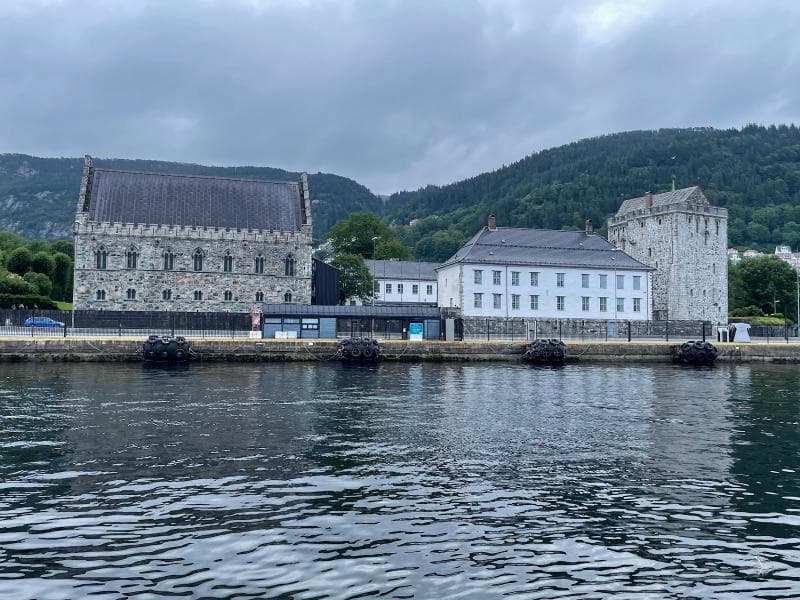
Explore Håkon's Hall, a medieval royal banquet hall within Bergenhus Fortress in Bergen, Norway. Discover its rich history and cultural significance.
Overview
Håkon's Hall, or Håkonshallen, stands as a magnificent testament to Norway's medieval past, nestled within the historic Bergenhus Fortress in Bergen, Norway. This grand royal banquet hall, built over 750 years ago, was once the most prestigious building in the kingdom. Today, it continues to welcome visitors as a vital cultural heritage attraction and museum, while also hosting significant royal dinners and official events. It offers a unique journey back to a time when Bergen was at the heart of Norwegian power and influence.
History & Cultural Background
The construction of Håkon's Hall began in the mid-13th century, between 1247 and 1261, under the command of King Håkon Håkonsson. This ambitious project marked a period when Bergen served as Norway's capital and political center, making the hall the largest and most monumental structure at Holmen, the royal estate. It was designed not only as a royal residence but primarily as a grand banqueting hall, reflecting the burgeoning power of the Norwegian monarchy.
A pivotal event in its early history was the lavish wedding feast of King Håkon's son, Magnus the Lawmender Håkonsson, to the Danish princess Ingeborg in 1261. This celebration reportedly hosted around 2000 guests across the fortress grounds, symbolizing Norway's standing among European royalty. The hall also played a crucial role in national affairs, including the promulgation of Norway's first complete set of laws.
Over centuries, as the royal seat shifted away from Bergen, Håkon's Hall saw its role diminish. It underwent periods of humble utility, serving as a storeroom and later as an ammunition depot for Bergenhus Fortress, even losing its roof at one point. The building faced significant peril on April 20, 1944, when an explosion from the Dutch ammunition ship 'Voorbode' in Bergen harbor severely damaged it, leaving only its walls standing. Following this devastation, a major restoration effort in the 1950s brought the hall back to its present form, reopening on its 700th anniversary in 1961.
What Makes It Special
Håkon's Hall stands out as the largest secular medieval building in Norway, showcasing impressive Gothic architecture. Its sheer scale and solid stone construction were a deliberate display of royal power and sophistication, drawing inspiration from European palace designs. The hall's three distinct floors each served a specific purpose: the basement for storage, the middle floor for administration and the King's council, and the magnificent top floor reserved for grand festivities and royal gatherings.
Beyond its architectural grandeur, what makes Håkon's Hall truly special is its enduring legacy. Despite centuries of change, including periods of neglect and wartime destruction, it has been meticulously restored and preserved. It continues to be a national cultural monument, actively used for royal dinners, official state occasions, and concerts, allowing visitors to experience a living piece of history. The hall's thick stone walls, as the sagas recall, resonate with echoes of solemn ceremonies and joyous feasts, inviting a deep connection to Norway's royal heritage.
Stories, Fun Facts & Local Details
Imagine the spectacle of 2000 guests celebrating a royal wedding in 1261, a number so grand it required the use of three buildings within the fortress complex. This monumental event illustrates the immense prestige and hospitality that Håkon's Hall was built to project. The sagas of the time vividly describe how 'kings held court in the stone hall,' highlighting its central role in the medieval Norwegian kingdom.
Interestingly, the hall's survival through centuries of shifting political landscapes and practical needs is partly due to its adaptability. After its royal significance waned, its robust structure found new life as a storeroom and even an ammunition depot, showing how pragmatic uses can inadvertently preserve historical treasures. In modern times, the Bergen City Museum, which administers Håkon's Hall, offers a 'Fortress Quiz Trail' for children, transforming a historical visit into an engaging outdoor adventure across the Bergenhus Fortress grounds.
Visitor Perspective
A visit to Håkon's Hall offers an immersive journey into medieval Norway. While exploring the Bergenhus Fortress grounds, which are freely accessible for walking and recreation, you'll encounter Håkon's Hall as a prominent feature. Inside, you can wander through its three floors, envisioning the historical events that unfolded within its walls. Guided tours, especially during the summer months, provide deeper insights into its history and significance.
The hall, administered by the Bergen City Museum, serves as both a museum and a vibrant venue. Although it's an ancient structure, visitors can still attend concerts and witness official functions held here, connecting contemporary life with centuries of tradition. For those with mobility considerations, it's worth noting that wheelchair access can be very limited, often requiring assistance to navigate the courtyard and enter the building. Nevertheless, the experience of stepping into this grand medieval hall, feeling the weight of history, is profoundly rewarding for any traveler curious about Norway's rich past.
Coordinates: 5.318540698482321, 60.399975884931344
View on Google Maps💬 How Travelers Describe This Place
Based on community votes
Must See
684Beautiful
363Photogenic
302Unique
250Interesting
88
Traveler Stories
Discover memorable experiences shared by travelers who have visited this place.
No traveler stories yet.
Be the first traveler to share what made this place memorable.

Tour
By
Spot
Discover amazing places around the world. Your journey starts here.
Explore
© 2026 TourBySpot. All rights reserved.