Griffith Observatory
Los Angeles, United States
Explore Griffith Observatory in Los Angeles, United States. Discover cosmic exhibits, planetarium shows, historic telescopes, and stunning city views.
Overview
Perched majestically on the southern slope of Mount Hollywood within Los Angeles' expansive Griffith Park, the Griffith Observatory offers more than just an impressive vantage point; it serves as a gateway to the cosmos. This iconic landmark commands breathtaking panoramic views of the Los Angeles Basin, encompassing the glittering Downtown skyline, the sprawling expanse of Hollywood, and the distant Pacific Ocean. It also provides a quintessential close-up view of the famous Hollywood Sign. More than just a scenic overlook, the observatory is a vibrant public space dedicated to making astronomy and science accessible to everyone, a vision upheld since its opening. Admission to the building, exhibits, and grounds is free, inviting millions to explore its extensive array of space and science-related displays and engage directly with the wonders of the universe.
History & Cultural Background
The story of Griffith Observatory begins with its visionary benefactor, Colonel Griffith J. Griffith. A wealthy industrialist, Griffith donated 3,015 acres of land to the City of Los Angeles in 1896, with a subsequent bequest in his will funding the construction of a public observatory, exhibit hall, and planetarium. His radical idea was to create a place where the general public, not just scientists, could engage with astronomy. This democratic approach to scientific education set the observatory apart from institutions typically confined to remote mountaintops. The observatory officially opened its doors on May 14, 1935, showcasing a distinctive architectural blend of Greco-Roman and Art Deco styles, adorned with classical elements like the Greek key pattern. Over the decades, Griffith Observatory has played a unique role, including training pilots in celestial navigation during World War II and assisting Apollo program astronauts in the 1960s, further cementing its historical significance. A major renovation and expansion from 2002 to 2006, costing $93 million, modernized the facility while preserving its original charm and expanding its exhibit space and offerings.
What Makes It Special
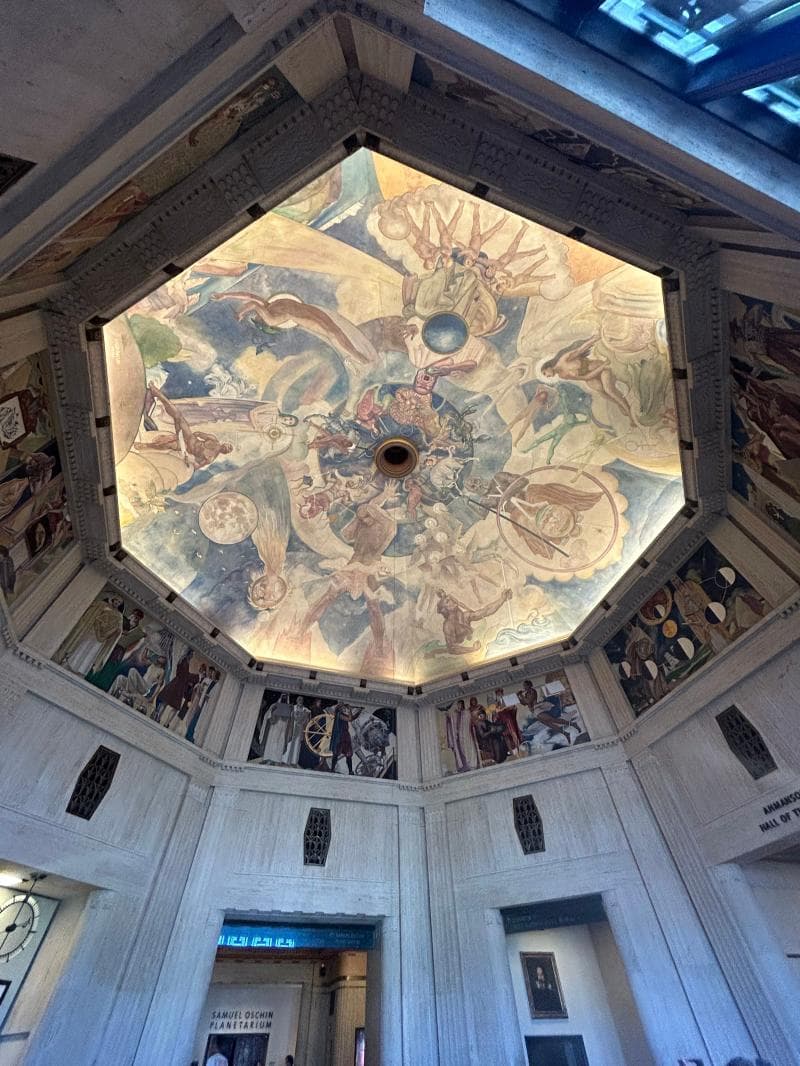
Griffith Observatory is globally recognized for several distinctive features. It houses the 12-inch Zeiss refracting telescope, through which more than nine million people have peered since 1935, making it the most viewed telescope in the world. The Samuel Oschin Planetarium, with its 75-foot seamless dome, offers immersive live shows that transport audiences to the farthest reaches of the cosmos, a rarity in modern planetariums. Inside, visitors encounter captivating exhibits such as the Foucault Pendulum, which visually demonstrates Earth's rotation, and a powerful Tesla Coil generating spectacular electrical displays. The 'Big Picture' in the Gunther Depths of Space Hall stands as the largest astronomically accurate image ever constructed, depicting the Virgo Cluster of galaxies in stunning detail across 152 feet. Outdoors, the Astronomers Monument pays tribute to six great astronomers, its design topped with an armillary sphere, an ancient astronomical instrument. These elements, combined with its strategic location offering unparalleled views, make it an exceptional blend of scientific exploration and cultural landmark.
Stories, Fun Facts & Local Details
Beyond its scientific endeavors, Griffith Observatory is steeped in fascinating stories and cultural anecdotes. It gained significant cinematic fame as a filming location, most notably featured in the iconic 1955 film 'Rebel Without a Cause' starring James Dean, and a sculpture of Dean is prominently displayed on the west side. The observatory was one of the first planetariums to be used in a film. A notable detail in its history involves the Astronomers Monument; while contemplating whom to include, Albert Einstein was considered but ultimately omitted because he was still alive at the time of its construction, which planners deemed 'inappropriate'. The observatory's original Zeiss Mark II planetarium projector was replaced in 1964 by a Mark IV model, and then later by the state-of-the-art Zeiss Mark IX Universarium, with the older models now part of the exhibits, showcasing the evolution of star projection technology. Even the Café at the End of the Universe, a nod to science fiction literature, adds a touch of whimsical charm to the visitor experience. The architect's intentional alignment of the building's major axes and even the stairway railing pointing to the North Star highlight the deep thought behind its design.
Visitor Perspective
A visit to Griffith Observatory promises an enriching experience, blending educational engagement with breathtaking scenery. While entry to the observatory building and its expansive grounds is free, a small fee is charged for shows in the Samuel Oschin Planetarium. Many visitors opt to arrive in the late afternoon to witness a spectacular sunset over Los Angeles, followed by stargazing through the public telescopes, which are available on clear evenings. The observatory's 12-inch Zeiss refracting telescope is available for public viewing, along with smaller portable telescopes on the lawn. Lines for telescopes can be long, but staff assist visitors through the viewing process. The observatory is generally open Tuesday through Sunday, with Monday closures, and tends to be busiest on weekends, holidays, and during sunset hours. While on-site paid parking is available, it can be limited; alternative transportation options like the DASH Observatory Bus are recommended. The facility is fully accessible, with ramps, elevators, and wide pathways ensuring a comfortable experience for all guests.
Coordinates: -118.3004, 34.1186
View on Google Maps💬 How Travelers Describe This Place
Based on community votes
Must See
540Photogenic
252Unique
147Beautiful
114Interesting
19
Traveler Stories
Discover memorable experiences shared by travelers who have visited this place.
No traveler stories yet.
Be the first traveler to share what made this place memorable.

Tour
By
Spot
Discover amazing places around the world. Your journey starts here.
Explore
© 2026 TourBySpot. All rights reserved.