Grand Facade
Astana, Kazakhstan
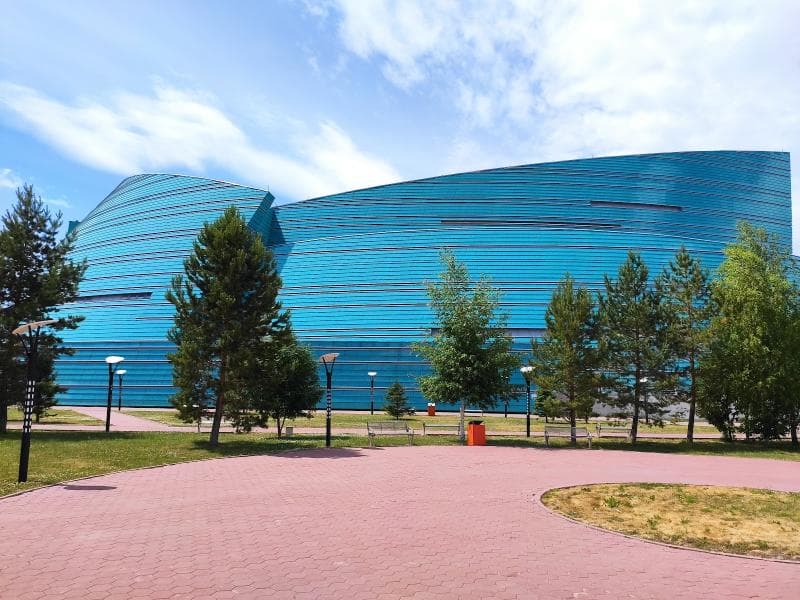
Discover the Grand Facade of Ak Orda Presidential Palace in Astana, Kazakhstan – a stunning symbol of national pride and modern architecture.
Overview
Standing majestically on the left bank of the Ishim River in Astana, Kazakhstan, the Ak Orda Presidential Palace serves as the official workplace of the President of Kazakhstan. Its 'Grand Facade' is not just an architectural feature but a profound symbol of the nation's independence, strength, and aspiration for a bright future. Inaugurated in 2004, this impressive structure immediately became one of Astana's most recognizable landmarks, reflecting a blend of European classicism with sophisticated Eastern motifs.
The palace's exterior captivates with its pure white marble, elegant columns, and a striking blue and gold dome crowned with a golden spire. This grand entrance and its surrounding meticulously landscaped grounds, including fountains and flower paths, create a solemn and awe-inspiring atmosphere, setting the tone for the nation's highest office.
History & Cultural Background
The construction of the Ak Orda Presidential Palace commenced in 2001 and was completed in a remarkable three years, officially opening its doors on December 24, 2004. The creation of Ak Orda was a pivotal part of Kazakhstan's ambitious project to develop Astana into a modern capital, reflecting the country's new philosophy of development.
The name 'Ak Orda' itself holds deep cultural significance, translating from Kazakh as 'White Horde' or 'White Headquarters.' This 'white' symbolism extends beyond the name, as white tones and light colors prevail across the facade and interiors, embodying concepts cherished in Turkic culture: sacredness, joy, happiness, sincerity, nobility, honor, and goodness.
The palace's design consciously integrates traditional European architectural elements with rich Kazakh and Eastern ornamental patterns, particularly visible in its circular blocks and decor. This architectural synthesis is intended to reflect Kazakhstan's position as a nation that bridges Western and Eastern cultures, promoting a Eurasian cultural identity.
What Makes It Special
The Grand Facade of the Ak Orda Presidential Palace is distinguished by its meticulous choice of materials and symbolic design. The pristine exterior is clad in white marble, sourced not just locally but also from places like Italy, with facade facing made of thick Calacata stone. This material choice contributes to its 'white' symbolism and its luminous appearance. The building stands at an imposing height of 80 to 86 meters, including its spire.
A prominent feature is the blue and gold dome, evocative of Kazakhstan's national flag. Crowning this dome is a golden spire that features a sun with 32 rays and a steppe eagle flying beneath it, mirroring the national emblem and symbolizing freedom, power, and a bright future. The palace's strategic location on slightly elevated ground by the Ishim River, with landscaped gardens and fountains, enhances its visual prominence and grandeur.
Stories, Fun Facts & Local Details
Often referred to as the 'White House of Kazakhstan,' the Ak Orda Presidential Palace's architectural design subtly draws inspiration from iconic government buildings, particularly noting its large dome reminiscent of Washington's Capitol Hill and a pillared semi-circle frontage similar to the White House.
Beyond its Western influences, the design incorporates elements of ancient Eastern philosophy, particularly Feng Shui. The palace is strategically embraced by the curve of the Ishim River, a feature referred to as the 'Jade Belt,' an auspicious formation symbolizing wealth and prosperity. The palace also sits on an 'Emperor's Throne Position,' an elevated spot signifying leadership and protection, flanked by two large gold towers acting as 'guardians.'
The building's seven levels are said to symbolize the 'Seven Heavens,' aligning with cosmological traditions globally where the number seven is associated with celestial realms and shaping destiny. A true testament to its national significance, the image of the Ak Orda Presidential Palace adorns the 10,000 Tenge banknote of the 2017 series.
Visitor Perspective
While the Ak Orda Presidential Palace primarily functions as the official workplace and administrative center for the President and his staff, visitors can marvel at its Grand Facade and the surrounding architectural ensemble from the adjacent Nurzhol Boulevard. Although direct public access to the interior can be limited, organized tours sometimes offer a rare glimpse into select halls, such as the Grand Central Hall, the Winter Garden, and various negotiation rooms, showcasing their opulent furnishings and diverse artistic collections.
The palace is a key landmark in Astana's modern landscape, offering impressive photo opportunities, especially when illuminated at night or seen against the backdrop of the city's other futuristic structures. Its presence helps tell the story of modern Kazakhstan's ambition and cultural identity, making the exterior a captivating sight for any curious traveler.
Coordinates: 71.44639, 51.12583
View on Google Maps💬 How Travelers Describe This Place
Based on community votes
Must See
797Interesting
695Unique
396Beautiful
286Photogenic
22
Traveler Stories
Discover memorable experiences shared by travelers who have visited this place.
No traveler stories yet.
Be the first traveler to share what made this place memorable.

Tour
By
Spot
Discover amazing places around the world. Your journey starts here.
Explore
© 2026 TourBySpot. All rights reserved.