Government Buildings
Pristina, Kosovo
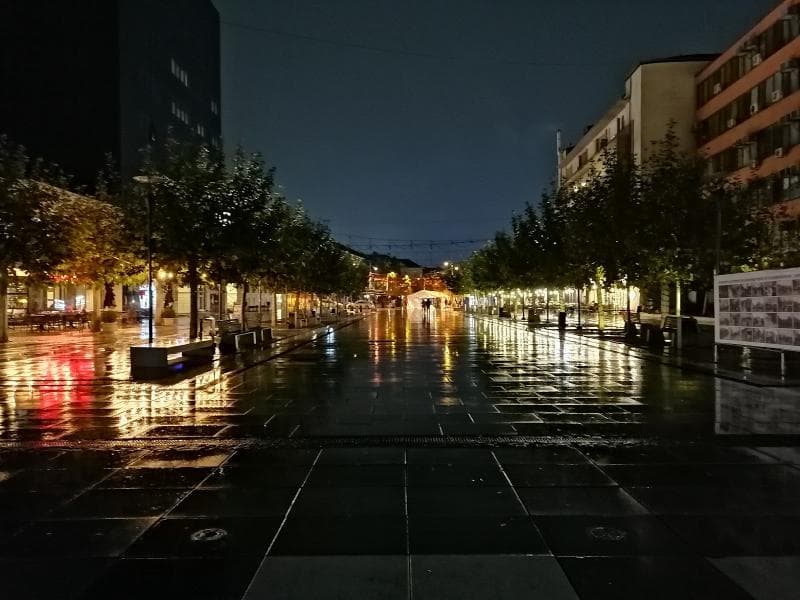
Explore the Government Buildings around Skanderbeg Square in Pristina, Kosovo. Discover the history, architecture, and significance of these symbols of Kosovo's democracy.
Overview
The area surrounding Skanderbeg Square in Pristina, Kosovo, serves as a pivotal political and civic heart, housing key governmental institutions that are central to the nation's governance. This includes the imposing Assembly of the Republic of Kosovo, where legislative decisions are made, and the main Government Building, which houses several ministries and administrative offices. The square itself, with the iconic Skanderbeg statue, acts as a vibrant public space that visually and symbolically links these centers of power with the daily lives of Pristina's citizens. The close proximity of these significant structures transforms the area into a dynamic hub where history, administration, and public life converge, reflecting the essence of a young, independent state.
History & Cultural Background
The governmental buildings around Skanderbeg Square bear witness to Kosovo's complex historical journey, from its Yugoslav past to its independent present. The Assembly of the Republic of Kosovo building, for instance, dates back to the 1950s and underwent a significant reconstruction in 1960. This redesign was notably influenced by professor Jura Naidhart, a world-renowned architect and associate of the celebrated modernist architect, Le Corbusier. Further renovations took place in 2003-2004, including a complete redesign of the plenary chamber, making it ready for the momentous events that would follow. It was within this very building that the representatives of Kosovo declared independence on February 17, 2008, a truly defining moment for the nation. The Government Building, formerly known as the Rilindja building, was originally constructed in 1978 as a 'media palace' during the Yugoslav era. It later underwent extensive reconstruction, transforming it into the governmental offices it houses today.
What Makes It Special
What sets the Government Buildings around Skanderbeg Square apart is their profound symbolic weight as pillars of Kosovo's democracy and national identity. The Assembly building, with its architectural roots in the mid-20th century, subtly blends historical layers with its modern function. The fact that the President's Office is located within the Assembly building underscores its central role in the country's leadership. Similarly, the revitalized Rilindja building, now the seat of various ministries, symbolizes the nation's 'rebirth,' as its name suggests. These structures, while serving practical administrative purposes, are also constant reminders of the journey Kosovo has undertaken to establish its self-governance. Their presence firmly anchors the political landscape within the bustling city center, making the exercise of democracy tangibly present to the public.
Stories, Fun Facts & Local Details
The buildings in and around Skanderbeg Square hold many untold stories. For example, during its 2003 renovation, the Assembly building's reconstruction was undertaken by the Mabetex Group. Interestingly, the auditorium, which was not part of the initial approved project plan, was generously donated to the government by the Mabetex Group. The square itself is not just a passive backdrop to these serious government functions; it's a living, breathing stage for national celebrations, protests, and public gatherings. This constant interaction between the formal institutions and the public space highlights the dynamic nature of Kosovo's young democracy. Sometimes, these interactions can be quite dramatic; there have been instances of protests where the Parliament building has been targeted, reflecting the passionate engagement of citizens in the political process. These occurrences, while challenging, illustrate the direct connection between the people and their government, adding a unique texture to the history of these buildings.
Visitor Perspective
For a curious traveler, observing the Government Buildings around Skanderbeg Square offers more than just architectural appreciation; it's an opportunity to grasp the pulse of Kosovo's governance and its recent history. While interior access might be limited for some buildings, their exteriors tell a powerful story of resilience and self-determination. Standing in Skanderbeg Square, framed by these significant structures, allows one to reflect on the events that shaped this young nation. The Assembly building, with its modernist heritage, invites contemplation on the architectural choices of a pivotal era, while the reconstructed Government Building speaks to continuous renewal. This central area serves as an informal open-air museum of Kosovo's political evolution, where every corner and facade contributes to a deeper understanding of the country's past and its aspirations for the future. It's a place where you can feel the weight of history and the vibrant energy of a nation in constant development.
Coordinates: 21.1638, 42.6636
View on Google Maps💬 How Travelers Describe This Place
Based on community votes
Interesting
800Must See
658Beautiful
589Photogenic
387Unique
90
Traveler Stories
Discover memorable experiences shared by travelers who have visited this place.
No traveler stories yet.
Be the first traveler to share what made this place memorable.

Tour
By
Spot
Discover amazing places around the world. Your journey starts here.
Explore
© 2026 TourBySpot. All rights reserved.