Government Buildings
Tbilisi, Georgia
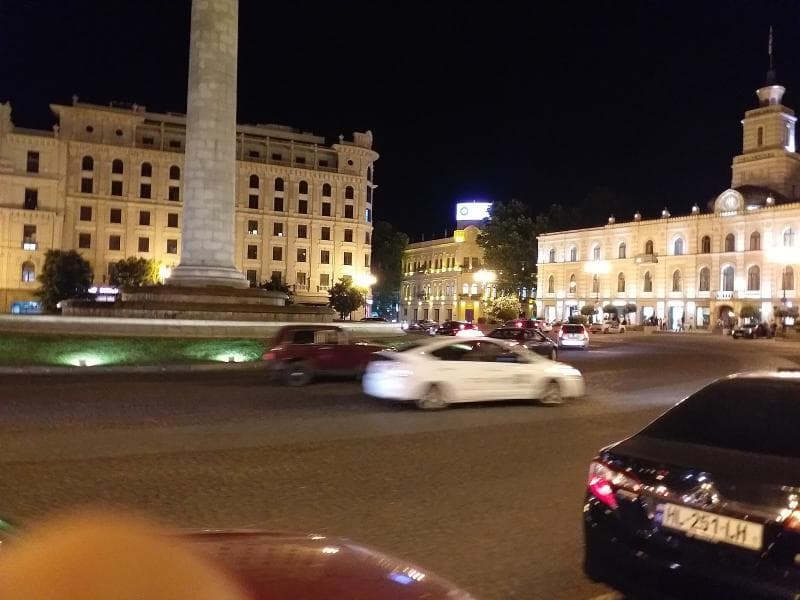
Explore the historic Tbilisi City Assembly building on Freedom Square, Tbilisi, Georgia – a symbol of governance and a witness to history.
Overview
At the bustling heart of Tbilisi, Georgia, lies Freedom Square, a place steeped in history and a vibrant focal point of the city. Within this expansive and iconic square stands a significant landmark: the Tbilisi City Assembly building. Often referred to as Tbilisi City Hall, this impressive structure is more than just an administrative center; it is a living testament to the city's enduring spirit and its journey through centuries of change. Its distinctive architecture immediately catches the eye, serving as a constant reminder of the historical events that have unfolded on the square it proudly overlooks.
As the seat of the Tbilisi Sakrebulo (City Council), the building plays a crucial role in the daily governance of Georgia's capital. While the square itself has witnessed countless transformations, the City Assembly building, with its grand façade, remains an anchor of local authority and cultural identity. For any traveler exploring Tbilisi, understanding this building's place within Freedom Square offers a deeper insight into the city's past and present.
History & Cultural Background
The history of Freedom Square, and by extension, the Government Buildings that have graced its perimeter, is a narrative of Georgia's broader struggle for identity and independence. Initially located outside the old city walls, the area was once known informally as 'Firewood Square' due to villagers selling timber there.
Over time, the square underwent numerous name changes, each reflecting a shift in political power or significant historical events. It was known as Pashkevich-Erivanskiy Square in the early 19th century, honoring a Russian general. Later, it became Theatre Square after a theatre and caravanserai were built nearby. During the brief period of the First Democratic Republic of Georgia in 1918, it was first named Freedom Square, a name that would later be reclaimed. Under Soviet rule, it was renamed several times, notably becoming Lenin Square, complete with a large statue of Vladimir Lenin at its center.
The current Tbilisi City Assembly building has its own rich history. Originally constructed in the 1830s during the Russian Empire, it served as the Chancellery of the Chief Policemaster and a police department. In 1878, a competition led to architect Paul Stern's design transforming it into the City Hall, giving it a distinctive neo-Moorish architectural style that still defines much of its exterior today. A clock tower and further expansions were added in the early 20th century.
What Makes It Special
The Tbilisi City Assembly building stands out not only for its historical significance but also for its architectural beauty. Its striking neo-Moorish design, characterized by intricate details and a prominent clock tower, makes it one of the most recognizable structures on Freedom Square. This unique architectural style, with its oriental influences blended with neoclassical elements, truly reflects Tbilisi's position at the crossroads of East and West.
More than its facade, the building represents the democratic governance of Tbilisi. It is where decisions regarding the city's administration, policies, and services are made, directly impacting the lives of its residents. Its continuous function as a hub of civic activity underscores its importance beyond mere aesthetics. Opposite the building, at the heart of Freedom Square, stands the powerful Freedom Monument, a golden statue of Saint George slaying the dragon, unveiled in 2006. This monument, dedicated to the freedom and independence of the Georgian nation, perfectly complements the City Assembly building's role as a symbol of self-governance.
Stories, Fun Facts & Local Details
Freedom Square has been the stage for some of Georgia's most dramatic historical moments, many directly involving the government presence around it. One of the most famous tales associated with the square dates back to 1907 when it was the site of a spectacular bank robbery orchestrated by Joseph Stalin, then a young revolutionary, to fund Bolshevik activities.
In more recent history, the square has been a crucible for modern Georgian nationhood. It was a primary gathering point for demonstrations that led to the April 9 tragedy in 1989, when a pro-independence rally was violently dispersed by Soviet troops, resulting in numerous casualties. The square also played a central role in the 2003 Rose Revolution, a bloodless protest that led to the resignation of Eduard Shevardnadze and marked a pivotal moment in Georgia's democratic transition. These events cemented Freedom Square's reputation as a powerful symbol of Georgian resilience and its unwavering pursuit of self-determination.
The City Assembly building itself has seen various incarnations, from police headquarters to its current role as the city's legislative body, reflecting the continuous evolution of Tbilisi's governance over two centuries. Legend even suggests a network of tunnels beneath the City Hall, purportedly used during past invasions, adding a touch of mystique to its already rich history.
Visitor Perspective
Visiting the Government Buildings at Freedom Square offers a unique opportunity to connect with the pulse of Tbilisi. While the Tbilisi City Assembly building functions as an active government office, its exterior is freely accessible and offers magnificent photo opportunities. Standing on Freedom Square, you are immersed in a dynamic atmosphere where history and contemporary city life seamlessly intertwine.
The square is a constant hive of activity, often hosting national celebrations, public gatherings, and concerts, making it not just a historical site but a vibrant public space. From here, you can easily venture into the charming Old Town with its winding streets and traditional balconies, or explore the sophisticated Rustaveli Avenue, lined with museums, theaters, and cafes, which begins at the eastern end of the square. Observing the grand architecture of the City Assembly and the powerful symbolism of the St. George monument provides a tangible sense of Georgia's past struggles and its aspirations for the future. It's a place where you don't just observe history; you feel its echo in the present.
Coordinates: 44.8015, 41.6934
View on Google Maps💬 How Travelers Describe This Place
Based on community votes
Must See
915Unique
873Photogenic
477Interesting
422Beautiful
53
Traveler Stories
Discover memorable experiences shared by travelers who have visited this place.
No traveler stories yet.
Be the first traveler to share what made this place memorable.

Tour
By
Spot
Discover amazing places around the world. Your journey starts here.
Explore
© 2026 TourBySpot. All rights reserved.