Gothic Façade
Vilnius, Lithuania
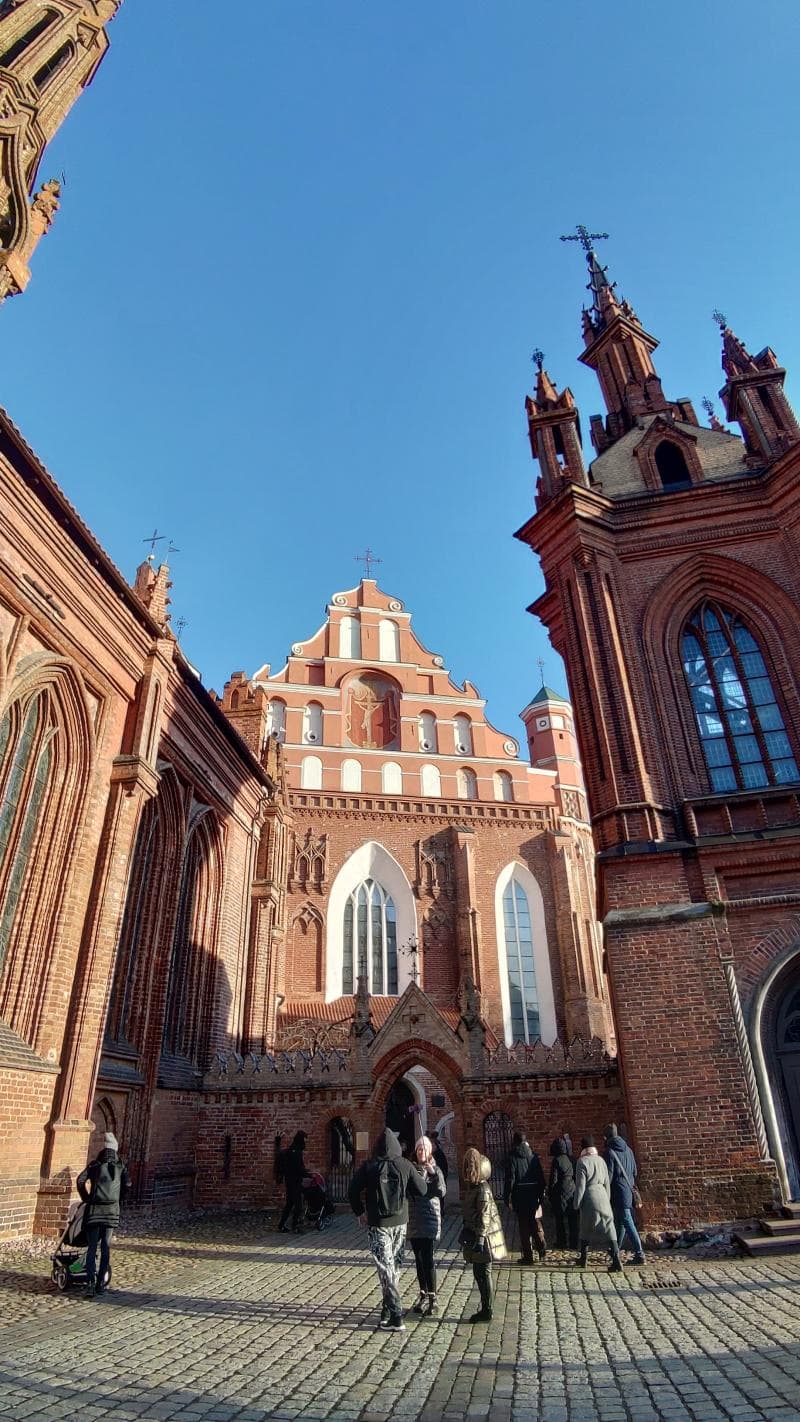
Discover the stunning Gothic Façade of St. Anne's Church in Vilnius, Lithuania. A masterpiece of Brick Gothic architecture.
Overview
Nestled within the enchanting Old Town of Vilnius, Lithuania, stands St. Anne’s Church, a breathtaking masterpiece renowned for its extraordinary Gothic Façade. This iconic structure is not merely a church but a prominent landmark that has played a pivotal role in the Old Town’s designation as a UNESCO World Heritage Site. Its intricate, flame-like brickwork captures the imagination, making it one of the most distinctive examples of Flamboyant Gothic architecture in Northern Europe. From afar, the façade presents a harmonious, almost delicate silhouette, appearing as if it were an elegant paper cutout against the Vilnius sky. Its enduring beauty has captivated visitors for centuries, serving as a testament to medieval craftsmanship and the rich cultural heritage of Lithuania.
History & Cultural Background
The story of St. Anne’s Church traces back to the late 14th century, with a wooden church reportedly built on this site for Anna, Grand Duchess of Lithuania, wife to Vytautas the Great. After a fire destroyed the earlier wooden structure, the present brick church was constructed between approximately 1495 and 1501, and consecrated in 1500 or 1501. Its construction is largely attributed to the initiative of Alexander Jagiellon, then Grand Duke of Lithuania. While the identity of the original architect remains a subject of historical debate, theories suggest masters like Michael Enkinger or Benedikt Rejt. This remarkable edifice has miraculously survived numerous fires and conflicts virtually unscathed, preserving its original architectural integrity over more than five centuries. It stands alongside the much larger Bernardine Church, forming a significant architectural ensemble that tells a complex story of religious and architectural evolution in Vilnius.
What Makes It Special
The Gothic Façade of St. Anne's Church is its undeniable crowning glory, a spectacle of architectural ingenuity. It is an outstanding example of both Flamboyant Gothic and Brick Gothic styles, uniquely adapting the characteristic fluid, flame-like forms into intricate brickwork. The church's distinctive red hue comes from the use of 33 different kinds of specially shaped clay bricks, each meticulously handcrafted to create the façade's detailed ornamentation. Visitors will observe a symmetrical and proportionate design dominated by sharp ogee arches, often interspersed with rectangular windows. Slender, polygonal pillars and pinnacles rise towards the sky, contributing to its airy and graceful appearance. Some art historians suggest that patterns from the Columns of Gediminas, an ancient Lithuanian symbol, are subtly echoed within the façade's complex design, adding a layer of national pride and historical resonance to its beauty.
Stories, Fun Facts & Local Details
Perhaps the most famous legend associated with St. Anne's Church involves Emperor Napoleon Bonaparte. During his 1812 campaign, upon seeing the church, he was allegedly so captivated by its beauty that he expressed a desire to carry it back to Paris 'in the palm of his hand'. While a romantic notion, historical accounts indicate that Napoleon's soldiers, unfortunately, used the church as a warehouse and burned its wooden interior during their retreat. Beyond this tale, closer inspection of the church reveals charming details. For instance, the iron church doors are said to bear St. Anne's monogram, 'SA' (Santa Anna), while the door handles are adorned with surprisingly mythical creatures, offering an unexpected and intriguing touch for the observant traveler. Another local detail, though perhaps less celebrated, points to two bricks on the church's wall that bear what some believe are the signs of the master craftsman and his apprentice, a small but meaningful nod to the hands that shaped this enduring structure.
Visitor Perspective
Approaching St. Anne’s Church, one is immediately struck by the sheer artistry of its façade, a visual symphony of red bricks and delicate forms. The exterior commands attention, inviting contemplation of the skill and vision of its medieval builders. It is a place that encourages slow observation, allowing the intricate details of the brickwork to reveal themselves. While the exterior is undoubtedly the main attraction for its Gothic beauty, the interior, though renovated in Baroque style in parts, offers a solemn and inviting atmosphere with its altarpiece and stained-glass windows. The church is generally open to the public, usually free of charge, though it is important to be mindful of service times and to dress modestly and behave respectfully as it is an active place of worship. Located in the heart of Vilnius' UNESCO-listed Old Town, a visit to St. Anne's Church seamlessly integrates with exploring nearby historical sites like the Bernardine Church and Monastery, and the charming cobblestone streets filled with local cafes and boutiques. It offers a profound sense of history and architectural wonder.
Coordinates: 25.29333, 54.68306
View on Google Maps💬 How Travelers Describe This Place
Based on community votes
Must See
1.0kPhotogenic
804Interesting
563Beautiful
100Unique
63
Traveler Stories
Discover memorable experiences shared by travelers who have visited this place.
No traveler stories yet.
Be the first traveler to share what made this place memorable.

Tour
By
Spot
Discover amazing places around the world. Your journey starts here.
Explore
© 2026 TourBySpot. All rights reserved.