Golden Pavilion
Hong Kong, China
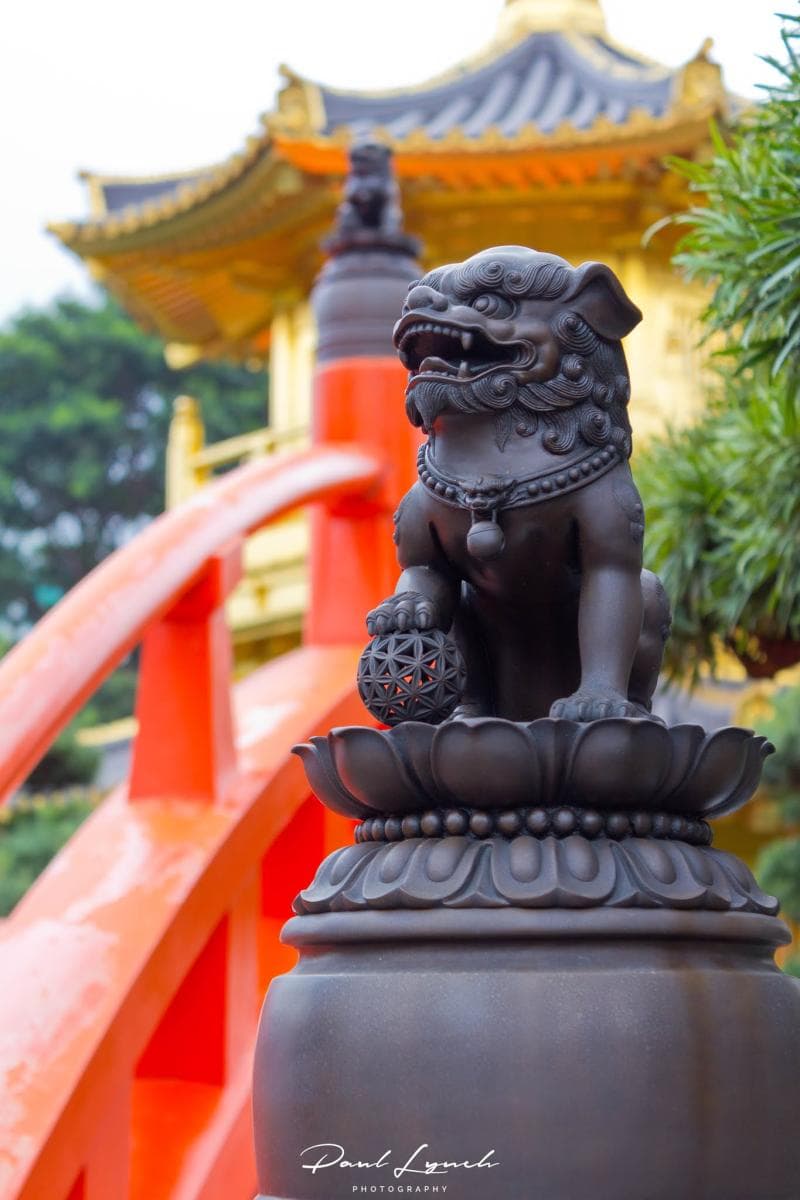

Discover the tranquil Golden Pavilion (Pavilion of Absolute Perfection) within Nan Lian Garden, adjacent to Chi Lin Nunnery in Hong Kong, China. Experience Tang Dynasty architecture and serene beauty.
Overview
Nestled amidst the bustling urban landscape of Hong Kong, the Chi Lin Nunnery and the exquisite Nan Lian Garden offer a serene escape, a meticulously crafted oasis embodying the tranquility and aesthetic principles of Tang Dynasty China. Within the verdant embrace of Nan Lian Garden lies a truly captivating sight often referred to as the 'Golden Pavilion'. Its formal name is the Pavilion of Absolute Perfection (圓滿閣), and it stands as the garden's iconic centerpiece, a beacon of peace and traditional Chinese architectural grandeur.
This resplendent octagonal pavilion, with its dazzling gilded roof, is strategically placed in the middle of an octagonal lotus pond, reflecting its golden hues in the still water. It is connected to the shore by two striking vermilion-red Zi Wu Bridges, creating a picturesque tableau that transports visitors far from the city's modern pulse. The entire complex, including the adjacent Chi Lin Nunnery, is a testament to classical Chinese design, built using traditional techniques that eschew modern materials, fostering an environment of profound calm and cultural immersion.
History & Cultural Background
The Chi Lin Nunnery, originally founded in 1934, underwent an extensive rebuilding in the 1990s, meticulously adhering to the architectural style of the Tang Dynasty (618–907 AD), a period considered a golden age for Chinese culture and art. This reconstruction involved skilled artisans and traditional techniques, notably the use of interlocking wooden frames without a single metal nail, making the nunnery complex one of the largest handmade wooden structures in the world.
Nan Lian Garden, opened to the public in 2006, was developed in collaboration with the Chi Lin Nunnery and the Hong Kong Government, designed as a classical Chinese garden inspired by Tang Dynasty principles. The design of the garden is modeled on the Jiangshouju Garden in Shanxi Province, which is one of the only surviving Tang Dynasty gardens in China, emphasizing the creation of miniature natural scenes. This adherence to historical accuracy and traditional craftsmanship imbues both the garden and the nunnery with a timeless quality, serving as a living connection to ancient Chinese Buddhist traditions and aesthetic philosophy.
What Makes It Special
What truly sets the 'Golden Pavilion' (Pavilion of Absolute Perfection) apart is its remarkable blend of architectural integrity and symbolic depth. Its gilded exterior and octagonal form are not merely decorative but deeply rooted in Buddhist symbolism, with its eight angles said to represent the 'eight merits of water' in Buddhism, bringing blessings to visitors. The pavilion's reflection in the clear waters of the lotus pond creates a stunning visual symmetry that enhances the sense of peace and harmony.
The meticulous design of Nan Lian Garden, where the pavilion resides, follows ancient Tang Dynasty gardening rules, utilizing techniques like 'borrowing views', 'concealing', and 'extending' to create a seemingly boundless and ever-changing landscape despite its urban setting. The absence of nails in the construction of the wooden structures throughout both the garden and the nunnery is a marvel of traditional engineering, demonstrating a profound understanding of natural materials and a philosophical connection between humanity and nature. This commitment to authenticity provides a rare opportunity to experience traditional Chinese architecture and landscape design in its purest form.
Stories, Fun Facts & Local Details
The creation of Nan Lian Garden is not just an architectural feat but a poetic expression of nature. Ancient Tang Dynasty poets, such as Lu Zongyuan, wrote about garden design principles emphasizing harmony with nature and human use. The entire complex is carefully insulated from the surrounding city noise by clever landscaping and noise barriers, allowing visitors to feel completely removed from the urban environment. It's often noted that once inside, the sounds of traffic disappear, replaced by the gentle rustle of leaves and the subtle murmur of water features.
The garden features over 60 species of evergreen trees, meticulously cloud-pruned, along with artfully arranged rocks that symbolize mountains, embodying virtues like stability and endurance. The golden hue of the Pavilion of Absolute Perfection is particularly striking at dawn or dusk, casting a magical glow over the water, offering exceptional photographic opportunities. The two red Zi Wu bridges leading to the pavilion are not just functional but also symbolic, with 'Zi' and 'Wu' relating to north and south, marking the garden's central meridian.
Visitor Perspective
Visiting the Golden Pavilion and its surrounding garden and nunnery is an immersive journey into tranquility. Travelers often describe feeling an immediate sense of calm upon entering, a stark contrast to the energetic pace of Hong Kong outside its walls. The designated one-way circular route through Nan Lian Garden guides visitors past its various attractions, ensuring a comprehensive and contemplative experience. From observing nuns offering fruit to Buddha inside the nunnery to enjoying the carefully curated views from various pavilions and bridges, every aspect is designed for quiet reflection.
The seamless connection between the Nan Lian Garden and the Chi Lin Nunnery via a pedestrian bridge encourages exploration of both, forming a unified cultural and spiritual precinct. The site is entirely free to enter, promoting accessibility to this cultural gem for everyone. It's a place where one can slow down, appreciate the artistry of traditional Chinese craftsmanship, and find a moment of peace and aesthetic beauty in the heart of Hong Kong.
Coordinates: 114.2052139, 22.340725
View on Google Maps💬 How Travelers Describe This Place
Based on community votes
Must See
556Photogenic
540Unique
470Interesting
410Beautiful
254
Traveler Stories
Discover memorable experiences shared by travelers who have visited this place.
No traveler stories yet.
Be the first traveler to share what made this place memorable.

Tour
By
Spot
Discover amazing places around the world. Your journey starts here.
Explore
© 2026 TourBySpot. All rights reserved.