Giant Carpet Hall
Ashgabat, Turkmenistan
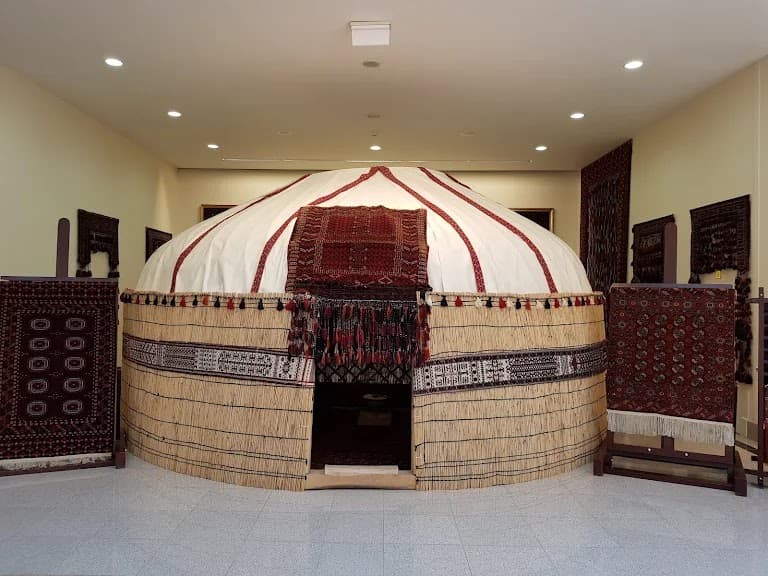
Explore Ashgabat, Turkmenistan's Turkmen Carpet Museum, home to the world's largest handwoven carpet and a stunning collection of tribal textiles. Discover rich history and cultural significance.
Overview
Deep within the heart of Ashgabat, Turkmenistan, lies the magnificent Turkmen Carpet Museum, a national treasure dedicated to the ancient and revered art of Turkmen carpet weaving. Established in 1993 and officially opened on October 24, 1994, the museum stands as a beacon for the preservation, revival, and creative development of this profound cultural heritage. It houses the world's largest collection of Turkmen carpets, featuring a rich array of pieces ranging from medieval times to the present day, including over one thousand carpets from the 18th and 19th centuries. The museum also proudly displays both the world's largest and smallest handwoven carpets, showcasing the incredible range and mastery of Turkmen craftsmanship.
History & Cultural Background
The history of Turkmen carpet weaving stretches back into antiquity, with archaeological evidence pointing to its existence as early as the 4th to 3rd centuries BC through discoveries of loom equipment and bronze carpet knives. The artistry captivated travelers centuries ago; Marco Polo, the renowned 13th-century Italian explorer, praised Turkmen carpets as 'the most delicate and beautiful in the world'. For the Turkmen people, carpets are far more than decorative items; they are a profound symbol of identity, home, harmony, and peace. A cherished proverb declares: 'Water is the life of a Turkmen, a horse is the wings of a Turkmen, a carpet is the soul of a Turkmen'. Each carpet tells a story, with intricate motifs known as 'guls' representing the unique cultural identity of different Turkmen tribes. These five primary gul patterns are so integral to the nation's identity that they are proudly featured on the national flag and emblem, symbolizing the unity and friendship of the Turkmen people. The traditional art of Turkmen carpet making was recognized globally for its cultural significance in 2019, when it was added to the UNESCO List of Intangible Cultural Heritage of Humanity.
What Makes It Special
The Turkmen Carpet Museum's grand exhibition space, often conceptualized as the 'Giant Carpet Hall', is home to truly awe-inspiring creations. The undisputed centerpiece is the world's largest handwoven carpet, recognized by Guinness World Records. This monumental carpet, measuring an astounding 301 square meters (14 by 21.2 meters) and weighing over one tonne, was meticulously crafted in 2001 to commemorate Turkmenistan's 10th anniversary of independence. Its creation was a labor of love, undertaken by 40 skilled carpetmakers over eight months. Another impressive exhibit is a colossal 193-square-meter Tekke carpet, woven in 1941 by 40 artisans, originally intended as a curtain for Moscow's Bolshoi Theatre. In striking contrast to these giants, the museum also displays the world's smallest handwoven carpet, a tiny piece designed as a keychain, measuring just 0.01 square meters. Visitors can also marvel at rare double-sided carpets, featuring distinct patterns on each face, showcasing advanced weaving techniques. Even the museum's architecture itself pays homage to this art form, designed to resemble a rolled-up carpet.
Stories, Fun Facts & Local Details
Beyond the impressive scale, every carpet at the museum whispers tales of nomadic life. Historically, carpets were not merely floor coverings; they adorned homes, horses, camels, and were essential household items for the traditionally nomadic Turkmen. The intricate geometric patterns, vibrant colors (often a deep crimson from madder root), and symbols on each carpet were a language understood by the community, conveying status, tribal affiliation, and even wishes for good fortune. Visitors can embark on a fascinating journey to learn how to 'read' these patterns, understanding the stories woven into the very fabric of Turkmen culture. The profound impact of Turkmen carpets even extended to Europe, with 14th-century Italian Renaissance painters like Lippo Mernmo and Nicolo Buonarocso depicting them in their works.
Visitor Perspective
A visit to the Turkmen Carpet Museum offers a deeply immersive cultural experience. Expert guides are available to lead tours in both English and Russian, providing insightful explanations into the history, techniques, and symbolism of the exhibits. The museum is generally open to the public from Monday to Saturday, allowing ample opportunity to explore its extensive collection. Located at Atamyrat Nyýazow şaýoly, 158, in Ashgabat, it serves as an indispensable destination for anyone seeking to understand the soul of Turkmenistan through its most cherished art form.
Coordinates: 58.37802, 37.92396
View on Google Maps💬 How Travelers Describe This Place
Based on community votes
Beautiful
951Unique
491Must See
427Interesting
414Photogenic
277
Traveler Stories
Discover memorable experiences shared by travelers who have visited this place.
No traveler stories yet.
Be the first traveler to share what made this place memorable.

Tour
By
Spot
Discover amazing places around the world. Your journey starts here.
Explore
© 2026 TourBySpot. All rights reserved.