Ghirardelli Square
San Francisco, United States
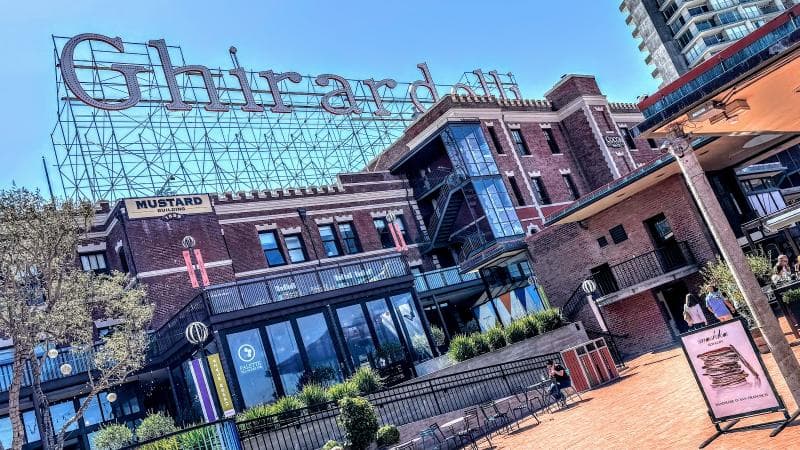
Explore Ghirardelli Square in San Francisco, United States – a historic chocolate factory transformed into a vibrant waterfront landmark.
Overview
Ghirardelli Square stands as a celebrated landmark in San Francisco, United States, gracefully nestled within the iconic Fisherman's Wharf neighborhood. It is a vibrant public square and a renowned shopping and dining complex, originally the site of the historic Ghirardelli Chocolate Company factory. Beyond its tempting aroma of chocolate, the square is globally recognized as one of the earliest and most successful examples of 'adaptive reuse' in the United States, where historical industrial buildings are thoughtfully repurposed for modern use without losing their charm. Its red-brick architecture and stunning views of the San Francisco Bay captivate visitors, offering a unique blend of historical significance and contemporary appeal.
History & Cultural Background
The story of Ghirardelli Square begins with Domenico Ghirardelli, an Italian confectioner born in Rapallo in 1817. His journey led him from apprenticeships in Genoa, to Uruguay, and then to Peru, where he established himself as a coffee and chocolate merchant. Drawn by the allure of the California Gold Rush, Ghirardelli arrived in San Francisco in 1849, inspired by his friend James Lick, who had carried 600 pounds of Ghirardelli's chocolate to the burgeoning city. After a brief stint as a gold prospector, Ghirardelli opened general stores, supplying miners with various goods, including his burgeoning chocolate creations. The Ghirardelli Chocolate Company was formally incorporated in 1852, becoming the third-oldest chocolate company in the United States.
In 1893, Domenico Ghirardelli acquired an entire city block, the former Pioneer Woolen Mills, which would become the company's headquarters and the site known today as Ghirardelli Square. For decades, this location was the heart of Ghirardelli's chocolate manufacturing. However, in the early 1960s, the chocolate production facilities were relocated to San Leandro. Faced with the threat of demolition, the site was purchased in 1962 by concerned San Franciscans William M. Roth and his mother, Lurline Matson Roth. They commissioned architects Lawrence Halprin and Wurster, Bernardi & Emmons to transform the old factory into a pioneering retail and dining complex. The reimagined Ghirardelli Square officially opened to the public in November 1964, setting a precedent for urban renewal and preservation. Its historical significance was further cemented when it was listed on the National Register of Historic Places in 1982.
What Makes It Special
Ghirardelli Square's distinctiveness lies in its seamless blend of a rich industrial past with a vibrant present. It serves as a living testament to architectural preservation, showcasing how historic structures can be revitalized to create dynamic public spaces. The iconic Ghirardelli sign, a glowing beacon against the brick buildings, draws visitors to explore its charming courtyards and passageways. Beyond its historical ambiance, the square offers breathtaking panoramic views of the San Francisco Bay, including Alcatraz Island and Angel Island, making it a picturesque spot for contemplation and photography.
As expected, chocolate remains at the heart of the Ghirardelli Square experience. Visitors can indulge in decadent ice cream sundaes and an array of chocolate treats at the various Ghirardelli chocolate shops, often accompanied by complimentary chocolate samples. However, the square is more than just chocolate; it hosts a diverse selection of specialty boutiques, artisanal shops, art galleries, and acclaimed restaurants offering various cuisines, from seafood to tacos. For those seeking entertainment, there's even an indoor miniature golf course featuring San Francisco landmarks.
Stories, Fun Facts & Local Details
The journey of Domenico Ghirardelli himself is a testament to the adventurous spirit of the 19th century, traversing continents to establish his chocolate empire in a booming Gold Rush town. Ghirardelli Square holds the distinction of being the nation's first successful 'adaptive reuse' project, a pioneering concept that transformed an old factory into a bustling marketplace and inspired similar preservation efforts across the country.
A notable feature is the giant GHIRARDELLI sign. Originally a bright, perhaps intrusive, landmark to some nearby residents, landscape architect Lawrence Halprin famously reoriented it to face the waterfront, making it a welcoming sight for ships entering the bay. Another artistic highlight is the 'Andrea' mermaid fountain, created by San Francisco sculptor Ruth Asawa in 1968. This whimsical bronze sculpture, depicting mermaids, frogs, and turtles, was initially met with some controversy from designers but was passionately defended by local women and remains a beloved part of the square today. Halprin's innovative design for the square also included custom-designed street furniture and, remarkably for its time, a wheelchair ramp, reflecting a forward-thinking approach to public space accessibility.
Visitor Perspective
Visiting Ghirardelli Square offers a delightful sensory experience, from the irresistible scent of chocolate wafting through the air to the stunning bay views. A typical visit might last between 30 to 45 minutes for a quick browse and a sweet treat, but it can easily extend to several hours if you choose to dine, explore shops, or soak in the surrounding atmosphere. While it can be a bustling and commercial area, its historical charm and picturesque setting make it a truly worthwhile stop.
Located at the western end of Fisherman's Wharf, Ghirardelli Square serves as an excellent starting point for exploring other nearby San Francisco attractions, including the Aquatic Park Historic District and its historic ships, the Cannery, and the famous Cable Car Museum. Parking is conveniently available in a garage located beneath the square, making access straightforward for travelers with vehicles. Many visitors particularly enjoy collecting a complimentary chocolate square, a sweet welcome that embodies the spirit of Ghirardelli's enduring legacy.
Coordinates: -122.42275, 37.80604
View on Google Maps💬 How Travelers Describe This Place
Based on community votes
Photogenic
989Must See
791Interesting
613Beautiful
514Unique
207
Traveler Stories
Discover memorable experiences shared by travelers who have visited this place.
No traveler stories yet.
Be the first traveler to share what made this place memorable.

Tour
By
Spot
Discover amazing places around the world. Your journey starts here.
Explore
© 2026 TourBySpot. All rights reserved.