Gazi Husrev-beg Mosque
Sarajevo, Bosnia and Herzegovina
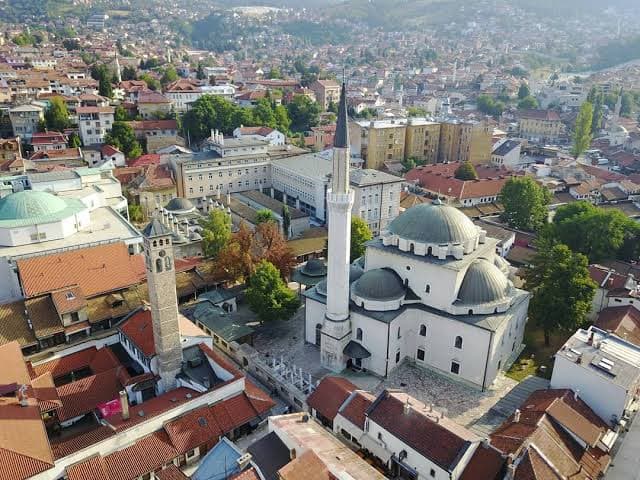
Explore Gazi Husrev-beg Mosque in Sarajevo, Bosnia and Herzegovina. Discover its rich history, stunning Ottoman architecture, and cultural significance.
Overview
Nestled in the vibrant heart of Baščaršija, Sarajevo's historic Ottoman-era bazaar, the Gazi Husrev-beg Mosque stands as a majestic testament to centuries of rich cultural and religious heritage. As the largest historical mosque in Bosnia and Herzegovina, and one of the most representative Ottoman structures in the Balkans, it is an indispensable landmark for any traveler to Sarajevo. Often simply referred to as the 'Bey's Mosque' by locals, it has served as Sarajevo's central congregational mosque since its construction in the 16th century, continually drawing both worshippers and curious visitors from around the globe. Its prominent location ensures it is almost impossible to miss, with its grand dome and towering minaret forming an integral part of the city's skyline and identity.
History & Cultural Background
The Gazi Husrev-beg Mosque was built between 1530 and 1531 as the central piece of a larger endowment, or 'waqf', established by Gazi Husrev-beg. Gazi Husrev-beg, a Bosnian-born Ottoman governor who served three times in the Sanjak of Bosnia during the 16th century, was a pivotal figure in transforming Sarajevo from a town into a thriving city. His extensive waqf included not only the mosque but also a madrasa (Islamic school), a library, a bezistan (vaulted marketplace), a hammam (public bath), and other charitable institutions, all of which were vital for the city's development and intellectual life. The mosque's architect is widely believed to be Acem Ali Tabrizi 'Alaüddin', an Ottoman master architect of Persian descent, though some scholars have speculated about the involvement of the famous Mimar Sinan as a young apprentice. Over its long history, the mosque has endured significant challenges. It suffered substantial damage during the 1992-1995 Siege of Sarajevo when it became a deliberate target due to its cultural significance. However, it was meticulously reconstructed and restored with international aid, particularly from Saudi Arabia and Turkey, with the most recent interior redesign completed in 2001-2002.
What Makes It Special
The Gazi Husrev-beg Mosque stands out for several remarkable reasons. Architecturally, it exemplifies the classical Ottoman style, characterized by its impressive main dome, which rises 26 meters, and its slender 47-meter minaret. The interior is adorned with intricate ornamentation, beautiful calligraphy, and floral arabesques, creating an atmosphere of serene spirituality. A fascinating historical detail is that the Gazi Husrev-beg Mosque was the first mosque in the world to receive electricity and electric illumination in 1898, during the Austro-Hungarian period. The mosque complex also features a unique clock tower (Sahat-kula) that displays time based on the lunar calendar, setting its midnight at sunset, which requires weekly adjustments to align with prayer times. In 2004, the mosque was declared a National Monument of Bosnia and Herzegovina, recognizing its profound historical and cultural value.
Stories, Fun Facts & Local Details
Gazi Husrev-beg's vision for Sarajevo was profound; he reportedly stated, 'I built the mosques, the bridges, the inns for travellers, and my vakuf is the finest that will ever be known. They will say, in the time to come, that Gazi Husref-beg turned Sarajevo village into Sarajevo town.' This enduring legacy is palpable throughout the city. A unique practice at the Gazi Husrev-beg Mosque is that the call to prayer, or 'adhan', is still delivered directly from the minaret, rather than being played from a recording, a rarity in modern mosques. Furthermore, the entire Qur'an ('hatma') is studied there every day. The mosque, alongside Sarajevo's Catholic and Orthodox cathedrals and Jewish synagogue, forms a powerful symbol of the city's multi-ethnic and multi-religious identity, often leading to Sarajevo being referred to as the 'European Jerusalem.' Within the mosque's tranquil courtyard, you will find a beautiful twelve-sided 'šadrvan' (ablution fountain), an integral part of Islamic tradition for ritual cleansing before prayer.
Visitor Perspective
Visiting the Gazi Husrev-beg Mosque offers a profound experience, connecting you with centuries of history and active spiritual life. As an active place of worship, visitors are requested to observe certain courtesies. Modest dress is essential; women should cover their heads and shoulders, and men should wear long pants and shirts with sleeves. Shoes must be removed before entering the main prayer hall, with designated areas usually available for storage. While photography is generally permitted in the courtyard and often inside the hall without flash during visiting hours, it is crucial to avoid photographing people during prayer out of respect. The mosque is open to visitors outside of designated prayer times, which are typically posted at the entrance. A small entrance fee is usually charged for non-worshippers, and English-speaking guides are often available to provide deeper insights into its history and traditions. Stepping into the mosque's serene courtyard provides a welcome respite from the bustling streets of Baščaršija, allowing for quiet reflection and appreciation of this magnificent architectural and cultural treasure.
Coordinates: 18.429389, 43.859147
View on Google Maps💬 How Travelers Describe This Place
Based on community votes
Unique
639Interesting
526Must See
421Beautiful
366Photogenic
181
Traveler Stories
Discover memorable experiences shared by travelers who have visited this place.
No traveler stories yet.
Be the first traveler to share what made this place memorable.

Tour
By
Spot
Discover amazing places around the world. Your journey starts here.
Explore
© 2026 TourBySpot. All rights reserved.