Gallery Halls
Podgorica, Montenegro
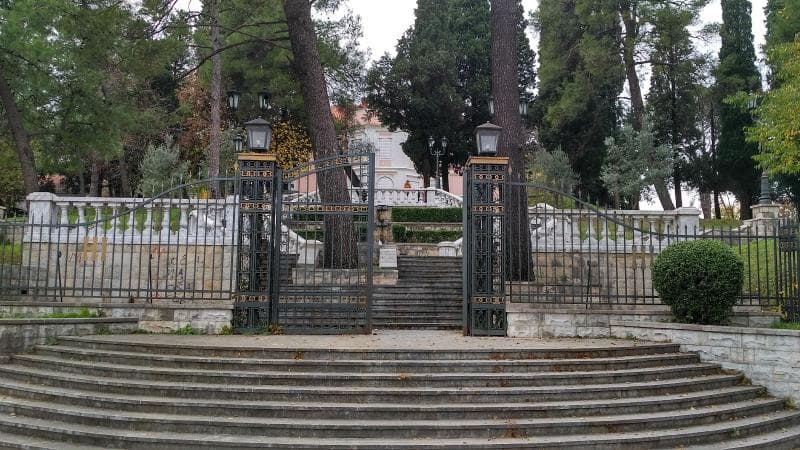
Explore the Gallery Halls at Petrović Castle in Podgorica, Montenegro, home to the Museum of Contemporary Art's diverse collections.
Overview
Nestled within the serene Kruševac park in Podgorica, Montenegro, the Gallery Halls of Petrović Castle offer a captivating journey through art and history. What was once a royal winter residence now serves as a vibrant hub for the Museum of Contemporary Art of Montenegro (MCAM). This elegant 19th-century palace, known also as Podgorica Royal Palace, has transformed its historic interiors into dynamic exhibition spaces, showcasing a rich collection of modern and contemporary art.
Visitors to the Gallery Halls can explore diverse artistic expressions from Montenegrin, Yugoslav, and international artists, making it a pivotal cultural institution in the country. The castle complex, a cultural monument, extends beyond the main palace to include the Perjanički Dom (House of the King's Guard), a charming chapel, and expansive landscaped gardens dotted with sculptures, offering a peaceful retreat from the city's bustle.
History & Cultural Background
The story of Petrović Castle begins in the late 19th century, specifically between 1891 and 1894, when King Nicholas I of Montenegro commissioned its construction as a winter residence for his son, Prince Mirko Petrović-Njegoš. This neoclassical edifice, built largely of stone, stood as a symbol of Montenegro's burgeoning nationhood, shortly after Podgorica's liberation from Ottoman control. Its historical significance runs deep, representing a key era in Montenegrin history.
Over the decades, the castle witnessed various transformations, serving even as a hospital during the Balkan Wars. A pivotal shift occurred in 1984 when the entire complex was revitalized and adapted into exhibition spaces. On September 1, 1984, it was inaugurated as the Gallery of Art of the Non-Aligned Countries 'Josip Broz Tito', a unique institution established under the auspices of the Non-Aligned Movement. This marked the beginning of its role as a significant artistic venue, eventually becoming the Center for Contemporary Art, which was later transformed into the Museum of Contemporary Art of Montenegro (MCAM) in 2023.
What Makes It Special
The Gallery Halls are truly special for their seamless blend of historical architecture and contemporary artistic narratives. Within the walls of this former royal residence, approximately 1,500 art pieces from nearly 60 countries are housed, offering an unparalleled collection that spans various artistic movements and media from the 20th century to the present day.
What stands out is the striking contrast between the opulent, historic setting of the castle and the modern, often thought-provoking, artworks displayed within. This juxtaposition creates a unique atmosphere where history informs contemporary expression. The complex also boasts an outdoor sculpture park nestled within the expansive landscaped grounds, allowing art to interact dynamically with nature. These spaces continuously host temporary exhibitions, cultural events, and educational programs, ensuring a vibrant and evolving artistic dialogue.
Stories, Fun Facts & Local Details
The Petrović Castle complex, affectionately known locally as 'Kruševac' or 'Dvorac Petrovića', carries the echoes of royal life and international diplomacy. It was not just a residence but a place where Montenegrin history unfolded, from King Nicholas I's personal family life to its later role on the international stage as a showcase for art from the Non-Aligned Movement. This unique heritage meant that the galleries once exhibited fascinating gifts given to Josip Broz Tito, including items from diverse nations across Asia and Africa, offering a rare glimpse into a particular era of global relations through art.
The grounds themselves tell a story; the Petrović Park, designed as a forest park with a botanical garden and music pavilion, highlights the late 19th-century aristocratic lifestyle and its appreciation for nature and culture. Even the main building's construction, overseen by Montenegrin engineer Marko Đukanović, speaks to local craftsmanship and pride. These details add layers of cultural richness to every corner of the castle, connecting visitors not just to art, but to Montenegro's historical journey.
Visitor Perspective
For the curious traveler, visiting the Gallery Halls offers more than just viewing art; it's an immersive cultural experience. The castle and its surrounding park provide a peaceful haven, allowing visitors to escape the urban rush and enjoy a tranquil environment. Many find joy in simply strolling through the beautiful gardens, admiring the outdoor sculptures, and soaking in the serene atmosphere before or after exploring the indoor exhibits.
Inside, the various rooms, particularly those on the second floor dedicated to the art gallery, invite contemplation and discovery. While the contemporary nature of the art may appeal to diverse tastes, the setting itself, within an elegant 19th-century villa, offers a compelling backdrop for artistic appreciation. Checking for special exhibitions or events before a visit can enhance the experience, ensuring you catch a thematic show or educational program. The blend of historical grandeur and modern artistic expression makes the Gallery Halls a compelling stop for anyone seeking to understand the cultural pulse of Podgorica.
Coordinates: 19.25028, 42.43778
View on Google Maps💬 How Travelers Describe This Place
Based on community votes
Interesting
521Beautiful
477Must See
422Unique
157Photogenic
28
Traveler Stories
Discover memorable experiences shared by travelers who have visited this place.
No traveler stories yet.
Be the first traveler to share what made this place memorable.

Tour
By
Spot
Discover amazing places around the world. Your journey starts here.
Explore
© 2026 TourBySpot. All rights reserved.