Fuxing Park
Shanghai, China
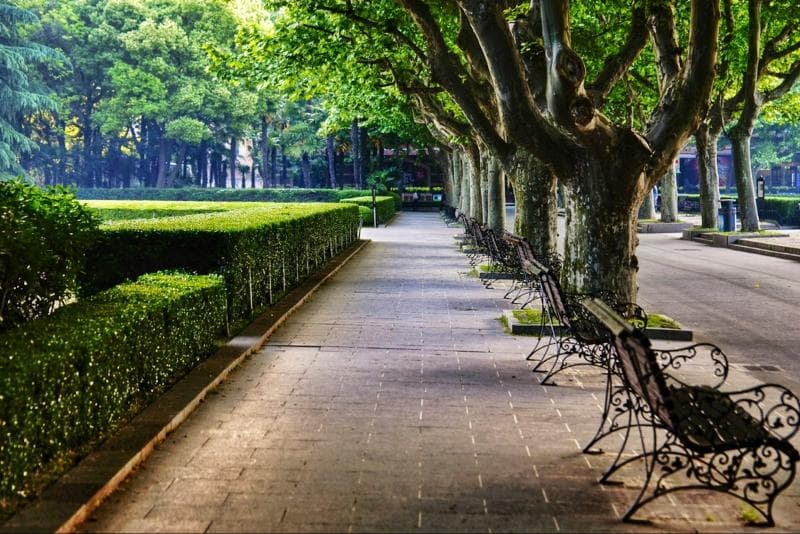
Discover Fuxing Park, a charming French-style garden in Shanghai, China's French Concession. Experience vibrant local culture and serene beauty.
Overview
Nestled within the historic French Concession in Shanghai, China, Fuxing Park offers a captivating blend of European elegance and vibrant local Chinese culture. Originally established by the French in 1909, this sprawling green space, approximately 10 hectares (24 acres) in size, was meticulously designed in a classic French style, featuring formal gardens, serene lakes, graceful fountains, and charming covered pavilions. Today, it stands as a cherished urban oasis, providing a peaceful retreat from the city's bustling pace while simultaneously serving as a lively hub for the daily rituals of local Shanghainese residents. It's a place where history quietly converges with the present, inviting visitors to observe and partake in its unique atmosphere.
History & Cultural Background
The story of Fuxing Park traces back much further than its French inception, with its origins rooted in a private garden from the Ming Dynasty, then known as Gu's Park. Its transformation began in 1909 when the French colonial administration laid out the park, designing it to mirror the grandeur of Parisian gardens such as the Jardin du Luxembourg. For a period, it was even a military encampment. During the Japanese occupation, it bore the name 'Daxing Park'. It was not until 1949, with the founding of the People's Republic of China, that the park received its current name, Fuxing Park, meaning 'revival', signifying a new era.
Historically, Fuxing Park holds significant cultural importance as it was one of Shanghai's first public parks, uniquely accessible to both foreign residents and Chinese citizens, albeit initially with unequal access. This early integration, despite its colonial undertones, eventually transformed the park into a symbol of unity. Its design remains a rare synthesis of Baroque symmetry and traditional Chinese landscaping principles, featuring a grand central axis flanked by formal flowerbeds, fountains, and alleys lined with towering plane trees that hark back to the French Concession era. The park's intricate network of irrigation channels still functions today, utilizing the original 20th-century French drainage system.
What Makes It Special
Fuxing Park's distinction lies in its harmonious blend of East and West, creating an atmosphere found nowhere else in Shanghai. Its French-style layout is evident in the wide, manicured paths, ornate flowerbeds, and classical water features like the colorful fountain at the center of the 'Mattress' flowerbed, which changes its design seasonally. The park boasts a rich botanical diversity, including a beautiful rose garden, a camellia flowerbed, an azalea flowerbed, and over 170 plant species, with an abundance of sycamores, buckeyes, maples, and ancient plane trees providing ample shade.
A notable landmark within the park is the Marx and Engels Sculpture Square, featuring a towering 6.4-meter (21 feet) bronze statue, weighing 70 tons, erected in 1985 to commemorate the 90th anniversary of Engels' death. This monument reflects a unique layer of Shanghai's complex history and ideological landscape. For families, the park also offers a children's playground complete with a carousel and bumper cars, making it a multifaceted destination for all ages.
Stories, Fun Facts & Local Details
To truly experience the soul of Fuxing Park, an early morning visit is a must. As dawn breaks, the park transforms into an open-air living room for local Shanghainese, a fascinating spectacle of daily life. You'll witness residents engaging in a wide array of activities: graceful tai chi and fan dancers, ballroom dancers moving to nostalgic melodies, competitive card and mahjong players, and various singing groups performing Chinese opera. It's common to see Mao-era suited men strolling with their caged birds, elderly couples walking hand-in-hand along tree-lined paths, and children flying kites or enjoying the playground.
The park is a tapestry of authentic moments, from individuals practicing calligraphy with water on stone pavements to others playing traditional musical instruments. This vibrant community spirit provides a stark contrast to the quiet contemplation the park offers at other times of the day. In the 1930s, the park's benches served as informal meeting points for intellectuals, poets, and even revolutionaries, adding another layer to its rich narrative.
Visitor Perspective
Fuxing Park offers visitors a rare opportunity to step into the heart of Shanghai's local culture, providing an intimate glimpse into the daily lives of its residents. Admission to the park is free, and it is generally open from early morning until evening (e.g., 5 AM to 9 PM, or 6 AM to 6 PM), making it accessible throughout the day.
The best time to visit for an immersive cultural experience is undoubtedly in the early morning, when the park is most alive with activity. It's a fantastic spot for people-watching and photography, capturing the interplay of natural beauty and human connection. With its central location within the former French Concession, Fuxing Park is easily reachable by various public transport options, including several metro lines and bus routes, making it a convenient and enriching stop on any Shanghai itinerary.
Coordinates: 121.472, 31.216
View on Google Maps💬 How Travelers Describe This Place
Based on community votes
Beautiful
996Interesting
673Must See
585Unique
143Photogenic
80
Traveler Stories
Discover memorable experiences shared by travelers who have visited this place.
No traveler stories yet.
Be the first traveler to share what made this place memorable.

Tour
By
Spot
Discover amazing places around the world. Your journey starts here.
Explore
© 2026 TourBySpot. All rights reserved.