Fortress Grounds
Bergen, Norway
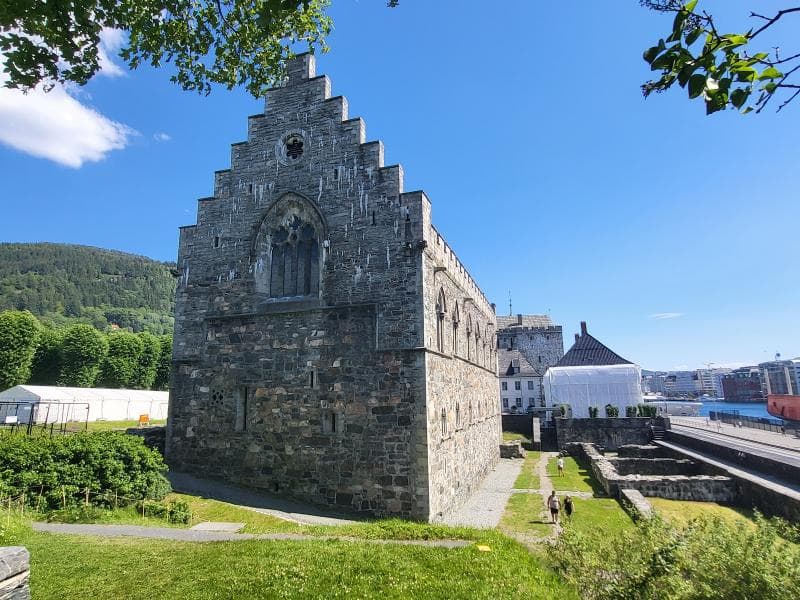
Explore the historic Fortress Grounds of Bergenhus in Bergen, Norway. Discover medieval halls, ancient towers, and scenic views at this preserved landmark.
Overview
The Fortress Grounds of Bergenhus, nestled in Bergen, Norway, offer a remarkable journey through centuries of Norwegian history right at the entrance of Bergen's bustling harbor. This sprawling area forms part of Bergenhus Fortress, recognized as one of Norway's oldest and most impeccably preserved fortifications. More than just a military stronghold, the Fortress Grounds today serve as a vibrant public park, a venue for cultural events, and a testament to Norway's royal and civic past. Visitors can freely explore the expansive green spaces, which encompass significant medieval structures like Håkon's Hall and the Rosenkrantz Tower, each telling its own compelling story of power, defense, and daily life.
The grounds themselves, known locally as 'Holmen' in medieval times, are characterized by their open lawns and picturesque views of the city and fjord. While entry to the outdoor areas is free, allowing for leisurely strolls and picnics, some of the historic buildings within the grounds have separate admission fees. It is a place where the echoes of ancient kings and medieval battles blend seamlessly with the sounds of modern-day concerts and recreational activities, offering a unique blend of historical contemplation and contemporary enjoyment.
History & Cultural Background
The history of Bergenhus Fortress, and by extension its grounds, stretches back well over 750 years. Its foundations are even older, believed to have been laid by King Olav Kyrre around 1070, who is regarded as the founder of Bergen. By the 13th century, Bergen had risen to become the capital of Norway, and the area now known as Bergenhus Fortress became the principal seat of the country's rulers. The first stone walls enclosing the area were erected in the 1240s, marking its transformation into a formidable fortress.
King Håkon Håkonsson, a powerful figure in Norwegian history, significantly developed the royal complex in the 13th century, commissioning the construction of the magnificent Håkon's Hall between 1247 and 1261. This grand hall was conceived as a royal residence and a venue for significant state events. Later, the Rosenkrantz Tower, built in the 1560s by Governor Erik Rosenkrantz, incorporated older medieval structures and served both as a residence and a vital defensive fortification. Throughout its existence, the fortress has served varied purposes: a royal residence, a symbol of monarchical power, a military base, and a defensive stronghold during conflicts. Its strategic importance shifted when Norway entered into union with Denmark, yet it continued as an administrative center for Western and Northern Norway for centuries.
During the Second World War, the fortress was notably used as a western headquarters by the German occupying force. A tragic explosion in Vågen in 1944 caused significant damage to some of its oldest buildings, which were meticulously restored in the post-war period, a process that continued until the mid-1960s.
What Makes It Special
What truly sets the Bergenhus Fortress Grounds apart is their unparalleled historical depth combined with their contemporary accessibility. As one of Norway's most enduring and well-preserved fortresses, it offers a tangible connection to the country's medieval past. The architectural grandeur of Håkon's Hall, with its Gothic elements, and the imposing presence of the Rosenkrantz Tower, providing breathtaking panoramic views of the harbor and city, are highlights for any visitor.
The 'Fortress Grounds' themselves are special for being an open, verdant expanse within a city center, seamlessly blending military history with public recreational space. It is a place where ancient stone walls frame lush lawns, creating a serene environment that encourages quiet contemplation of history. Unlike many historical sites that are strictly museums, Bergenhus Fortress Grounds actively serves multiple functions, hosting military personnel, offering space for public gatherings, and even transforming into a vibrant concert venue. This dynamic blend of past and present, military and civilian, educational and recreational, makes the grounds a living piece of history that continues to evolve.
Stories, Fun Facts & Local Details
The stones of Bergenhus Fortress Grounds whisper countless tales. Håkon's Hall, for instance, was notably completed for the wedding of King Håkon Håkonsson's son, Magnus Lagabøte, in 1261, underscoring its role in royal celebrations. The Rosenkrantz Tower wasn't just for defense; it was partly intended to impress, and perhaps 'scare,' the powerful Hanseatic merchants who dominated trade in Bergen, ensuring their compliance with Norwegian law. This highlights the interplay between royal authority and burgeoning mercantile power in medieval Bergen.
The fortress also played a direct role in international conflict, famously resisting an English attack during the Battle of Vågen in 1665, an event that saw a large Dutch flotilla seek refuge in Bergen's neutral harbor. More somber, yet equally significant, is the reinforced bunker built within the fortress grounds by Soviet prisoners of war during the German occupation in World War II. Today, the 'Lawn' (Plenen) within the grounds is a popular spot for locals and visitors alike to relax, enjoy a picnic, and soak in the atmosphere. The grounds also come alive with large-scale rock concerts at the Koengen area and other cultural events, proving that this ancient site is far from static, continually creating new memories and stories. Visitors can also find a statue of King Haakon 7, offering views over Vågen.
Visitor Perspective
Visiting the Fortress Grounds of Bergenhus offers a wonderfully accessible historical experience. While the grounds themselves are free to explore, providing ample space for walking and relaxation, specific attractions like Håkon's Hall and the Rosenkrantz Tower have entrance fees. These fees are well worth it for the opportunity to step inside these ancient structures and absorb their rich histories. Guided tours are often available, especially during the summer months, offering deeper insights into the fortress's past.
The Bergenhus Fortress Museum, located within the grounds, provides exhibitions detailing Bergen's military and cultural history, including the contribution of women to the armed forces and the resistance movement during World War II. For those with mobility considerations, the outdoor spaces and concert venues like Koengen are generally wheelchair accessible, though Håkon's Hall and the Rosenkrantz Tower present challenges due to their historical architecture. The fortress grounds are typically open daily, though hours may vary seasonally, and it's always advisable to check current timings. As a protected national cultural heritage site, visitors are kindly asked to respect the surroundings, dispose of waste properly, keep dogs on a leash, and note that activities like barbecuing and drone flying are prohibited, ensuring the preservation of this remarkable piece of Norwegian heritage for all to enjoy.
Coordinates: 5.3185, 60.4
View on Google Maps💬 How Travelers Describe This Place
Based on community votes
Beautiful
886Unique
564Must See
233Interesting
201Photogenic
121
Traveler Stories
Discover memorable experiences shared by travelers who have visited this place.
No traveler stories yet.
Be the first traveler to share what made this place memorable.

Tour
By
Spot
Discover amazing places around the world. Your journey starts here.
Explore
© 2026 TourBySpot. All rights reserved.