Fort Wood
New York, United States
Explore Fort Wood, the historic eleven-pointed star fort beneath the Statue of Liberty in New York, United States. Discover its military past.
Overview
Hidden in plain sight beneath one of the world's most recognizable symbols of freedom, the Statue of Liberty, lies Fort Wood. This historic sub-spot in New York, United States, is not merely a foundation but a significant historical site with its own compelling story. Constructed as a military fortification to protect New York Harbor, Fort Wood's distinctive eleven-pointed star shape now serves as the base for Lady Liberty's colossal pedestal. Many visitors to Liberty Island may not realize that they are standing atop a relic of early American defense, a testament to the nation's protective past before it became a beacon of welcome.
Today, Fort Wood is an integral part of the Statue of Liberty National Monument, offering a unique blend of military history and iconic American symbolism. Its granite walls, once bristling with cannons aimed at potential invaders, now quietly support the statue that gazes out over the Atlantic, greeting millions. Exploring Fort Wood provides a deeper understanding of the layers of history embedded within Liberty Island itself, revealing how a defensive structure transformed to underpin an enduring monument to liberty.
History & Cultural Background
The story of Fort Wood begins in the early 19th century, during a period of heightened international tension, particularly with Great Britain. Construction on the fort commenced around 1808 and was largely completed by 1811, strategically positioned on what was then known as Bedloe's Island. Its primary purpose was to safeguard New York City and its vital harbor from naval attacks, forming a critical link in the chain of coastal defenses established during that era and anticipating the War of 1812.
Initially, the fort was simply referred to as 'the fort' on Bedloe's Island. It was formally named Fort Wood in 1814, honoring Lieutenant Colonel Eleazer Derby Wood, a distinguished American Army engineer who tragically lost his life during the siege of Fort Erie in the War of 1812. Over the decades, Fort Wood served as an active army post, occupied by the War Department until 1937. However, by the late 19th century, advancements in military technology rendered many such coastal fortifications obsolete.
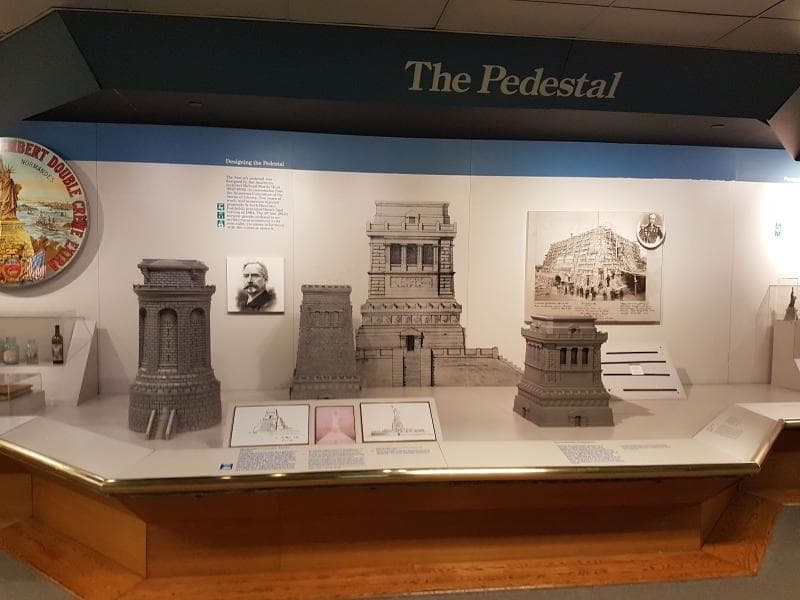
The fort's destiny changed dramatically when French sculptor Frédéric Auguste Bartholdi, the creator of the Statue of Liberty, found Bedloe's Island to be the ideal location for his monumental gift to the United States. Fort Wood's robust, star-shaped walls proved to be the perfect existing foundation for the statue's massive pedestal, leading to a remarkable repurposing of a military stronghold into the base of a global icon.
What Makes It Special
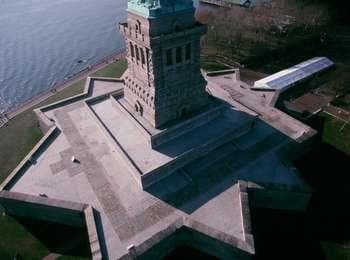
What truly sets Fort Wood apart is its striking eleven-pointed star design, a classic example of a 'star fort' or 'trace italienne' an architectural style introduced to North America by French military engineers in the 17th century. This intricate layout was not merely aesthetic; it was a highly effective defensive strategy allowing for interlocking fields of fire and minimizing blind spots against attacking forces.
The fort's enduring legacy is its extraordinary transformation into the base of the Statue of Liberty. Instead of being demolished, its formidable granite walls, sourced from Blue Hill, Maine, were ingeniously integrated into the new construction, providing an unparalleled example of adaptive reuse in American history. This blend of military engineering with monumental art creates a compelling narrative: a structure built for defense now underpins one of the world's most potent symbols of peace and liberty. The very foundation of what represents welcoming freedom was once a bulwark against perceived threats, offering a powerful metaphor for the nation's journey.
Stories, Fun Facts & Local Details
Fort Wood holds a myriad of fascinating stories within its historic walls. During the American Civil War, for instance, the fort briefly served as a holding place for Confederate prisoners, and also functioned as an ordnance depot and recruiting station. This period saw it play a small, but direct, role in one of America's most defining conflicts.
One of the most intriguing aspects is the sheer practicality that led to its selection as the Statue of Liberty's base. Faced with the immense challenge of constructing a foundation for such a colossal statue, the existing, solid structure of Fort Wood provided an immediate and stable solution, saving considerable time and expense. Engineers literally built the statue's pedestal within the confines of the fort's star-shaped walls, making it an integral, rather than a separate, component. It wasn't until 1956 that Bedloe's Island was officially renamed Liberty Island, further cementing its identity with the iconic statue it hosts.
Visitor Perspective
For the curious traveler, visiting Fort Wood today is an experience of discovery. While most come to marvel at the Statue of Liberty, the fort itself offers a tangible connection to an earlier chapter of American history. As you walk around the base of the Statue of Liberty's pedestal, you are, in fact, traversing the grounds and walls of Fort Wood.
Visitors with pedestal or crown reserve tickets gain deeper access, allowing them to explore areas within and around the fort that reveal its original military architecture and purpose. Seeing the sheer scale of the granite walls and understanding their original function provides a powerful context to Lady Liberty's presence. It encourages reflection on how history evolves, how symbols are built upon preceding foundations, and how a place can hold multiple layers of meaning—from defense to welcome, from fort to freedom's pedestal. It's a reminder that even the most celebrated symbols often have hidden histories waiting to be uncovered.
Coordinates: -74.044502, 40.689247
View on Google Maps💬 How Travelers Describe This Place
Based on community votes
Interesting
951Beautiful
748Must See
499Photogenic
491Unique
427
Traveler Stories
Discover memorable experiences shared by travelers who have visited this place.
No traveler stories yet.
Be the first traveler to share what made this place memorable.

Tour
By
Spot
Discover amazing places around the world. Your journey starts here.
Explore
© 2026 TourBySpot. All rights reserved.