Fort Saint-Jean Viewpoint
Marseille, France
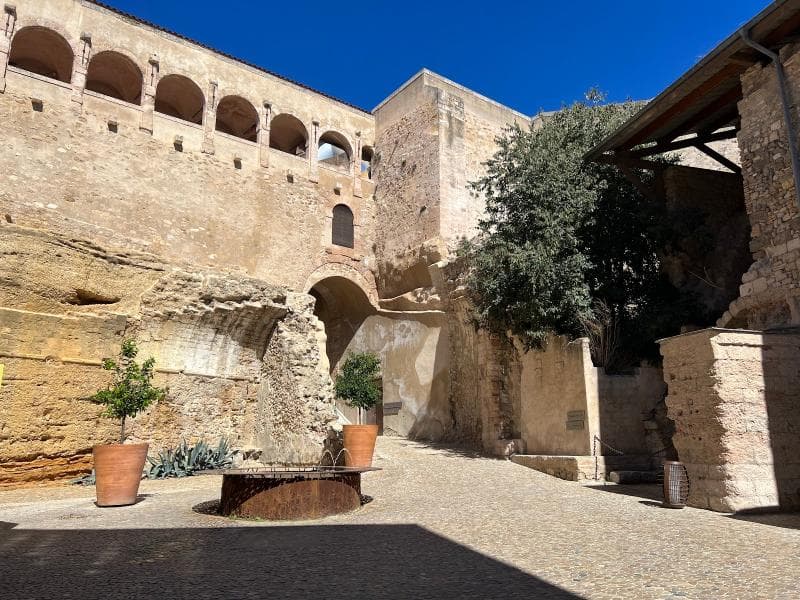
Explore Fort Saint-Jean Viewpoint in Marseille, France. Discover centuries of history, panoramic Old Port views, and its unique connection to the MuCEM.
Overview
Perched majestically at the entrance of the historic Old Port of Marseille, the Fort Saint-Jean Viewpoint offers a captivating journey through time, blending ancient defense with modern cultural vibrancy. This iconic fortification provides breathtaking panoramic vistas of the bustling Old Port, the azure Mediterranean Sea, and the dynamic cityscape that stretches towards the distant horizon. A testament to Marseille's enduring spirit, Fort Saint-Jean is not merely a historical relic but an integral part of the city's contemporary life, thoughtfully integrated with the Museum of European and Mediterranean Civilisations (MuCEM) and seamlessly connected to the historic Le Panier district via elegant footbridges. Visitors can wander its ancient ramparts, explore its tranquil gardens, and soak in centuries of history, with free access often available to its outdoor areas.
History & Cultural Background
The story of Fort Saint-Jean is deeply intertwined with Marseille's long and often tumultuous past, stretching back to its very origins as a strategic Mediterranean outpost. The site's foundations date to the 12th century, when it was occupied by a commandery of the Knights Hospitaller of Saint John of Jerusalem, serving as a crucial staging post for Crusaders en route to the Holy Land. This early complex included a chapel, a church, a hospital, and a commander's palace, completed by 1365. In the 15th century, King René further bolstered the port's defenses by commissioning the impressive square King René Tower between 1447 and 1453.
The fort's current form largely took shape under the reign of Louis XIV. Following a period of unrest and rebellion by the people of Marseille, the king ordered the construction of Fort Saint-Jean between 1668 and 1671, alongside its counterpart, Fort Saint-Nicolas, on the opposite side of the harbor. A notable and rather provocative detail of its construction was that its cannons were initially pointed inward, towards the city itself, a clear symbol of royal authority meant to keep the rebellious citizens in check, rather than solely for external maritime defense. To further assert control, a moat was dug by military engineer Vauban in 1679, physically separating the fort from the city. Throughout its history, Fort Saint-Jean maintained a military purpose until the French Revolution, after which it served as a state prison, even holding figures like Louis Philippe II. The fort suffered extensive damage in 1944 during World War II, when an accidental explosion occurred while it was being used as an ammunition depot by German forces. It was subsequently classified as a historic monument in 1964 and underwent significant restoration, culminating in its reimagining as a public and cultural space.
What Makes It Special
Fort Saint-Jean stands out for its remarkable synthesis of historical preservation and contemporary innovation. Its most distinctive feature is its seamless, architectural integration with the modern MuCEM, connected by two striking footbridges. One bridge gracefully spans the water, linking the fort to the museum's J4 building, while another connects it directly to the venerable Le Panier district, creating an accessible cultural promenade that bridges centuries. This thoughtful design allows visitors to traverse from ancient stone walls to sleek, contemporary exhibition spaces, offering a unique dialogue between past and present. The fort itself showcases an intriguing architectural timeline, with the formidable square King René Tower from the 15th century contrasting with the round Fanal Tower, a 17th-century addition that once served as a vital lighthouse, guiding ships into the Old Port. The ability to walk freely along its accessible ramparts and explore its beautifully maintained Mediterranean gardens provides visitors with an unparalleled perspective of Marseille's bustling harbor and the tranquil expanse of the sea.
Stories, Fun Facts & Local Details
The very name Fort Saint-Jean evokes its origins with the Knights Hospitaller of Saint John, a powerful medieval military order whose presence here predates the existing fortress. A fascinating historical anecdote concerns King Louis XIV's true intentions behind building the fort. He famously remarked that 'We noticed that the inhabitants of Marseille were extremely fond of nice fortresses. We wanted to have our own at the entrance to this great port,' subtly revealing his desire to control the city's rebellious spirit. This sentiment was underscored by the cannons that initially faced inward, symbolizing the monarch's direct assertion of power over the city rather than merely defending against external threats. The site's continuous occupation for over two millennia, starting from the ancient Greek settlement of Massalia around 600 BC, highlights its enduring strategic importance and its role as a witness to the unfolding history of Marseille. The Old Port itself, immediately adjacent to the fort, is legendary as the birthplace of Marseille, where Greek settlers first established their colony, Massalia. A stroll through the fort's grounds offers glimpses into these layers of history, connecting visitors to the rich tapestry of Mediterranean civilizations that have shaped this vibrant city.
Visitor Perspective
Visiting the Fort Saint-Jean Viewpoint is an immersive experience, inviting travelers to step back in time while enjoying modern amenities. The tranquil Mediterranean gardens within the fort provide a peaceful respite from the city's bustle, ideal for a leisurely stroll or quiet contemplation. From various vantage points along the ramparts, visitors are treated to incredible photo opportunities, capturing postcard-perfect views of the Old Port's colorful boats, the majestic Notre-Dame de la Garde basilica perched on its hill, and the endless blue of the Mediterranean Sea. Walking the Chemin de Ronde, or 'round path,' along the fort's battlements offers a unique 'aerial tour,' providing a palpable sense of the soldiers who once guarded these walls and allowing you to survey Marseille's 2,600 years of history. The fort is easily accessible, reachable by a pleasant walk from the Old Port or via various public transport options. A visit can be perfectly combined with an exploration of the adjacent MuCEM; a single ticket often grants access to all exhibitions within both the museum and the fort, offering a comprehensive cultural and historical outing.
Coordinates: 5.362433, 43.295387
View on Google Maps💬 How Travelers Describe This Place
Based on community votes
Beautiful
950Must See
858Unique
287Interesting
231Photogenic
86
Traveler Stories
Discover memorable experiences shared by travelers who have visited this place.
No traveler stories yet.
Be the first traveler to share what made this place memorable.

Tour
By
Spot
Discover amazing places around the world. Your journey starts here.
Explore
© 2026 TourBySpot. All rights reserved.