Fort Imperial
Dubrovnik, Croatia
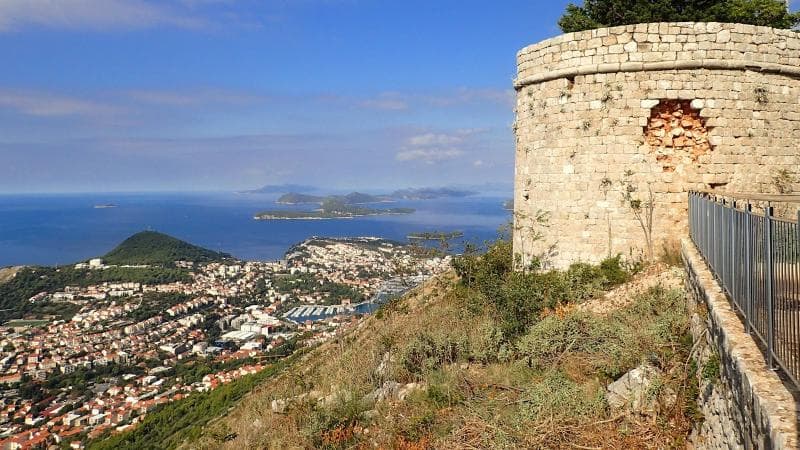
Explore Fort Imperial on Mount Srđ in Dubrovnik, Croatia. Discover its Napoleonic history, its pivotal role in the Homeland War, and panoramic views.
Overview
Perched majestically atop Mount Srđ, overlooking the historic city of Dubrovnik, Croatia, stands Fort Imperial. This robust limestone fortification, sitting at an elevation of over 400 meters, offers more than just breathtaking panoramic views; it is a profound historical landmark and a testament to the region's enduring spirit. Originally constructed by the French in the early 19th century, its strategic position has made it a silent observer and active participant in centuries of conflict and peace. Today, Fort Imperial primarily houses the Museum of the Croatian War of Independence, inviting travelers to delve into a pivotal chapter of modern Croatian history. Accessible via a scenic cable car ride, a challenging hike, or by road, the fort serves as a vital vantage point for capturing the beauty of Dubrovnik, the shimmering Adriatic Sea, and its surrounding islands.
History & Cultural Background
The story of Fort Imperial begins in the early 1800s, a period marked by Napoleonic expansion across Europe. The French, having seized control of Dubrovnik and dissolved its ancient republic, commenced construction of the fort in 1806, completing it by 1812. Its primary purpose was to establish a formidable defensive outpost against potential incursions from Russian and Montenegrin forces. The name 'Imperial' itself reflects this era of French occupation and its role as an imperial military stronghold.
Following Napoleon's defeat, the fort transitioned into Austrian hands in the mid-19th century, who further reinforced it as part of their coastal defense system against the Ottoman Empire. However, Fort Imperial's most significant and harrowing role unfolded during the Croatian War of Independence (1991-1995). During the brutal Siege of Dubrovnik, it became a critical frontline command post for the Croatian Army's 163rd Dubrovnik Brigade. On December 6, 1991, a particularly tragic day for the city, the fort sustained severe damage. Yet, the courageous Croatian defenders held their ground, preventing the city's capture from this crucial high point, thus making it a potent symbol of Dubrovnik's resilience.
What Makes It Special
What truly sets Fort Imperial apart is its unique blend of strategic significance, historical depth, and unparalleled natural beauty. Its commanding position atop Mount Srđ provides arguably the most comprehensive panoramic views of Dubrovnik's terracotta rooftops, the ancient city walls, the serene Adriatic, and a scattering of nearby islands like Lokrum. These vistas alone are reason enough to visit, offering a photographer's dream and a contemplative moment for any traveler.
Beyond the scenery, the fort houses the poignant Museum of the Croatian War of Independence (Homeland War Museum). This museum is not a polished, sanitized exhibit; it's a raw and powerful account of the 1991-1995 siege, presented through original documents, compelling photographs, actual weapons, and personal testimonies. Walking through the fort, visitors can still observe the visible scars of the 1991 conflict – bullet holes and shelling damage etched into its stone walls – serving as a tangible reminder of its tumultuous past and the city's heroic defense. It is a place where history feels incredibly close, allowing for a deep, emotional connection to Dubrovnik's recent struggles and triumphs.
Stories, Fun Facts & Local Details
Mount Srđ holds a fascinating connection to Dubrovnik's very name. Legend has it that the mountain was once densely forested with oak trees, known locally as 'dubrava'. This 'dubrava' is believed to be the origin of the city's name, 'Dubrovnik'.
A curious detail about Fort Imperial's construction is that it was reportedly completed on August 15, 1812 – Napoleon Bonaparte's birthday. This means that for a time, the fort and its imperial founder shared their birthdays, a small but intriguing historical footnote.
The iconic Dubrovnik Cable Car, a popular way to reach the fort, has its own story of resilience. The original cable car, inaugurated in 1969, was unfortunately destroyed during the 1991 siege. It lay inoperative for many years before being fully restored and reopened in 2010, once again offering visitors a swift and stunning ascent. On exceptionally clear days, the expansive views from Fort Imperial can stretch as far as 60 kilometers (37 miles), with some even claiming to catch a glimpse of the Italian coastline.
For those who choose to hike up Mount Srđ, the winding path offers more than just exercise; it's lined with Stations of the Cross, providing a spiritual dimension to the journey. It's also worth noting that while the fort area is safe, the ridge still bears evidence of wartime trenches, and travelers are advised to stick to marked paths due to areas that were previously mined.
Visitor Perspective
Visiting Fort Imperial is an experience that caters to various interests. Most travelers opt for the convenient Dubrovnik Cable Car, which whisks them to the summit in just about four minutes, offering spectacular aerial views of the Old Town and the coastline throughout the ride. For the more adventurous, a hike up the steep, but well-marked trail provides a rewarding physical challenge and a chance to immerse oneself in the natural beauty and historical path of the Stations of the Cross. Taxis and private cars also provide access to the fort.
Upon arrival, visitors are greeted not only by the fort itself but also by multiple viewing platforms designed for optimal photo opportunities. The 'Panorama Restaurant and Bar' offers a chance to dine with arguably the best view in Dubrovnik, while smaller cafes and souvenir shops provide refreshments and mementos. To fully appreciate the fort and its museum, dedicating at least 1.5 to 2.5 hours is recommended. For the best light, cooler temperatures, and fewer crowds, an early morning visit is often suggested, allowing you to witness the city awakening under a soft, golden glow.
Coordinates: 18.11056, 42.65
View on Google Maps💬 How Travelers Describe This Place
Based on community votes
Photogenic
674Must See
585Beautiful
546Interesting
503Unique
92
Traveler Stories
Discover memorable experiences shared by travelers who have visited this place.
No traveler stories yet.
Be the first traveler to share what made this place memorable.

Tour
By
Spot
Discover amazing places around the world. Your journey starts here.
Explore
© 2026 TourBySpot. All rights reserved.