Flag Ceremony Area
Jakarta, Indonesia
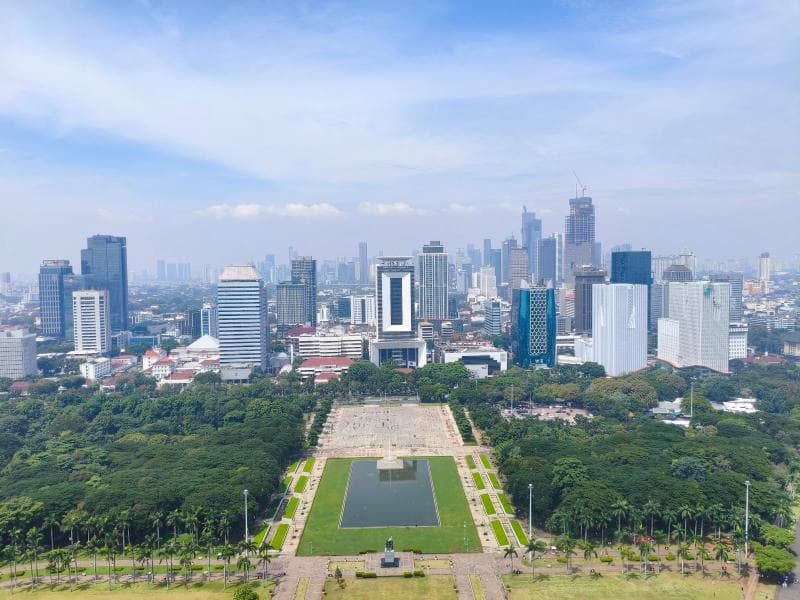
Explore the symbolic Flag Ceremony Area within Jakarta's National Monument (Monas), delving into Indonesia's fight for independence and national pride.
Overview
The National Monument, affectionately known as Monas, stands proudly in the heart of Jakarta, Indonesia, as a towering symbol of the nation's hard-won independence. More than just an obelisk, Monas serves as a profound historical landmark and a focal point for national pride. While grand ceremonial events often unfold in the vast Merdeka Square surrounding the monument, the essence of Indonesia's flag and its struggle for freedom is deeply enshrined within Monas itself, particularly in the Hall of Independence. This inner sanctum acts as a spiritual 'Flag Ceremony Area', preserving the sacred symbols that embody the nation's journey to sovereignty.
Standing at an impressive 132 meters, topped with a flame coated in gold leaf, Monas is an architectural representation of the Indonesian people's burning spirit of struggle. It is a place where history resonates through detailed dioramas and significant artifacts, offering visitors a profound connection to the nation's past and the sacrifices made for its freedom.
History & Cultural Background
The vision for Monas was conceived by Indonesia's first President, Sukarno, aiming to commemorate the struggle for independence from Dutch colonial rule and serve as a symbol of national identity, pride, and unity. Construction began on August 17, 1961, coinciding with the 16th anniversary of Indonesia's proclamation of independence, and it was officially opened to the public on July 12, 1975.
Central to Indonesia's independence narrative is its national flag, the Sang Saka Merah Putih (The Sacred Red and White). This flag was first raised on August 17, 1945, marking the pivotal moment of the Proclamation of Independence. While the original, now fragile flag is no longer displayed prominently, it holds immense symbolic power. Its spirit is maintained through ceremonies where it accompanies a replica flag, often flown in front of the Merdeka Palace, but its historical journey often begins or is acknowledged at Monas.
The Merdeka Square itself, where Monas is situated, has a rich historical tapestry, having been known by names like Koningsplein (King's Square) during the Dutch colonial era. It was designed to be an expansive public space for gatherings, celebrations, and national ceremonies, reinforcing Monas's role as a central part of Indonesia's identity.
What Makes It Special
What makes Monas and its surrounding ceremonial grounds truly special is its profound connection to Indonesia's national identity and the deep emotional resonance of its flag. The monument isn't just a structure; it's a living testament to a nation's birth. Inside the monument, the Hall of Independence serves as a hallowed space, housing several crucial symbols of sovereignty. Here, one can find a large Red and White flag, a tangible representation of the national banner. Alongside it is the original manuscript of the 1945 Proclamation of Independence, preserved in a gold-leafed glass case, and the bronze Garuda Pancasila, Indonesia's national emblem. These artifacts collectively transform this hall into a sacred 'Flag Ceremony Area' of remembrance and reverence.
The historical reliefs carved around the outer yard of Monas further narrate Indonesia's arduous journey, from ancient empires through colonialization, popular uprisings, and ultimately, the Proclamation of Independence. These visual stories provide a powerful backdrop to the living history encapsulated by the monument and its ceremonies.
Stories, Fun Facts & Local Details
Every August 17th, Indonesia celebrates its Independence Day, and Monas plays a significant role in these national commemorations. While the main flag-raising often takes place at the Presidential Palace, Monas frequently serves as a starting point or a symbolic venue for related events. For instance, in 2024, a replica of the national flag began its historic journey from Monas to Nusantara for the Independence Day ceremony, demonstrating the monument's enduring centrality.
The solemnity and pride of the flag-hoisting ceremonies are often carried out by the Paskibraka, the national flag-hoisting troop, whose precision and dedication add to the grandeur of these events. These ceremonies are not just official duties; they are powerful emotional experiences that unite the nation. Within Monas, a diorama depicting the Sumpah Pemuda Congress (Youth Pledge Congress) features young men and women with the red and white flag, illustrating a pivotal moment in Indonesian nationalism where youth organizations united for a common identity. This demonstrates how deeply ingrained the flag's symbolism is in the country's formative history.
The careful attention to symbolic numbers in Monas's design, such as the 17-meter height of the main runway, the 8 square meter museum area, and the 45-meter outer plaza, reflects the date of Indonesia's independence: August 17, 1945. These details are a constant, silent reminder of the nation's birth.
Visitor Perspective
For visitors, approaching the National Monument and its ceremonial grounds offers a unique opportunity to witness the spirit of Indonesia. While you may not always be present for a full-scale flag ceremony in Merdeka Square, the reverence for the flag is palpable throughout the monument. Inside, the Hall of Independence provides a quiet, reflective space. Standing before the original Proclamation text and the large national flag, one can truly grasp the weight of history and the sacrifices made for freedom. It’s an emotional experience to see these artifacts, understanding that they represent the very foundation of the Indonesian nation.
Exploring the reliefs around the monument, witnessing the historical narratives, and simply being in a space so central to Indonesia's identity offers a powerful connection to the country's past and its resilient spirit. Monas is not just a place to see; it's a place to feel the pulse of Indonesian patriotism and understand the profound significance of its national flag.
Coordinates: 106.8271, -6.1753
View on Google Maps💬 How Travelers Describe This Place
Based on community votes
Photogenic
996Must See
953Beautiful
658Interesting
585Unique
69
Traveler Stories
Discover memorable experiences shared by travelers who have visited this place.
No traveler stories yet.
Be the first traveler to share what made this place memorable.

Tour
By
Spot
Discover amazing places around the world. Your journey starts here.
Explore
© 2026 TourBySpot. All rights reserved.