Ferry Port Area
Split, Croatia
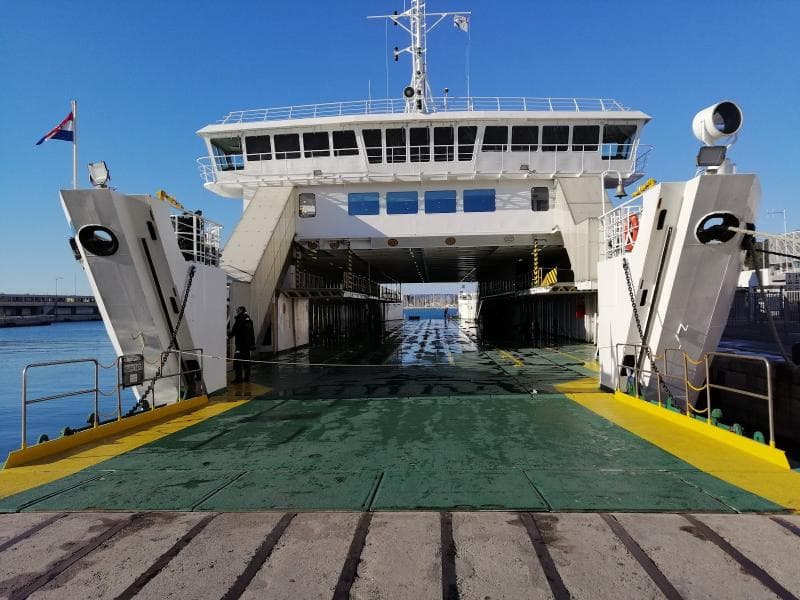
Explore Split's Ferry Port Area, a historic gateway within Riva Promenade, Croatia. Discover its ancient maritime history and vibrant local life.
Overview
Nestled at the eastern end of Split's iconic Riva Promenade, the Ferry Port Area serves as the pulsating heart of this historic Croatian city. More than just a transit point, it is a dynamic extension of Split's social and cultural life, where the ancient world meets the vibrant rhythm of the Adriatic. This area is not merely where ships dock; it is the vital connection between the mainland and the myriad Dalmatian islands, making it Croatia's largest passenger port and one of the busiest in the entire Mediterranean.
As you stand along the Riva, with its gleaming white marble underfoot, the Ferry Port seamlessly blends into the panorama. It acts as a grand maritime gateway, offering immediate access to the ancient city center and the UNESCO-protected Diocletian's Palace, which stands majestically just steps away. The constant ebb and flow of ferries, catamarans, and smaller boats create a captivating spectacle, reflecting centuries of maritime tradition that define Split's very essence.
History & Cultural Background
The history of Split's port is as old as the city itself, stretching back to the 4th century BC when Greek settlers from the island of Vis established a trading post called Aspalathos here. Its strategic location within a natural harbor, coupled with proximity to numerous islands and a fertile hinterland, ensured its early prosperity. The Romans later took control, further solidifying its importance, and through the Middle Ages, the port continued to thrive, developing extensive trade routes across the Adriatic and Mediterranean.
By the 16th century, under Venetian rule, Split's port became a central maritime hub for the Balkans, facilitating trade between the Ottoman Empire, India, and Persia with the Venetian Republic. However, its fortunes waned in the late 18th and early 19th centuries, partly due to the decline of the Ottoman Empire and the rise of other Adriatic ports like Rijeka. A resurgence began in the latter half of the 19th century, transforming Split into a crucial regional hub once more. After World War I, with other major Adriatic cities falling under Italian control, Split's port became the most significant in the newly formed Kingdom of Serbs, Croats, and Slovenes, further bolstered by new railway connections.
The Riva Promenade itself began to take its modern shape during the early 19th century under French rule, specifically Marshal Marmont's administration, through significant land reclamation efforts. This transformed the area from the sea lapping directly against Diocletian's Palace into the broad, public promenade we see today. Subsequent renovations, notably in 2005 and 2007, have refined its appearance with crisp white marble and rows of palm trees, yet its fundamental role as the city's meeting point has remained unchanged.
What Makes It Special
What truly makes the Ferry Port Area special is its unparalleled integration with Split's historical core and daily life. It is where ancient Roman grandeur, embodied by Diocletian's Palace, forms a breathtaking backdrop to the ceaseless activity of a modern port. This contrast creates a unique atmosphere unmatched by many other European waterfronts.
The area functions as Split's 'living room', a place where locals and visitors converge, creating a lively tapestry of human experience. The fusion of historical gravitas, bustling maritime commerce, and vibrant social interaction gives this sub-spot a distinct character. It's a place where history is not just observed but actively lived against the dramatic canvas of the Adriatic Sea and ancient stone.
Stories, Fun Facts & Local Details
The Riva, directly adjacent to the ferry port, is more than just a walkway; it is the city's emotional barometer. Here, you'll find fishermen casting lines, pensioners playing cards, families enjoying evening strolls, and young people gathering for coffee. The famous Split coffee culture is on full display here, with locals often spending an hour over a single espresso, soaking in the atmosphere.
This is where Split celebrates its triumphs, be it a football victory for the beloved Hajduk Split, national holidays, or major cultural events. It transforms from a bustling summer hub to a festive winter wonderland with Christmas markets, all against the same stunning coastal vista. The southern facade of Diocletian's Palace, with its rhythmic arches, originally served as the Emperor's loggia, allowing him to survey the sea – a lineage of observation and connection to the water that continues to this day.
Visitor Perspective
For many travelers, the Ferry Port Area and Riva Promenade are their first introduction to Split, offering an immediate immersion into the city's unique charm. Arriving by ferry places you directly within walking distance of Diocletian's Palace and the bustling old town, eliminating the need for lengthy transfers. This convenience makes it an ideal starting point for exploring Split or embarking on island-hopping adventures to destinations like Hvar, Brač, and Šolta.
The area is free and accessible 24 hours a day, inviting visitors to enjoy leisurely strolls, savor a coffee at one of the many cafes, or simply people-watch as the ferries come and go. Whether you're witnessing the golden light of sunrise over the harbor or the romantic glow of sunset, the Ferry Port Area provides an unforgettable and authentic experience of Split's living history and vibrant coastal culture. It's a place to pause, absorb, and feel the pulse of a city deeply connected to its maritime heritage.
Coordinates: 16.442156, 43.505079
View on Google Maps💬 How Travelers Describe This Place
Based on community votes
Beautiful
965Photogenic
743Unique
629Must See
184Interesting
176
Traveler Stories
Discover memorable experiences shared by travelers who have visited this place.
No traveler stories yet.
Be the first traveler to share what made this place memorable.

Tour
By
Spot
Discover amazing places around the world. Your journey starts here.
Explore
© 2026 TourBySpot. All rights reserved.