Façade Murals
Basel, Switzerland
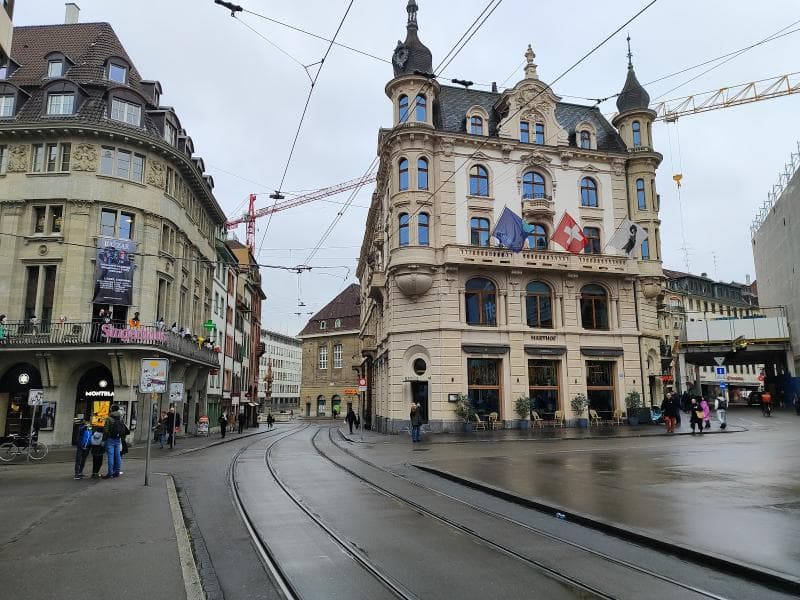
Explore the vibrant Façade Murals of Basel Town Hall in Basel, Switzerland. Discover centuries of history, art, and civic pride depicted on its iconic red walls.
Overview
Dominating Basel's historic Marktplatz, the Basel Town Hall, known locally as the Rathaus or 'Roothus', stands as a vibrant testament to centuries of civic life and artistic expression. This striking red sandstone building is not merely an administrative center for the Basel government and parliament; it is an open-air gallery adorned with intricate façade murals and frescoes that narrate Basel's rich history and cultural identity. Its architecture, a captivating blend of Late Gothic, Renaissance, Neo-Gothic, and Neo-Renaissance styles, provides a dramatic backdrop to the daily bustling market, drawing visitors into a story told through art and stone. The façade murals, in particular, are a highlight, featuring an array of symbolic figures, coats of arms, and historical scenes that make the building a focal point of the city.
History & Cultural Background
The origins of the Basel Town Hall trace back to the 14th century, though the current magnificent structure was primarily erected between 1504 and 1514. This significant construction period followed Basel's pivotal decision in 1501 to join the Swiss Confederation, an event that necessitated a grander, more symbolic seat of government. The building was designed to celebrate this new era of independence and alliance. Over the centuries, the Rathaus underwent several expansions and renovations, notably in the 17th century and a substantial rebuilding between 1898 and 1904. These periods introduced additional wings, the prominent tower, and further artistic embellishments, seamlessly integrating newer styles with the existing Gothic framework. Each architectural phase and artistic addition served to reinforce the building's role as a symbol of Basel's resilience, civic pride, and its enduring political and cultural journey within Switzerland.
What Makes It Special
The Façade Murals of the Basel Town Hall are an extraordinary fusion of art and history, transforming the building's exterior into a grand narrative. The vibrant red sandstone facade is embellished with playful frescoes and intricate carvings that capture the eye and imagination. Among the most notable artistic contributions are those from the 17th century by Hans Bock the Elder, who adorned the façade with painted trompe l'oeil effects, and the courtyard arcades with his masterpieces. The exterior also proudly displays the coats of arms of the Swiss cantons, symbolizing Basel's membership in the Confederation since 1501. Allegorical figures, such as Justitia, the Roman goddess of Justice, are prominently featured, often depicted with her sword and scales, reminding observers of the city's commitment to law and order. While Hans Holbein the Younger's 16th-century frescoes in the Great Council Chamber are now lost, fragments and original drawings are preserved, testament to the building's long artistic heritage. The murals in the inner courtyard further elaborate on themes of law, justice, biblical scenes, and significant historical figures, making the Town Hall a living museum.
Stories, Fun Facts & Local Details
The Basel Town Hall is rich with fascinating stories and local details. The building's vivid red color is not merely aesthetic; it traditionally symbolized the strength and independence of Basel as a free imperial city. Locals affectionately refer to it as the 'Roothus', a charming pun as 'Rathaus' means council house in German, but 'Roothus' also sounds like 'red house' in the local Basel dialect, perfectly describing its appearance. On the balcony, visitors can spot an inscription that reads: 'Hie Schweiz – Grund und Boden' ('Here Switzerland – Land and Soil'), a poignant reminder of Basel's declaration upon joining the Swiss Confederation. Inside the picturesque courtyard, a statue of Lucius Munatius Plancus, the founder of the Roman colony Augusta Raurica, stands as a prominent figure, though his direct role in founding Basel itself is often debated. Another intriguing detail in the courtyard is a mural depicting two Great Danes, added during the 1900s renovation, which cleverly symbolizes the protection of the state treasury. These artistic elements, from the ceremonial entry mural by Emil Schill inside the Grand Council Chamber to the subtle carvings, offer layers of meaning that reflect Basel's intricate past and present.
Visitor Perspective
For any curious traveler, a visit to the Basel Town Hall offers a captivating journey through history and art. Located at the heart of the bustling Marktplatz, the building's radiant red facade is an unmissable landmark. From the outside, the detailed murals, coats of arms, and sculptural elements invite contemplation and reveal stories at every glance. The inner courtyard, which is freely accessible to the public, provides a more intimate encounter with its richly painted arcades and statues. It's a peaceful oasis where one can admire the historical frescoes and feel the echoes of centuries of civic life. While the exterior and courtyard can be explored independently, deeper insights into the building's administrative and historical functions, particularly its interior council chambers and additional murals, are often available through guided tours. These tours provide context to the intricate artworks and the significant events that shaped Basel, offering a unique perspective on the city's heritage. The Basel Town Hall truly acts as an open book, inviting visitors to delve into its pages of artistic and political evolution.
Coordinates: 7.5881, 47.5581
View on Google Maps💬 How Travelers Describe This Place
Based on community votes
Beautiful
683Unique
642Photogenic
597Interesting
300Must See
88
Traveler Stories
Discover memorable experiences shared by travelers who have visited this place.
No traveler stories yet.
Be the first traveler to share what made this place memorable.

Tour
By
Spot
Discover amazing places around the world. Your journey starts here.
Explore
© 2026 TourBySpot. All rights reserved.