Exterior Square
Odessa, Ukraine
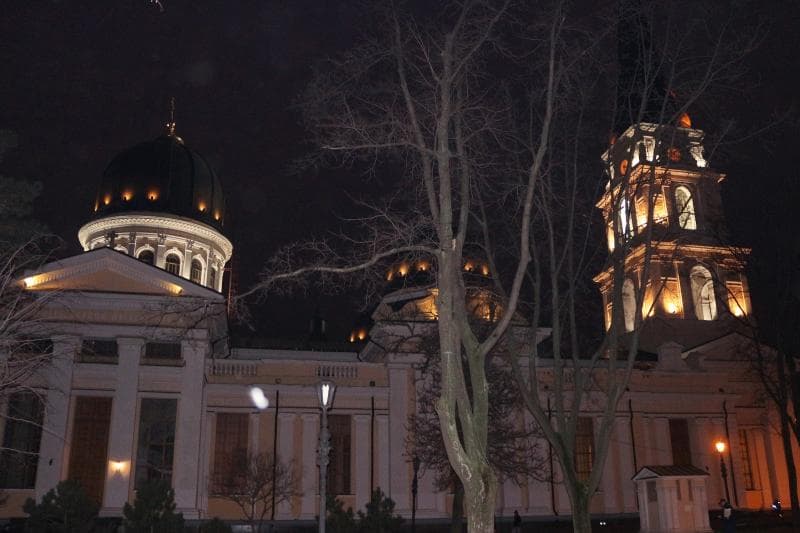
Discover Soborna Square, the historic 'Exterior Square' of Spaso-Preobrazhensky Cathedral in Odessa, Ukraine. Explore its rich history, monuments, and vibrant local art scene.
Overview
As you approach the majestic Spaso-Preobrazhensky Cathedral in Odessa, Ukraine, your journey naturally leads you to the expansive and historic space often referred to as the 'Exterior Square,' officially known as Soborna Square, or Cathedral Square. This vibrant public plaza serves as the spiritual and cultural heart of the city, embracing the grandeur of the cathedral itself. Locals affectionately call it 'Soborka,' highlighting its deep integration into the daily life and identity of Odessa. It is a place where history resonates, architectural beauty captivates, and the pulse of the city can truly be felt.
History & Cultural Background
The story of Soborna Square is inextricably linked with that of the Spaso-Preobrazhensky Cathedral, dating back to Odessa's very foundation in 1794. The first stone for what would become the city's largest Orthodox cathedral was laid in 1795, and the square developed around it as the central hub for both civic and religious festivals. Over the centuries, the cathedral grew significantly, reflecting Odessa's own rapid development. However, a dark chapter unfolded in 1936 when the original cathedral was tragically demolished during the Soviet campaign against religious institutions. For decades, the square lay empty of its monumental centerpiece, marked only by flower beds and a fountain.
A new era of hope began with Ukraine's independence. Reconstruction of the cathedral, based on historical references, commenced in 1999, and by 2003-2005, the magnificent structure once again graced Soborna Square, restoring its architectural presence and spiritual significance. Sadly, the cathedral's resilience was tested again in July 2023, when it suffered severe damage from a missile strike. Restoration efforts began almost immediately, underscoring its enduring importance as a symbol of Odessa's spirit and endurance.
What Makes It Special
Soborna Square is special not only for being the grand setting of the Spaso-Preobrazhensky Cathedral but also for its rich tapestry of historical monuments and lively atmosphere. Dominating the northern part of the square is the Monument to Count Vorontsov, unveiled in 1863, honoring a key figure in Odessa's development. The square is also known for its historic fountains, including the 'Filatov's Vase,' which has a unique story of relocation.
Beyond its fixed landmarks, Soborna Square transforms into a dynamic space. It is renowned for its informal 'art market,' where local artists display and sell paintings and handmade souvenirs, offering visitors a chance to take home a piece of Odessa's creative soul. The blend of religious solemnity, historical commemoration, and artistic expression makes this exterior square a truly unique and engaging place.
Stories, Fun Facts & Local Details
Delving into the details reveals the heart of Soborna Square. The original Spaso-Preobrazhensky Cathedral was so vast it could accommodate an astonishing 12,000 people. Inside the reconstructed cathedral, the bells are electronically controlled and capable of playing 99 different melodies, filling the square with diverse carillons throughout the day.
A fascinating local mystery surrounds the cathedral's foundations: scientists have long pondered why there is no groundwater beneath the cathedral within Soborna Square, despite its presence in other parts of the city center. Moreover, the square has always been a gathering point, serving as a venue for major city events, and even historically, a place for football fans to congregate. The remains of Prince Mikhail Semyonovich Vorontsov and his wife, prominent figures in Odessa's history, were reburied in the reconstructed cathedral, connecting the past directly to the present.
Visitor Perspective
For any curious traveler, a visit to Soborna Square offers a profound experience. Standing in this grand square, you are enveloped by a blend of Odessa's tumultuous history, unwavering faith, and striking architectural beauty. The magnificent neoclassical design of the Spaso-Preobrazhensky Cathedral, with its grand central dome and harmonious facade, creates a focal point that draws the eye and inspires awe.
The peaceful ambiance invites contemplation, while the vibrant art market provides an opportunity for cultural immersion and souvenir hunting. It is an essential stop for understanding the city's past, observing its present resilience, and appreciating the community spirit that thrives around this central landmark. Whether you're admiring the architecture, exploring the local crafts, or simply soaking in the atmosphere, Soborna Square offers a compelling and memorable encounter with the soul of Odessa.
Coordinates: 30.7310417, 46.4831778
View on Google Maps💬 How Travelers Describe This Place
Based on community votes
Unique
923Photogenic
672Must See
587Beautiful
309Interesting
232
Traveler Stories
Discover memorable experiences shared by travelers who have visited this place.
No traveler stories yet.
Be the first traveler to share what made this place memorable.

Tour
By
Spot
Discover amazing places around the world. Your journey starts here.
Explore
© 2026 TourBySpot. All rights reserved.