Event Area
Ljubljana, Slovenia
Overview
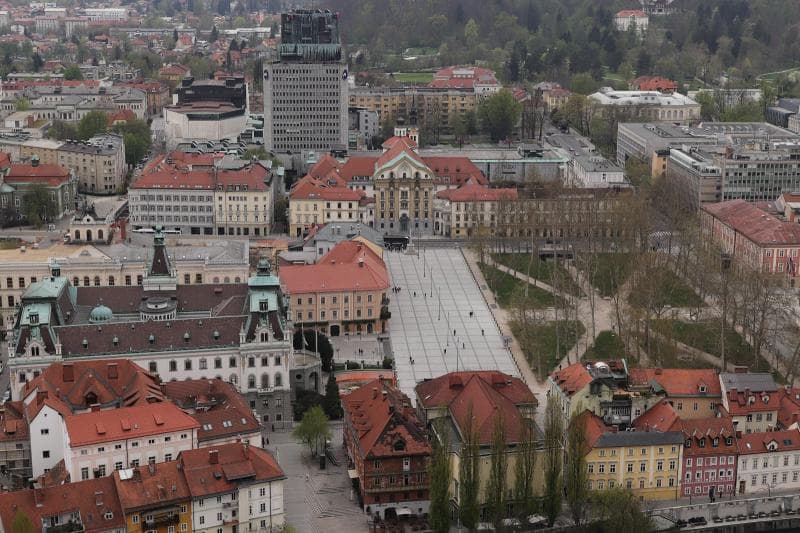
Congress Square, known locally as Kongresni trg, stands as Ljubljana's expansive and historically resonant public space, centrally located in the heart of Slovenia's capital. More than just a square, it serves as a dynamic 'Event Area' where the city's pulse can truly be felt, hosting significant national celebrations, cultural festivals, and everyday gatherings. Its prominent position and rich past make it a vital point of interest for any traveler wishing to delve into Ljubljana's essence. At its core lies the serene Zvezda Park, or Star Park, a green oasis that offers both respite and a connection to ancient history, surrounded by magnificent architectural landmarks.
This iconic square is a place where history has been forged, from grand declarations of independence to vibrant open-air concerts. It beautifully blends historical gravitas with contemporary urban life, inviting visitors to explore its depths and discover the layers of stories it holds. The name itself, 'Congress Square', hints at its foundational event, setting the stage for centuries of pivotal moments that have shaped the nation.
History & Cultural Background
The origins of Congress Square date back to 1821 when it was established for the Congress of the Holy Alliance, a significant diplomatic conference involving Austria, Prussia, and Russia aimed at bringing peace to Europe after the Napoleonic Wars. This pivotal event lent the square its enduring name. Before this, the site held the ruins of a medieval Capuchin monastery.
Throughout Slovenian history, Congress Square has played an immensely symbolic role. It was here, on October 29, 1918, that independence from Austro-Hungarian rule and the establishment of the State of Slovenes, Croats, and Serbs were proclaimed during a mass demonstration. Decades later, in June 1988, it became the venue for Slovenia's first free mass demonstration, demanding the release of imprisoned journalists, a moment that ignited the 'Slovenian spring'. This movement culminated in the declaration of Slovenia's independence on June 25, 1991, with celebrations and speeches echoing across the square.
The square underwent a significant renovation in the late 1930s by the renowned Slovenian architect Jože Plečnik, whose distinctive touch integrated green spaces and urban design elements. His work on Congress Square, including Zvezda Park, is now part of the UNESCO World Heritage List, showcasing its architectural and historical value. The square has also seen several name changes throughout the communist period, being known as Revolution Square and Liberation Square, before its original name was restored in 1990.
What Makes It Special
Congress Square is distinguished by its seamless integration of historical depth, architectural grandeur, and its continuing function as a central gathering place. The square is framed by a remarkable collection of landmark buildings. To the south stands the imposing University of Ljubljana building, once the Provincial Palace where the 1821 congress took place. Nearby, the Slovenian Philharmonic building, established in 1701, is one of the world's oldest music institutions. The early Baroque Ursuline Church of the Holy Trinity and the neoclassical Casino building also contribute to the square's impressive architectural ensemble.
At its heart lies Zvezda Park, a beautifully designed green space with paths radiating in a star pattern, a feature that gives the park its name (Zvezda means 'star' in Slovene). Within the park, visitors can discover archaeological remnants of the ancient Roman city of Emona, including a replica of the gilded bronze statue of an Emonan patrician. Other notable features include a music pavilion, an anchor monument placed in 1954 to symbolize Slovenia's access to the sea, and a replica of the Holy Trinity Column. The square's ability to host a variety of public functions, from quiet contemplation in the park to large-scale events, truly sets it apart.
Stories, Fun Facts & Local Details
The name 'Zvezda' for the central park literally translates to 'star', a direct reference to the star-shaped layout of its paths. This charming detail adds a touch of whimsical storytelling to its historical gravitas.
A fascinating tale from its past involves the statue of Austrian field marshal Joseph Radetzky. Originally erected in 1852, a life-size statue of Radetzky stood in the square. However, after the collapse of Austria-Hungary, 'patriots' removed it on the night of December 30, 1918, reflecting the changing political landscape. An earlier bust statue of Radetzky was also removed, deemed 'not decent enough' by city councillors. These incidents highlight the square's role as a canvas for political expression and historical shifts.
Beyond its historical markers, Congress Square frequently transforms into a vibrant hub for contemporary life. During summer evenings, it becomes an open-air cinema, offering free screenings under the stars. In late December, it buzzes with open-air concerts leading up to New Year's Eve, drawing crowds for festive celebrations. These events demonstrate the square's enduring appeal as a communal gathering place, weaving new stories into its ancient fabric.
Underneath the historic surface of the square and Zvezda Park lies a modern underground car park, a testament to how Ljubljana subtly integrates modern infrastructure while preserving its heritage. This blend of old and new makes the square both a historical treasure and a functional urban space.
Visitor Perspective
For the curious traveler, Congress Square serves as an invaluable window into Ljubljana's soul. It's a place where one can quietly observe the ebb and flow of daily life, from students hurrying to the university to locals enjoying a stroll through Zvezda Park. The panoramic views of Ljubljana Castle rising majestically above the city are particularly captivating from the square, offering a perfect photo opportunity and a sense of the city's picturesque setting.
Visiting the square offers a moment of reflection amidst the city's vibrant energy. You can sit on a bench, enjoy the shade of the trees in Zvezda Park, and soak in the atmosphere of a place that has witnessed centuries of significant events. It's an ideal starting point for exploring Ljubljana's historical and tourist center, with many major landmarks just a short walk away. The square's accessibility, whether by foot from the city center or via public transport, makes it a convenient and essential stop on any Ljubljana itinerary, providing a peaceful escape while remaining at the heart of the action.
Coordinates: 14.5022, 46.0502
View on Google Maps💬 How Travelers Describe This Place
Based on community votes
Must See
1.0kPhotogenic
804Interesting
563Beautiful
100Unique
63
Traveler Stories
Discover memorable experiences shared by travelers who have visited this place.
No traveler stories yet.
Be the first traveler to share what made this place memorable.

Tour
By
Spot
Discover amazing places around the world. Your journey starts here.
Explore
© 2026 TourBySpot. All rights reserved.