Entrance Plaza
Dushanbe, Tajikistan
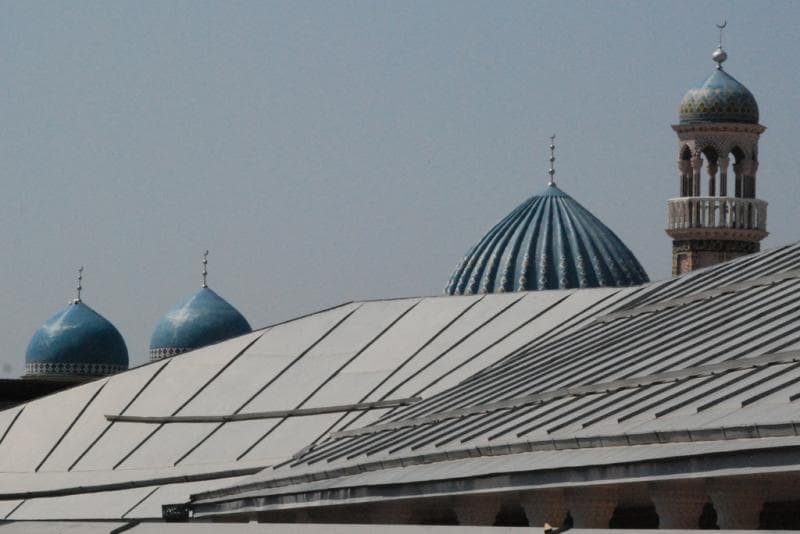
Explore the Entrance Plaza of Haji Yakoub Mosque in Dushanbe, Tajikistan, a grand gateway showcasing rich Tajik history and architectural beauty.
Overview
The Entrance Plaza of the Haji Yakoub Mosque in Dushanbe, Tajikistan, serves as a significant initial encounter for visitors to one of the capital city’s most historically rich and spiritually vital landmarks. While not a sprawling, separate square, this meticulously designed entrance area acts as a grand and welcoming gateway, setting the tone for the profound heritage and architectural splendor within. It is the threshold where the urban bustle gives way to an atmosphere of reverence and contemplation. The Haji Yakoub Mosque itself is celebrated as one of Dushanbe’s oldest and most important places of worship, a resilient symbol of Islamic culture in the region, known for its capacity to accommodate up to 3,000 people.
This mosque complex is not only a place for prayer but also houses the Islamic Centre of the Republic of Tajikistan and, historically, the Islamic Institute of Tajikistan, underscoring its role as a hub for Islamic education and community life.
History & Cultural Background
The origins of the Haji Yakoub Mosque trace back approximately 200 years, with its foundation laid in 1856 through the financial support of Haji Yakub, a respected Tajik religious leader, and his mother. The main building, largely as it stands today, was constructed between 1905 and 1910, reflecting a long tradition of Islamic learning and worship. Over the years, the mosque has undergone several renovations and expansions, transforming it into the grand structure visible today. Notable restoration work occurred after 1991, particularly in the late 1990s, including a renovation in 1996 by Master Said Ikrom of Konibodom.
The mosque’s history is deeply intertwined with Tajikistan’s broader cultural and political narrative. It has endured periods of significant change, including Soviet-era restrictions on religious practices, yet it has remained a focal point for Islamic culture, embodying the resilience and continuity of the local Muslim community.
What Makes It Special
The Entrance Plaza of the Haji Yakoub Mosque is particularly notable for its distinctive craftsmanship and design, which immediately captivates visitors. The central entrance is described as 'arrow-shaped and relatively magnificent,' conveying a sense of grandeur and purpose. This architectural feature is a testament to traditional Tajik national artistic traditions, which are evident in both the overall layout and the intricate decorations of the facades.
As you approach, the entrance subtly guides you toward the main structure, offering a glimpse into the mosque’s traditional Central Asian Islamic architecture. This style is characterized by intricate details such as carved wooden columns, patterned mosaic (mo’araq) tiles, and elegant calligraphic bands, creating a visually inspiring environment. The entrance area serves as a vital transitional space, preparing visitors for the serene atmosphere and historical narratives housed within the mosque’s walls.
Stories, Fun Facts & Local Details
The Haji Yakoub Mosque is named after Haji Yakub, a Tajik religious leader. This connection deepens its spiritual and historical significance, linking it to the personal narratives and movements within the region. While Dushanbe has witnessed the construction of much larger mosques in recent times, the Haji Yakoub Mosque retains a unique and cherished historical role, standing as an unchanging benchmark and an oasis of tranquility in a rapidly developing city.
Local traditions of cult construction and art were extensively used in the mosque’s design, from its general plan to the decoration of its walls, facades, minaret, and interiors. The original building featured a single-column square with a porch, showcasing carved and decorated elements, including a curved column and four cross-shaped pillars. This rich artistic detail tells a story of generations of local artisans and their dedication.
Visitor Perspective
Approaching the Haji Yakoub Mosque’s Entrance Plaza offers travelers an immediate sense of entering a sacred and historically significant space. The detailed carvings and the magnificent central entrance invite contemplation even before one steps inside. This area effectively transitions visitors from the bustling city streets into a realm of peace and reflection.
To ensure a respectful and enriching visit, modesty in dress is essential; women are generally expected to wear a headscarf, especially when entering prayer areas. The mosque is accessible year-round, but visiting during religious festivals like Eid al-Fitr or Eid al-Adha can offer a vibrant cultural experience with festive decorations and celebrations. It is advisable to visit outside of designated prayer times to fully appreciate the architecture and serene ambiance without causing disturbance. Once inside the complex, the spacious courtyard and clean ablution facilities further contribute to a comfortable and welcoming environment.
Coordinates: 68.78406, 38.58783
View on Google Maps💬 How Travelers Describe This Place
Based on community votes
Must See
898Photogenic
853Beautiful
667Interesting
190Unique
32
Traveler Stories
Discover memorable experiences shared by travelers who have visited this place.
No traveler stories yet.
Be the first traveler to share what made this place memorable.

Tour
By
Spot
Discover amazing places around the world. Your journey starts here.
Explore
© 2026 TourBySpot. All rights reserved.