Elizabetes Street
Riga, Latvia
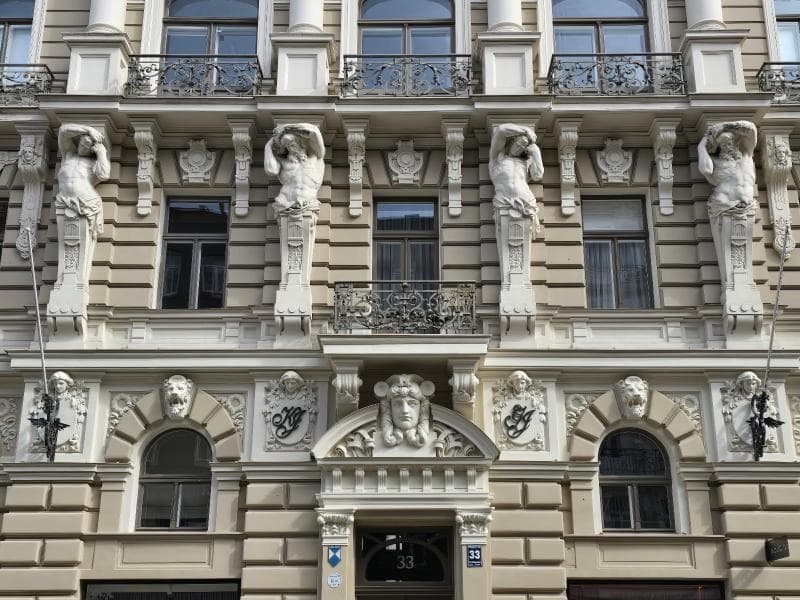
Discover Elizabetes Street in Riga, Latvia, a UNESCO-listed open-air gallery showcasing the world's highest concentration of stunning Art Nouveau architecture.
Overview
Step into a living masterpiece along Elizabetes Street, nestled within the renowned Art Nouveau District of Riga, Latvia. This iconic thoroughfare is not merely a street; it is an open-air gallery, showcasing an unparalleled concentration of Art Nouveau architecture that has earned Riga the distinction of having the highest number of buildings in this style globally. As you wander its length, you'll discover a vibrant tapestry of intricate facades, expressive sculptures, and a rich historical narrative embedded in every stone. Elizabetes Street, alongside its famous neighbour Alberta Street, forms the heart of Riga's UNESCO World Heritage-listed Art Nouveau ensemble, inviting curious travellers to marvel at its turn-of-the-century splendor.
The Art Nouveau district, often referred to as the 'Quiet Centre', is situated just a short walk from Riga's Old Town, offering a striking contrast to the medieval charm with its early 20th-century elegance. It's a place where every building tells a story of innovation, prosperity, and artistic ambition, making it an essential destination for anyone seeking to understand the unique cultural heritage of this Baltic capital.
History & Cultural Background
The flourishing of Art Nouveau in Riga, particularly along streets like Elizabetes, coincided with a period of rapid economic growth and urbanization between 1904 and 1914. At the turn of the 20th century, Riga was a significant port city within the Russian Empire, experiencing a building boom that saw its population nearly double. This era of prosperity fueled an architectural revolution, with approximately 40% of the city centre's buildings being constructed in the Art Nouveau style during this time.
Architects, both local Latvian talents and others, embraced the new aesthetic with enthusiasm. Figures like Mikhail Eisenstein, the father of the celebrated filmmaker Sergei Eisenstein, became prominent, known for his flamboyant and decorative contributions. His buildings, including those at Elizabetes 10a and 10b, exemplify the more ornate and expressive variations of the style, characterized by dramatic masks, flowing lines, and vibrant color palettes. Other architects like Konstantīns Pēkšēns also left their mark, often blending symmetry with Latvian native symbolism. The sheer volume and artistic diversity of these constructions led to Riga's Art Nouveau district being recognized as a UNESCO World Heritage site, preserving this unique chapter of early 20th-century architectural innovation.
What Makes It Special
What sets Elizabetes Street apart is not just the quantity of Art Nouveau buildings, but the incredible diversity of substyles represented within a single stretch. You can observe the evolution of Art Nouveau, from the initial 'Eclectic' phase blending with existing architectural trends, to the 'Decorative' style emphasizing ornamental details, and the 'Romantic' Art Nouveau that fused modern shapes with historical motifs. Latvian National Romanticism also thrived here, incorporating traditional Latvian elements into the designs.
The street is particularly famous for the creations of Mikhail Eisenstein, whose buildings are often considered among the most photographed in Riga. His work at Elizabetes 10b, built in 1903, is a stunning example, featuring an extraordinarily colorful facade adorned with a rich composition of masks, peacocks, sculptural elements, geometrical figures, and bright blue tiles. This building, along with others by Eisenstein such as Elizabetes 10a, stands as a testament to his imaginative and bold approach, which often drew inspiration from various historical architectural styles. The intricate details, often hidden above windows, around balconies, and high on the facades, encourage visitors to look closely and discover the artistry in every corner.
Stories, Fun Facts & Local Details
Elizabetes Street and the wider Art Nouveau district emerged during a period known as Riga's 'golden age', a time of immense optimism and cultural awakening before the disruptions of World War I and Soviet rule. Imagine the bustling street at the turn of the century, filled with horse-drawn carriages and elegantly dressed pedestrians, all living amidst these newly erected architectural marvels that symbolized modernity and progress.
A fun detail to note is how Riga's architects, like Eisenstein, often used the facades as canvases for artistic expression, incorporating whimsical animals, mythical creatures, and stylized flora into the stonework. These elements weren't just decorative; they often carried symbolic meanings, adding layers of interpretation for the observant viewer. For instance, the building at Elizabetes 33 represents one of Mikhail Eisenstein's earliest attempts at Art Nouveau, showcasing his developing style with its richly decorated facade. Similarly, Elizabetes 23, designed according to sketches by Berlin architect Albert Giseke, boasts elegant decorative reliefs and well-preserved entrance details, including stained glass representations of stylized plants in its stairwell. These intricate details provide a glimpse into the opulent lifestyles and artistic sensibilities of Riga's elite at the time, whose homes doubled as statements of their wealth and status.
Visitor Perspective
Exploring Elizabetes Street is an immersive experience best enjoyed on foot. Allow yourself ample time to stroll slowly, gazing upwards and absorbing the incredible detail of each building. Many visitors recommend visiting during the daytime to best appreciate the lighting and photograph the facades. It's a quiet centre where the buildings themselves are the main attraction, offering a truly unique living museum experience.
While Elizabetes Street boasts many prominent examples, be sure to also venture onto neighboring Alberta Street, where the Art Nouveau Museum is located within a building designed by Konstantīns Pēkšēns, offering an authentic glimpse into an Art Nouveau apartment interior. Look for the striking contrast between the more decorative facades and those embodying Latvian National Romanticism, often featuring more organic and robust forms. Every corner holds a visual surprise, making Elizabetes Street an unforgettable highlight of any visit to Riga, a city that proudly stands as a testament to the enduring beauty of Art Nouveau.
Coordinates: 24.10409, 56.959038
View on Google Maps💬 How Travelers Describe This Place
Based on community votes
Beautiful
836Unique
797Photogenic
396Interesting
286Must See
255
Traveler Stories
Discover memorable experiences shared by travelers who have visited this place.
No traveler stories yet.
Be the first traveler to share what made this place memorable.

Tour
By
Spot
Discover amazing places around the world. Your journey starts here.
Explore
© 2026 TourBySpot. All rights reserved.