El Castillo
Cancún, Mexico
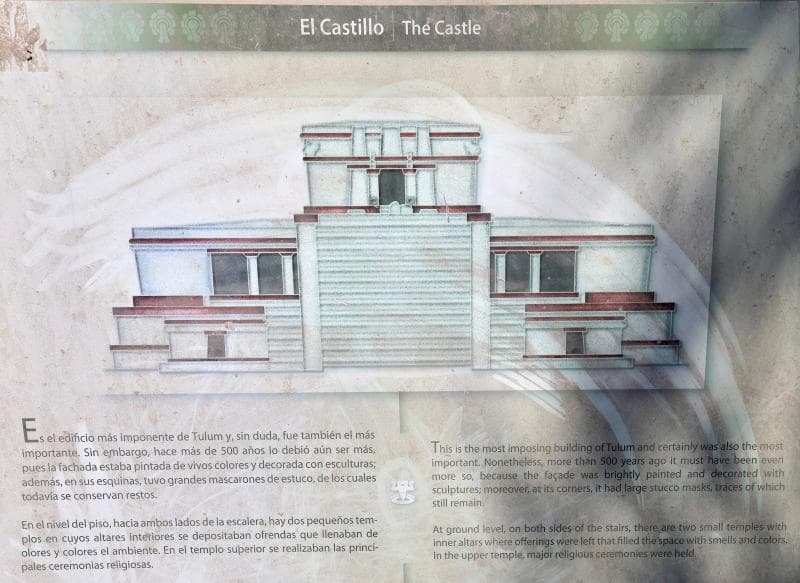
Explore El Castillo, the iconic pyramid within Tulum Ruins, Cancún, Mexico. Discover its history as a Mayan lighthouse and ceremonial center on a cliff overlooking the Caribbean Sea.
Overview
Perched majestically atop a 12-meter limestone cliff, El Castillo stands as the undisputed centerpiece of the Tulum Ruins in Cancún, Mexico. This iconic structure, often referred to as 'The Castle,' offers breathtaking views of the turquoise Caribbean Sea, making it one of the most visually stunning archaeological sites in the world. As the largest and most recognizable building within the ancient walled city, El Castillo commanded a strategic position that underscored its dual importance as both a significant ceremonial temple and an ingenious navigational beacon for ancient Mayan mariners. Its construction dates primarily to the Late Postclassic period of Mayan civilization, between the 13th and 15th centuries, a time when Tulum flourished as a bustling seaport.
History & Cultural Background
Tulum, originally known as Zamá, meaning 'city of dawn,' was one of the last cities built and inhabited by the Maya. It reached its peak prominence between 1250 and 1550 AD, making it a critical hub during the Postclassic period. Unlike many other major Mayan sites nestled deep within the jungle, Tulum's unique coastal location was central to its power and prosperity. The city served as a vital trading port, controlling maritime routes for valuable goods such as obsidian, jade, cacao, and textiles, connecting various Mayan communities along the coast and inland. The very name 'Tulum' means 'wall' in Yucatec Maya, a testament to the formidable fortifications that surrounded the city, emphasizing its role in both defense and control of trade. While the most visible structures date from this later period, evidence suggests earlier occupation, with some stylistic elements hinting at origins as far back as the 6th century.
What Makes It Special
El Castillo's allure lies in its remarkable blend of architectural beauty, strategic placement, and ingenious functionality. Perhaps its most fascinating feature is its conjectured role as an ancient lighthouse. Ancient fires, lit in its upper windows, are believed to have guided Mayan trading canoes safely through a specific natural break in the treacherous Mesoamerican Barrier Reef. This sophisticated system allowed vessels to navigate the dangerous coral formations and access the city's port. The structure's precision extends beyond navigation; it is astronomically aligned to coincide with celestial events, such as solstices and equinoxes, demonstrating the Mayans' profound understanding of the cosmos and their environment. The temple's facade once featured vibrant painted stucco and intricate sculpted masks, some of which are still partially visible today. El Castillo was built in multiple stages, with successive constructions encasing earlier buildings, a common Mayan practice that signifies renewal and continuity.
Stories, Fun Facts & Local Details
Imagine Mayan traders, after days at sea, spotting the guiding light from El Castillo, a beacon of home and prosperity. The structure's design includes serpent motifs carved into the lintels and remnants of a sculpture of the 'Descending God,' or 'Diving God,' in its central niche. This deity, often depicted headfirst, is a significant figure in Tulum, sometimes associated with the setting sun or even beekeeping, highlighting the interconnectedness of Mayan spirituality with nature and daily life. The strategic opening in the coral reef, which El Castillo helped mariners navigate, was not entirely natural; the Mayans likely modified it to enhance accessibility. This foresight allowed Tulum to thrive as a well-protected port. The original splendor of El Castillo, with its brightly colored murals and molded masks, would have presented a truly opulent sight, far grander than its weathered stone appearance today. The towering structure, reaching about 7.5 meters (25 feet) tall on its 12-meter (39-foot) cliff, stands as a testament to the advanced engineering and artistic prowess of the Mayan civilization.
Visitor Perspective
Approaching El Castillo, visitors are immediately struck by its imposing presence and the stunning backdrop of the Caribbean Sea. The visual spectacle of the ancient stone contrasting with the brilliant blue waters is unforgettable. To truly appreciate its grandeur and immerse oneself in its history, arriving early in the morning is highly recommended. The archaeological site opens at 8:00 AM, and early entry ensures cooler temperatures, softer light for photography, and fewer crowds, allowing for a more serene and contemplative experience. The last entry is typically at 3:30 PM, with the site closing at 5:00 PM. Since 2025, all visitors must enter through Parque del Jaguar, a protected ecological corridor designed to manage visitor flow. Allow ample time, typically 1.5 to 2.5 hours, to explore the main route, soak in the panoramic views from the cliff, and reflect on the sophisticated civilization that built such a marvel.
Coordinates: -87.466, 20.212
View on Google Maps💬 How Travelers Describe This Place
Based on community votes
Photogenic
683Beautiful
536Must See
489Unique
251Interesting
88
Traveler Stories
Discover memorable experiences shared by travelers who have visited this place.
No traveler stories yet.
Be the first traveler to share what made this place memorable.

Tour
By
Spot
Discover amazing places around the world. Your journey starts here.
Explore
© 2026 TourBySpot. All rights reserved.