El Caracol
Cancún, Mexico
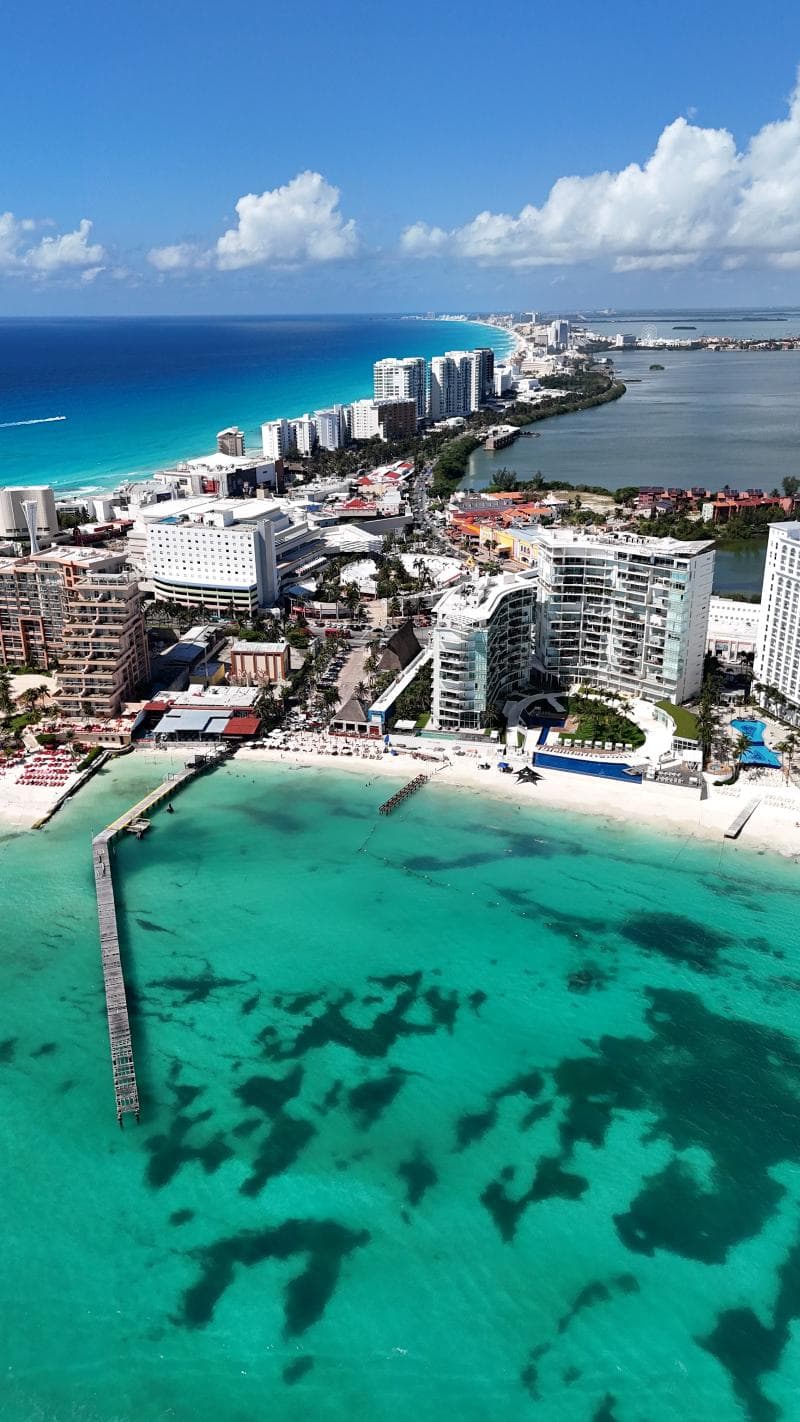

Explore Mayan heritage in Cancún, Mexico. While the specific 'El Caracol' within 'Old City Gate' is undocumented, discover local ruins like El Rey and San Miguelito.
Overview
As you plan your exploration of Cancún, Mexico, you might come across references to specific historical sites. When researching a 'sub-spot named El Caracol, located inside the larger place Old City Gate in Cancún,' it is important to note that extensive research from reputable sources does not readily identify an archaeological site by this precise combination of names within Cancún. While Cancún is rich in Mayan history and hosts its own significant archaeological zones, the specific 'Old City Gate' and an 'El Caracol' within it are not commonly documented in official tourism guides or historical records.
However, the name 'El Caracol,' meaning 'the snail' in Spanish, famously refers to a distinct type of Mayan astronomical observatory, most notably the one at Chichén Itzá, a major archaeological site in the Yucatán Peninsula. Within Cancún itself, visitors can explore other accessible and fascinating Mayan ruins such as El Rey and San Miguelito, which offer a glimpse into the region's ancient past.
History & Cultural Background
The Cancún region, though now a modern tourist destination, was once part of the vast and intricate Mayan civilization. The ancient Maya flourished between 300 and 900 AD, developing a sophisticated culture with advanced knowledge of mathematics, astronomy, and architecture. While Cancún itself was not a primary urban center during the Classic Mayan period, it played a role in the coastal trade networks, particularly during the Postclassic period (1300-1550 AD).
The archaeological sites found within Cancún, such as El Rey and San Miguelito, primarily date from the Late Postclassic era. These sites provide evidence of ancient settlements involved in fishing and salt extraction, vital commodities for Mayan trade. The broader Mayan culture placed immense importance on celestial observations. Structures known as 'El Caracol' served as observatories, allowing Mayan astronomers to meticulously track the movements of the sun, moon, and planets, particularly Venus. This astronomical precision was integral to their complex calendar systems, religious rituals, and even decisions regarding agriculture and warfare.
What Makes It Special
When considering what makes an 'El Caracol' special, we turn to its most renowned example at Chichén Itzá, which embodies the pinnacle of Mayan astronomical architecture. This structure is distinguished by its unique circular design, a rarity among the predominantly rectilinear Mayan buildings. Its rounded tower, often compared to a snail's shell due to its interior spiral staircase, was ingeniously designed for celestial observation.
Through precisely aligned windows and sightlines, Mayan astronomers at observatories like El Caracol could chart the solstices, equinoxes, and the extremes of Venus's path across the sky. Venus, in particular, held profound significance for the Maya, influencing their calendar and societal planning. The flat landscape of the Yucatán Peninsula meant that elevated structures were essential for unobstructed sky-watching, highlighting the architectural foresight and astronomical expertise embedded in these observatories.
Stories, Fun Facts & Local Details
The name 'El Caracol' itself is a fun detail, a Spanish appellation meaning 'the snail,' given for the spiral staircase winding up inside the structure, reminiscent of a snail's shell. This seemingly simple name belies the complex astronomical purpose of such buildings. Mayan astronomers, with their advanced understanding, used these observatories not merely for curiosity but for practical and spiritual guidance. They could predict eclipses and measure the solar year with remarkable accuracy, deeply integrating celestial events into their daily lives.
While the famed 'El Caracol' is not in Cancún, the local Mayan ruins like El Rey offer their own charming details. These sites are often inhabited by colonies of iguanas, which have become accustomed to human visitors, adding a unique natural element to the historical exploration. These lizards, basking on ancient stones, provide a living connection to the enduring natural world that has surrounded these ruins for centuries.
Visitor Perspective
For the curious traveler in Cancún seeking to connect with Mayan history, the local archaeological sites provide an accessible and enriching experience, even if a specific 'El Caracol' within an 'Old City Gate' is not found. El Rey Archaeological Zone, located conveniently within Cancún's Hotel Zone, offers a compact yet informative visit with over 47 structures, including a temple and remnants of mural paintings. It's an excellent introduction to Mayan history without requiring a lengthy day trip.
Another valuable option is the San Miguelito Archaeological Site, which is integrated with the Cancún Maya Museum. This combination provides a more comprehensive cultural experience, allowing visitors to explore structures like the Chaak Palace and other platforms, then delve deeper into Mayan artifacts and history within the museum. Both El Rey and San Miguelito offer a chance to walk among ancient stones, imagine past civilizations, and appreciate the enduring legacy of the Maya in a beautiful, natural setting.
Coordinates: -86.8515, 21.1619
View on Google Maps💬 How Travelers Describe This Place
Based on community votes
Must See
871Photogenic
806Beautiful
730Unique
280Interesting
111
Traveler Stories
Discover memorable experiences shared by travelers who have visited this place.
No traveler stories yet.
Be the first traveler to share what made this place memorable.

Tour
By
Spot
Discover amazing places around the world. Your journey starts here.
Explore
© 2026 TourBySpot. All rights reserved.