El Capitan Theatre
Los Angeles, United States
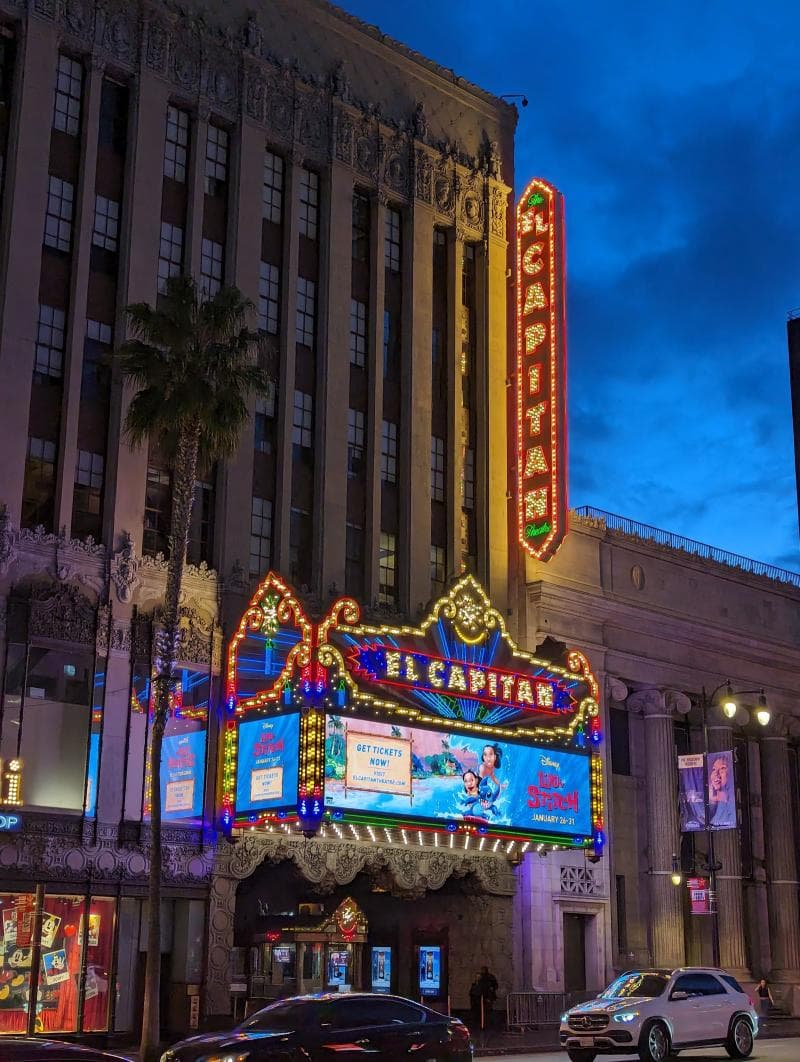
Discover El Capitan Theatre, a historic movie palace on the Hollywood Walk of Fame in Los Angeles, United States, showcasing Disney premieres and classic glamour.
Overview
Nestled on the illustrious Hollywood Walk of Fame in Los Angeles, United States, the El Capitan Theatre stands as a grand movie palace and a cherished landmark. Owned and meticulously operated by The Walt Disney Company, it serves as the premier venue for many of Disney's film premieres, offering a unique cinematic experience that harks back to Hollywood's Golden Age. Beyond its role as a modern cinema, the El Capitan is a historical and architectural gem, captivating visitors with its opulent interiors and a rich legacy that spans nearly a century.
The theatre is more than just a place to watch a movie; it is a destination where nostalgia and cutting-edge entertainment converge, creating an immersive journey into the heart of Hollywood's magical storytelling tradition. Its location on Hollywood Boulevard places it at the center of a vibrant cultural district, making it an essential stop for anyone exploring the iconic sights of Los Angeles.
History & Cultural Background
The El Capitan Theatre first opened its doors on May 3, 1926, not as a cinema, but as 'Hollywood's First Home of Spoken Drama'. Real estate developer Charles E. Toberman, often referred to as the 'Father of Hollywood', envisioned a thriving theatre district and, along with Sid Grauman, was instrumental in building the Egyptian, Chinese, and El Capitan theatres. The building’s elaborate Spanish Colonial exterior was designed by the esteemed firm Morgan, Walls & Clements, while the lavish East Indian-inspired interior was the work of theatre designer G. Albert Lansburgh.
For a decade, the El Capitan was a celebrated playhouse, hosting over 120 live productions. However, the economic pressures of the Great Depression led to a shift. In 1941, it famously hosted the world premiere of Orson Welles' controversial film, 'Citizen Kane', marking a pivotal moment in its history. Following this, the theatre underwent a significant renovation and reopened in March 1942 as the Hollywood Paramount Theatre, becoming a first-run movie house. The theatre served as Paramount Pictures' West Coast flagship for decades, until a legal decision forced studios to divest their theatre holdings. The El Capitan name and staff moved to the nearby Hollywood Playhouse during this period. By the late 1980s, the theatre was in need of revitalization. In 1989, The Walt Disney Company, in partnership with Pacific Theatres, began a meticulous, two-year restoration to return the theatre to its original 1926 grandeur.
What Makes It Special
What truly sets the El Capitan Theatre apart is its commitment to providing an unparalleled, immersive entertainment experience. The 1989-1991 restoration, supervised by the National Parks Service, painstakingly recreated the theatre's original aesthetic, including ornate plasterwork and opera boxes that had been hidden beneath subsequent renovations. This dedication to historical accuracy has preserved a magnificent environment where visitors can truly step back in time.
Today, the El Capitan is renowned for being Disney's flagship theatre, hosting world premieres and exclusive engagements of Walt Disney Studios films. Each screening is elevated into an event, often featuring live stage shows with Disney characters, special effects, and pre-show concerts performed on the theatre's magnificent Wurlitzer pipe organ. This grand organ, originally installed in San Francisco's Fox Theatre, boasts four keyboards and 37 ranks of pipes, producing a sensational range of sounds that enhance the pre-film atmosphere.
Stories, Fun Facts & Local Details
The El Capitan's history is filled with fascinating anecdotes. When it first opened, it premiered 'The Charlot Revue of 1926', an event so significant it made front-page news in the Los Angeles Sunday Times. The theatre's transformation into a movie house was solidified by the premiere of 'Citizen Kane', a film that struggled to find a screening venue due to its controversial nature at the time. Orson Welles himself rented the El Capitan for the occasion.
During Disney's comprehensive restoration, hidden original design elements, like plasterwork and architectural details, were discovered and brought back to life, showcasing the remarkable craftsmanship of the 1920s. The theatre reopened in 1991 with the premiere of Disney's 'The Rocketeer', a fitting choice for a resurrected landmark. A testament to its enduring appeal, Disneyland's Mickey & Minnie's Runaway Railway ride even features a nod to the theatre with its 'El Capitoon Theater', celebrating the golden age of cinema. The theatre is also a KultureCity Certified Sensory Inclusive Venue, offering sensory bags and a mobile sensory station to ensure a comfortable experience for all guests.
Visitor Perspective
Visiting the El Capitan Theatre is an experience far beyond a typical movie outing. Travelers are treated to a full sensory journey, starting from the moment they step into its grand lobby. The pre-show entertainment, featuring the thundering Wurlitzer organ and often live stage performances tailored to the film, creates an atmosphere of excitement and anticipation.
For many, attending a movie here is a nostalgic trip, evoking the glamour of Old Hollywood. The theatre frequently showcases curated displays of costumes and props from the films, and offers special events like Q&A sessions with filmmakers. Situated directly across from Ovation Hollywood and a short walk from other Hollywood Walk of Fame attractions like the TCL Chinese Theatre, the El Capitan is perfectly positioned for visitors to immerse themselves in the heart of Tinseltown. Whether you are a film buff, a Disney enthusiast, or simply someone looking to experience a piece of cinematic history, the El Capitan Theatre promises a memorable and enchanting visit.
Coordinates: -118.33981, 34.10116
View on Google Maps💬 How Travelers Describe This Place
Based on community votes
Must See
981Photogenic
921Beautiful
617Unique
357Interesting
147
Traveler Stories
Discover memorable experiences shared by travelers who have visited this place.
No traveler stories yet.
Be the first traveler to share what made this place memorable.

Tour
By
Spot
Discover amazing places around the world. Your journey starts here.
Explore
© 2026 TourBySpot. All rights reserved.