Educational Panels
Vientiane, Laos
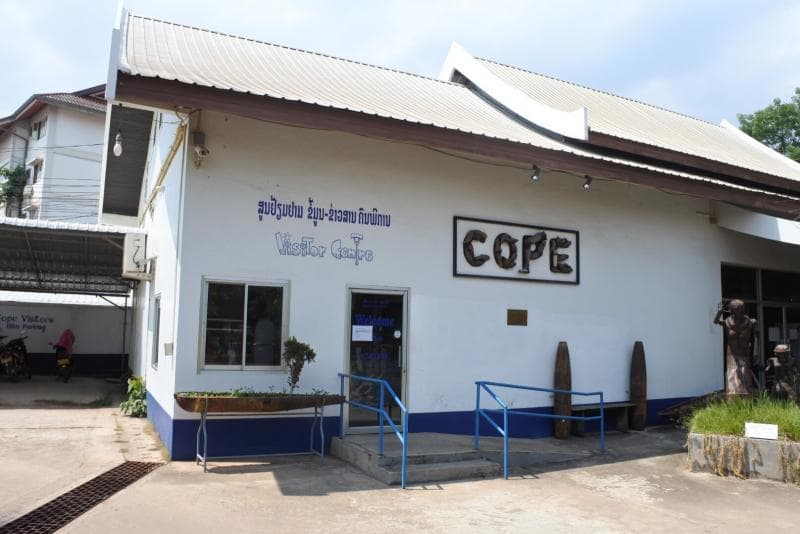
Explore the impactful educational panels at the COPE Visitor Centre in Vientiane, Laos, detailing the legacy of UXO and rehabilitation efforts.
Overview
The Educational Panels at the COPE Visitor Centre in Vientiane, Laos, offer a profound and essential insight into the enduring legacy of conflict in the country. This unique institution, whose name stands for Cooperative Orthotic and Prosthetic Enterprise, serves as both a powerful museum and a vital rehabilitation center for survivors of unexploded ordnance (UXO). The panels are central to the visitor experience, meticulously detailing Laos' history as the most heavily bombed nation per capita and illustrating the ongoing humanitarian crisis caused by UXO.
Visitors are guided through a series of thought-provoking exhibits that combine factual information, compelling visuals, and personal narratives. These panels explain the origins of the UXO problem, the various types of ordnance that still litter the landscape, and the devastating impact these remnants of war have on the lives of ordinary Lao people. The COPE Visitor Centre, with its free entry, encourages a reflective journey, ensuring that the stories and struggles of UXO survivors are neither forgotten nor overlooked.
History & Cultural Background
Laos endured an astonishing nine-year bombing campaign during the Vietnam War, often referred to as the 'Secret War,' between 1964 and 1973. During this period, the United States dropped over two million tons of ordnance across the country, making Laos the most heavily bombed nation per capita in history. An estimated 270 million cluster munitions were deployed, with approximately 80 million failing to detonate, leaving a deadly inheritance of unexploded ordnance scattered across vast areas.
This immense historical context forms the bedrock of the educational panels. They vividly portray how this conflict, largely hidden from global headlines at the time, continues to affect daily life and hinder development in Laos decades later. The panels delve into the cultural ramifications, such as the impact on agriculture, livelihoods, and the constant fear faced by rural communities. The COPE organization was established in 1996 to address these critical issues, providing essential orthotic and prosthetic services to those injured by UXO, with the visitor centre opening in 2008 to raise global awareness.
What Makes It Special
The educational panels at COPE are distinguished by their deeply human-centered approach. Unlike traditional museum displays, they seamlessly blend historical data with poignant personal testimonies and striking visual aids. Visitors will encounter hand-stitched fabric panels, actual bomb fragments, and displays of both rudimentary handmade and advanced modern prosthetic limbs, showcasing the ingenuity and resilience required in the face of tragedy.
What truly sets these panels apart is their ability to transform abstract statistics into tangible human experiences. They are not merely informative but are designed to evoke empathy and understanding, fostering a profound connection between the visitor and the stories shared. The panels also highlight the innovative rehabilitation techniques and the ongoing efforts by COPE and its partners to improve the quality of life for people with mobility-related disabilities, emphasizing a message of hope and recovery amidst adversity.
Stories, Fun Facts & Local Details
Among the panels, visitors will find powerful stories of survival and resilience. These narratives often feature individuals who have lost limbs to UXO, detailing their journeys through rehabilitation and their return to active, meaningful lives thanks to COPE's support. One striking display includes a wall of worn-out prosthetic limbs, returned by survivors in exchange for new ones, each a silent testament to a life impacted and rebuilt.
Beyond the personal accounts, the panels also touch upon local details, such as how some villagers traditionally repurposed war remnants for everyday items, unknowingly exposing themselves to danger. The centre also features a 'Cave Cinema' which screens short documentaries about UXO and COPE's work, providing an immersive, often emotional, experience for visitors. These elements add layers of cultural context, revealing the resourcefulness of the Lao people and the pervasive nature of the UXO problem in their society.
Visitor Perspective
Visiting the educational panels at the COPE Visitor Centre is an experience that many travelers describe as essential for truly understanding Laos. The displays are thoughtfully curated to be accessible and impactful, delivering a powerful message without being overly graphic. The center encourages visitors to reflect on the human costs of war and the importance of humanitarian work.
Guests often leave with a deeper appreciation for the resilience of the Lao people and a heightened awareness of a global issue that often goes unnoticed. The center is located within the grounds of the Centre for Medical Rehabilitation (CMR) on Khouvieng Road in Vientiane, making it a central and easy-to-access destination. While admission is free, donations are welcomed and directly support COPE's vital rehabilitation services, allowing visitors to contribute directly to the ongoing mission of 'helping people move on'.
Coordinates: 102.607447, 17.954
View on Google Maps💬 How Travelers Describe This Place
Based on community votes
Beautiful
948Unique
913Interesting
337Must See
196Photogenic
94
Traveler Stories
Discover memorable experiences shared by travelers who have visited this place.
No traveler stories yet.
Be the first traveler to share what made this place memorable.

Tour
By
Spot
Discover amazing places around the world. Your journey starts here.
Explore
© 2026 TourBySpot. All rights reserved.