Earth Sciences
Toronto, Canada
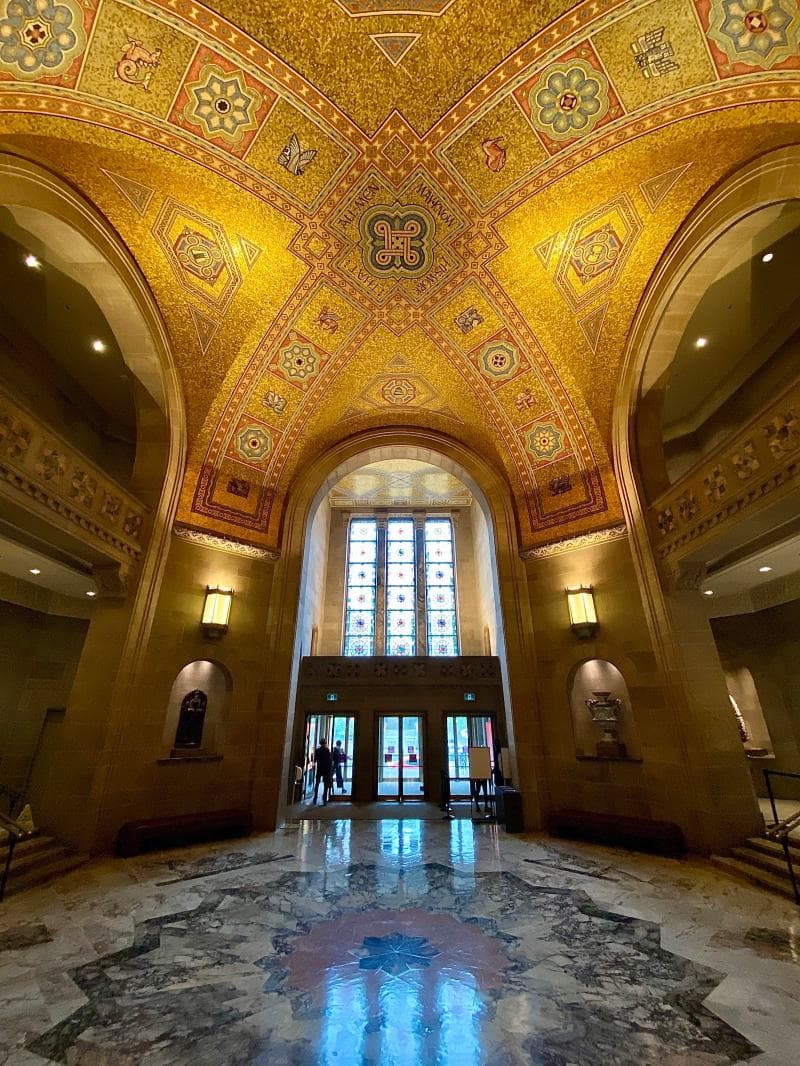
Explore Earth Sciences at the Royal Ontario Museum in Toronto, Canada, with stunning gems, minerals, and meteorites revealing our planet's history.
Overview
Deep within the heart of the Royal Ontario Museum (ROM) in Toronto, Canada, lies a realm dedicated to the magnificent forces that have shaped our planet: the Earth Sciences galleries. This captivating sub-spot offers an extraordinary journey through billions of years of geological history, showcasing an unparalleled collection of minerals, gems, meteorites, and rocks. Often referred to as the Teck Suite of Galleries: Earth's Treasures, it is recognized as one of North America's finest displays of geological specimens, inviting visitors to marvel at the sheer beauty and scientific wonder of our world and beyond.
The galleries are designed to ignite curiosity, providing a visually stunning and informative experience for all ages. From dazzling displays of precious stones to fragments of celestial bodies, the Earth Sciences section at the ROM connects visitors directly to the dynamic processes that continually sculpt the Earth.
History & Cultural Background
The Royal Ontario Museum's commitment to natural history, including geology and mineralogy, dates back to its very foundation. Established in 1912 and opening its doors in 1914, the ROM initially functioned as five separate museums, with geology and mineralogy being core disciplines.
Over the decades, the museum's Earth Sciences collection grew significantly through dedicated fieldwork, acquisitions, and generous donations. This rich history underscores the ROM's enduring role as a beacon of natural science research and public education in Canada. The collections reflect not only the scientific pursuit of understanding our planet but also Canada's own geological wealth and mining heritage.
A significant expansion and re-envisioning of these galleries, including the Teck Suite of Galleries: Earth's Treasures, opened in stages, culminating around 2009. This modern presentation built upon a century of collecting and research, solidifying the ROM's position as a leading institution for Earth Sciences.
What Makes It Special
What truly sets the ROM's Earth Sciences galleries apart is the sheer scale and quality of its holdings, featuring nearly 3,000 exceptional specimens of minerals, gems, meteorites, and rocks within the Teck Suite alone.
Highlights include the awe-inspiring Kirwin Collection, boasting over 21,000 specimens of minerals and ores from around the globe, with a particular emphasis on the Asia-Pacific region. This monumental collection, weighing 10 tonnes, significantly elevates the ROM's standing in international geological research.
Visitors can also gaze upon the 'Light of the Desert,' a magnificent 900-carat faceted cerussite, which holds the title of the world's largest. Another scientific marvel is the Tagish Lake meteorite, containing primitive organic material that offers clues about the early formation of our solar system. The ROM's meteorite collection also proudly displays one of the largest lunar meteorites in the world, weighing 1.1 kilograms.
Stories, Fun Facts & Local Details
Imagine holding a piece of the Moon in your hand, or touching a wall made of pure gold ore. These are just some of the immersive experiences offered. The galleries feature interactive displays, touch-screen stations, and videos that delve into the fascinating stories behind these geological treasures and their impact on daily life.
Canada's own rich geological tapestry is well represented. Visitors can discover rare Canadian minerals like ammolite, a vibrant iridescent gem formed from ancient marine shells, and marvel at Canadian diamonds, distinguished by their unique characteristics. Gold-quartz and silver-bearing specimens also narrate Canada's significant mining history.
The Tagish Lake meteorite, for instance, fell in British Columbia in 2000 and has been meticulously preserved, with most of it kept frozen to protect its ancient secrets. The fragment displayed at the ROM is a unique window into the universe's primordial past. The ROM also hosts identification clinics where experts help the public identify their own found rocks, minerals, gems, and fossils, fostering a direct connection between visitors and the Earth Sciences.
Visitor Perspective
Walking through the Earth Sciences galleries is an adventure for the senses. The polished gleam of gemstones, the intricate crystal formations, and the stark, otherworldly presence of meteorites create a sense of wonder. The layout encourages exploration, allowing visitors to appreciate both the individual beauty of each specimen and the grand narrative of Earth's geological evolution. Interactive exhibits make complex scientific concepts accessible and engaging, transforming passive viewing into an active learning experience.
Whether you're a budding geologist, a gem enthusiast, or simply a curious traveler, the Earth Sciences section at the Royal Ontario Museum offers a profound connection to the natural world. It's a place where the planet's deep past and spectacular present are brought to life, leaving a lasting impression of Earth's enduring power and beauty.
Coordinates: -79.3947771, 43.6677097
View on Google Maps💬 How Travelers Describe This Place
Based on community votes
Unique
685Photogenic
472Beautiful
446Interesting
399Must See
33
Traveler Stories
Discover memorable experiences shared by travelers who have visited this place.
No traveler stories yet.
Be the first traveler to share what made this place memorable.

Tour
By
Spot
Discover amazing places around the world. Your journey starts here.
Explore
© 2026 TourBySpot. All rights reserved.