Duke De Richelieu Monument
Odessa, Ukraine
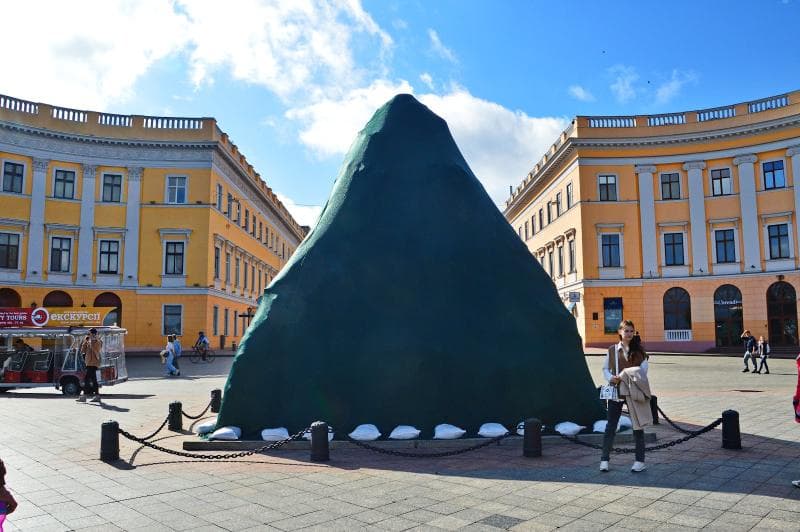
Discover the Duke De Richelieu Monument on Primorsky Boulevard in Odesa, Ukraine. Explore its rich history, unique design, and local stories.
Overview
Perched majestically at the summit of the iconic Potemkin Stairs, overlooking the vast expanse of the Black Sea and the bustling Marine Station, stands the Duke De Richelieu Monument. This bronze statue is not merely a memorial; it is an enduring symbol of Odesa, Ukraine, deeply intertwined with the city's very identity and founding spirit. Located along the picturesque Primorsky Boulevard, the monument serves as a welcoming beacon for those arriving by sea and a beloved landmark for locals and visitors alike. Locals affectionately refer to it simply as 'the Duke', a testament to his lasting impact and revered status in Odesa's history.
History & Cultural Background
The monument honors Armand Emmanuel de Vignerot du Plessis, the 5th Duke of Richelieu, a French nobleman whose transformative leadership as governor laid the foundation for modern Odesa. Fleeing the French Revolution, Richelieu entered Russian service and was appointed governor of Odesa in 1803, later becoming the governor-general of the Novorossiysk Territory. During his tenure from 1803 to 1814, he tirelessly worked to develop the fledgling port into a thriving commercial and cultural hub. He stimulated trade, improved port facilities, promoted agriculture, and fostered education and industry, turning Odesa into a significant European city.
Upon his death in 1822 in Paris, the people of Odesa, recognizing his invaluable contributions, began raising funds for a monument to immortalize 'our Duke'. This initiative, spearheaded by his successor Count Langeron and continued under Governor-General Count Vorontsov, garnered widespread support from all segments of society. The renowned sculptor Ivan Martos, famed for his work on the Minin and Pozharsky monument in Moscow, was commissioned for the design. The bronze statue was cast in Saint Petersburg by V. Ekimov, with the pedestal designed by architects Franz Boffo and A.I. Melnikov. The grand unveiling took place in April 1828, marking it as the very first monument erected in Odesa.
What Makes It Special
What truly distinguishes the Duke De Richelieu Monument is its rich symbolism and artistic detail, which reflect the core values Richelieu instilled in Odesa. The Duke is depicted in classical Roman-style drapery, a toga, holding a scroll in his left hand, and gesturing towards the sea with his right, as if eternally welcoming ships and overseeing the city's maritime prosperity. This attire was deliberately chosen to lend a classical gravitas to his figure, emphasizing his status as a wise and visionary statesman. The granite pedestal features three exquisite brass bas-reliefs, each symbolizing a pillar of Odesa's development under his rule: commerce, agriculture, and justice. These detailed carvings, along with a gilded plaque expressing the city's gratitude, serve as a constant reminder of the principles that fueled Odesa's rapid growth and continue to define its character.
Stories, Fun Facts & Local Details
The Duke De Richelieu Monument is steeped in local lore and fascinating anecdotes. One popular tradition among visitors and locals is to touch the small bag of coins depicted on the 'commerce' bas-relief, believed to bring good luck and success in business ventures. During exam periods, students are known to visit 'the Duke' in hopes of receiving academic fortune. A unique feature is the iron patch with a stylized cannonball embedded in the pedestal. This marks a spot damaged during the Crimean War in 1854 when an Anglo-French squadron shelled Odesa. Local legend humorously suggests that the French, inadvertently or otherwise, fired upon a monument to their own former Prime Minister, and the Odesa residents, with their characteristic wit, commemorated the event.
In more recent times, the monument gained attention when it was encased in protective sandbags in March 2022 to shield it from potential damage during the full-scale invasion of Ukraine. These protective measures were removed in August 2026. While the monument sustained no critical damage, corrosion was observed due to prolonged contact with moisture, necessitating a comprehensive restoration. Annually, during the Vyshyvanka Festival, the Duke is adorned with a traditional Ukrainian embroidered shirt (vyshyvanka), celebrating Ukrainian heritage and national identity, especially around Ukraine's National Flag Day.
Visitor Perspective
Visiting the Duke De Richelieu Monument offers more than just a glimpse into Odesa's past; it provides a panoramic vista of the city's vibrant present. Standing before the Duke, you are perfectly positioned to admire the grandeur of the Potemkin Stairs cascading down to the port, with ships dotting the Black Sea horizon. It is an ideal starting point for exploring Primorsky Boulevard, a scenic promenade renowned for its architectural beauty and lively atmosphere. The monument is easily accessible on foot from most central locations in Odesa. Taking a moment to appreciate the intricate bas-reliefs, pondering the Duke's legacy, and soaking in the expansive views allows travelers to connect deeply with Odesa's unique spirit, its blend of historical significance, and its forward-looking maritime outlook. It is a truly evocative spot that encapsulates the charm and resilience of this remarkable Ukrainian city.
Coordinates: 30.7397, 46.4883
View on Google Maps💬 How Travelers Describe This Place
Based on community votes
Photogenic
954Beautiful
946Must See
439Unique
92Interesting
66
Traveler Stories
Discover memorable experiences shared by travelers who have visited this place.
No traveler stories yet.
Be the first traveler to share what made this place memorable.

Tour
By
Spot
Discover amazing places around the world. Your journey starts here.
Explore
© 2026 TourBySpot. All rights reserved.