Dry Dock
Helsinki, Finland
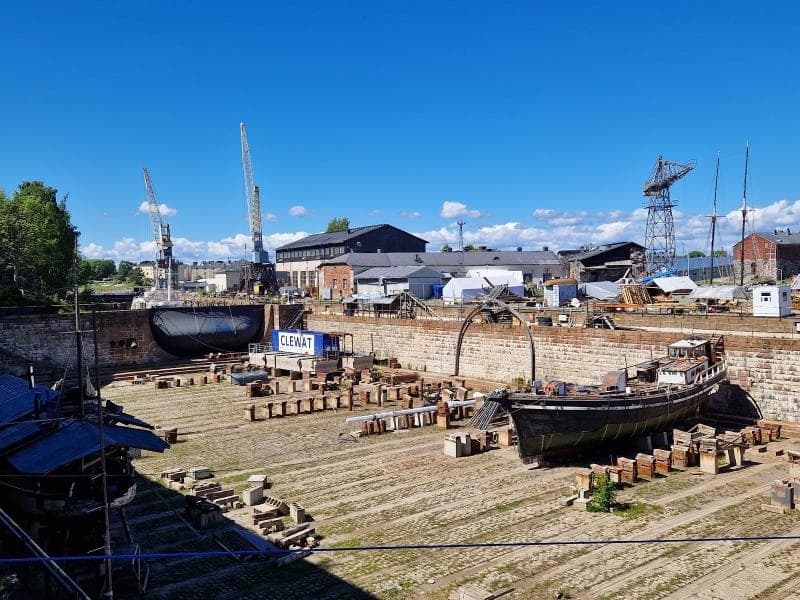
Explore Suomenlinna's historic Dry Dock in Helsinki, Finland – one of the world's oldest active shipyards. Discover its rich maritime history and ongoing traditional vessel repairs.
Overview
The Dry Dock at Suomenlinna, an impressive maritime fortress in Helsinki, Finland, is a testament to centuries of shipbuilding ingenuity and continuous operation. Nestled within the UNESCO World Heritage site, this historic dry dock is not merely a relic of the past but a vibrant, working shipyard. It stands as one of the oldest operational dry docks globally, its origins tracing back to the mid-18th century. Today, it remains active, primarily serving the vital purpose of repairing traditional wooden sailing vessels, preserving maritime heritage for future generations. While the working areas are typically restricted for safety, visitors can gain a fascinating perspective of this engineering marvel from designated observation points, offering a unique glimpse into its ongoing story.
History & Cultural Background
The story of Suomenlinna's Dry Dock began in 1750, shortly after the commencement of the formidable Sveaborg fortress, which would later be renamed Suomenlinna. This ambitious construction project was initiated by Sweden to bolster its defenses against Russia and establish a robust naval base in the Baltic Sea. The dry dock itself was designed by the esteemed hydro engineer Daniel Thunberg, whose innovative technical solutions garnered international acclaim. His design was crucial for building and maintaining Sweden's archipelago fleet, which consisted of specialized shallow-draft vessels.
Throughout the 1760s and late 1780s, under the guidance of renowned shipbuilder Fredrik Henrik af Chapman, the dock hummed with activity, constructing numerous gunboats and Turuma frigates. Initially, the immense basins were emptied using the power of a windmill, a remarkable feat of 18th-century engineering. The dry dock's fortunes mirrored the geopolitical shifts of Finland. It played a significant role during the Swedish, Russian, and Finnish eras. A poignant chapter in its history includes the damage sustained during the Crimean War in 1855, after which its basins lay submerged for decades. Later, it underwent modifications during World War I and was even used for airplane manufacturing in the 1920s and as a submarine base in the 1930s. Following World War II, the dock contributed to Finland's recovery by building ships for war reparations.
What Makes It Special
What truly sets Suomenlinna's Dry Dock apart is its extraordinary longevity and continuous functionality. It holds the distinction of being one of the oldest constantly operating dry docks in the world, having served maritime needs for over 270 years. Its inclusion within the UNESCO World Heritage site underscores its universal historical and cultural significance.
Beyond its age, the dry dock is special for its role in preserving traditional shipbuilding and repair methods, particularly for wooden vessels. It stands as a living museum where ancient crafts are still practiced. The advanced engineering of its original design by Daniel Thunberg was revolutionary for its era, showcasing foresight and technical prowess. Today, the facility comprises both an indoor and an outdoor dry dock, with the indoor basin providing crucial winter storage and repair space for a variety of historical vessels.
Stories, Fun Facts & Local Details
Imagine the sight and sound of the early dry dock operations: the colossal basins were once emptied using 'horsepower' – quite literally, with horses providing the brute force to operate the pumps. This speaks volumes about the ingenuity and sheer labor involved before modern machinery. The dry dock continues its rhythmic cycle, with the large inner basin traditionally emptied once a year in autumn to accommodate ships for winter repairs and then refilled in spring as they return to the sea. The smaller outdoor dock, however, sees much more frequent activity, being emptied approximately twenty times annually.
The area surrounding the dry dock is more than just a repair facility; it's a hub of maritime craft. Visitors might discover active workshops for smithing, sail making, and even traditional boatbuilding within the vicinity, upholding skills that are centuries old. Adding to the vibrant maritime atmosphere, the popular Suomenlinna guest harbor is located nearby, often bustling with recreational boaters. It's important to remember that while fascinating, the dry dock is a working industrial site, and public access to the immediate dock area is restricted for safety reasons. However, well-placed observation decks ensure that curious travelers can still witness this living piece of history in action.
Visitor Perspective
Experiencing Suomenlinna's Dry Dock offers a unique journey into maritime history and active preservation. The sea fortress itself is easily accessible via a short, scenic ferry ride from Helsinki's Market Square, setting the stage for an engaging day out. Once on Suomenlinna, finding the observation deck of the dry dock is a must, providing a safe and excellent vantage point to view the historic basins and the vessels undergoing repair.
For those seeking deeper insights, guided tours of Suomenlinna frequently include discussions about the dry dock's historical significance. Specialized guided visits to the old Pump Room can even be arranged, offering a detailed explanation of how the dock operated in the 18th century, demonstrating the mechanical ingenuity of the past. If your visit coincides with the seasonal 'docking out' in spring or 'docking in' in autumn, you'll witness a spectacular event as ships are moved in and out of the basins. Beyond the dry dock, the broader Suomenlinna islands offer a wealth of attractions, including museums, cafes, and restaurants, ensuring a fulfilling and enriching experience for every traveler.
Coordinates: 24.984, 60.1395
View on Google Maps💬 How Travelers Describe This Place
Based on community votes
Must See
797Interesting
695Unique
396Beautiful
286Photogenic
22
Traveler Stories
Discover memorable experiences shared by travelers who have visited this place.
No traveler stories yet.
Be the first traveler to share what made this place memorable.

Tour
By
Spot
Discover amazing places around the world. Your journey starts here.
Explore
© 2026 TourBySpot. All rights reserved.