Dongdaemun Market
Seoul, South Korea
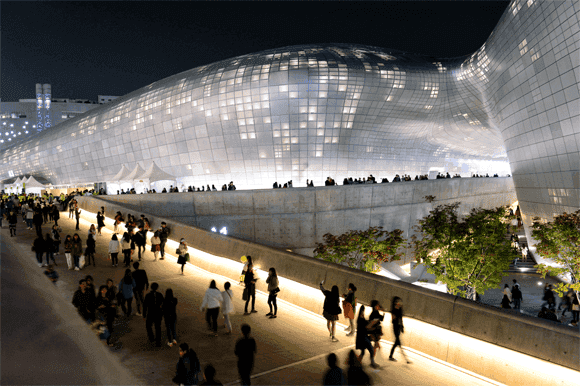
Discover Dongdaemun Market in Seoul, South Korea – a vibrant 24-hour hub for fashion, textiles, and street food. Explore its history and unique shopping culture.
Overview
Dongdaemun Market, a dynamic and sprawling commercial district in Seoul, South Korea, stands as a captivating blend of tradition and modernity. Renowned as one of Asia's largest wholesale and retail hubs, this district offers an unparalleled shopping experience that operates around the clock, drawing in both locals and international visitors. It is an epicenter for fashion, textiles, and accessories, home to over 20 shopping malls, thousands of shops, and tens of thousands of manufacturers.
Situated in the heart of Seoul, the market area encompasses the historic Heunginjimun Gate, also known as Dongdaemun or 'Great East Gate', a significant landmark from the Joseon Dynasty. Adjacent to this historic gate, the futuristic Dongdaemun Design Plaza (DDP), with its distinctively neofuturistic design, serves as a major cultural hub and a testament to Seoul's modern urban development. While Dongdaemun Market refers to the entire vast shopping district, the DDP often hosts design markets and cultural events that complement the area's vibrant commercial activity.
History & Cultural Background
The origins of Dongdaemun Market trace back to July 1905 with the establishment of Baeugaejang, later known as Gwangjang Market, making it Korea's first privately owned market. Initially, it emerged as a public trading venue, designed by Korean merchants to counteract the commercial dominance of Japanese interests during the colonial period. This early market laid the groundwork for what would become a massive commercial enterprise.
The area suffered immense destruction during the Korean War but was slowly rebuilt and modernized. By the 1960s, Dongdaemun had solidified its role as a nationwide wholesale destination, particularly for textiles and apparel, with the Peace Market playing a crucial part in the garment industry's growth and South Korea's economic recovery. The labor movement in the 1970s, driven by young female workers in the garment industry, also has its roots in this area, highlighting its social as well as economic significance. In 2002, the Korean government officially designated Dongdaemun Market as a 'Special Tourism Zone,' further cementing its status as a vital cultural and commercial landmark.
What Makes It Special
What truly sets Dongdaemun Market apart is its round-the-clock operation. Many shops and malls stay open until the early hours of the morning, especially the wholesale sections, creating a unique nocturnal shopping experience. This 24-hour cycle is fueled by a fast-paced fashion ecosystem, where garments can go from design to production and sale within 24 to 48 hours, making it an epicenter of K-fashion trends. Designers and wholesalers frequent the market at night to source materials and stock their stores, embodying the rapid prototyping and production cycles that drive the Korean fashion industry.
The market's sheer scale is another distinguishing feature, comprising over 20 shopping malls, traditional markets, and specialty shops spread across several city blocks. Visitors can find an astonishing array of goods, including silks, fabrics, clothing, shoes, accessories, electronics, leather goods, and even pet products and toys. This diversity, coupled with competitive pricing, makes it a powerful appeal for shoppers seeking everything from the latest fashion to unique finds.
Stories, Fun Facts & Local Details
Dongdaemun's night market culture is a spectacle in itself, with neon lights illuminating bustling streets where steam rises from countless street food stalls. The aroma of sizzling snacks like tteokbokki (spicy rice cakes), hotteok (sweet pancakes), and bindaetteok (mung bean pancakes) fills the air, offering a delicious glimpse into Korean street cuisine. Bargaining is an integral part of the shopping experience, especially at smaller shops and street vendors, where a friendly approach can often lead to a better deal.
The area surrounding the Dongdaemun Design Plaza, a landmark designed by the renowned architect Zaha Hadid, was once the site of Dongdaemun Stadium, an amateur baseball park. The demolition of the stadium in 2008 paved the way for the DDP and the Dongdaemun History & Culture Park, transforming the landscape into a hub for art, design, and history. This transformation represents Seoul's ability to seamlessly integrate its rich historical past with avant-garde urban development.
Visitor Perspective
Exploring Dongdaemun Market is an immersive experience best savored by embracing its vibrant energy. While many shops are open during the day, the market truly comes alive at night, with peak activity from evening until dawn. For first-time visitors, navigating the extensive district can feel overwhelming due to its sheer size, so having a plan or focusing on specific areas can be helpful. The market is well-connected by subway, with Dongdaemun Station and Dongdaemun History & Culture Park Station serving different sections of the area.
When shopping, it's advisable to carry Korean Won, especially for purchases in the more traditional market stalls and wholesale sections, as cash can often lead to better deals through bargaining. While some major retail malls cater to individual shoppers and accept cards, many wholesale vendors prefer cash transactions. Beyond shopping, visitors can explore the architectural marvel of the DDP, enjoy diverse exhibitions, or simply soak in the dynamic atmosphere, making Dongdaemun Market a multifaceted destination in Seoul.
Coordinates: 127.007889, 37.570497
View on Google Maps💬 How Travelers Describe This Place
Based on community votes
Must See
683Beautiful
642Interesting
597Unique
300Photogenic
300
Traveler Stories
Discover memorable experiences shared by travelers who have visited this place.
No traveler stories yet.
Be the first traveler to share what made this place memorable.

Tour
By
Spot
Discover amazing places around the world. Your journey starts here.
Explore
© 2026 TourBySpot. All rights reserved.