Dolby Theatre
Los Angeles, United States
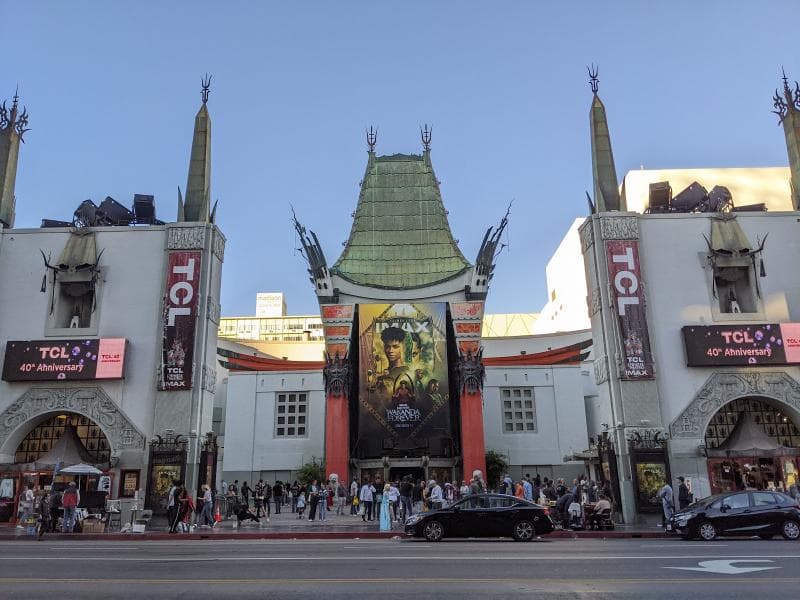
Explore the Dolby Theatre in Los Angeles, United States, the iconic home of the Academy Awards. Discover its history, innovative design, and Oscar stories.
Overview
The Dolby Theatre, nestled within the bustling Ovation Hollywood complex along the iconic Hollywood Walk of Fame in Los Angeles, United States, stands as a beacon of cinematic achievement. Renowned globally, it has served as the distinguished permanent home for the annual Academy Awards ceremony since 2002, drawing the world's gaze to its hallowed halls each year. Originally unveiled as the Kodak Theatre in 2001, this architectural marvel was meticulously designed to host Hollywood's biggest night. With a seating capacity of approximately 3,300 to 3,400 people, it is not merely a venue but a symbol of the entertainment industry's glitz and glamour, equipped with cutting-edge audio-visual technology courtesy of Dolby Laboratories.
History & Cultural Background
The vision for the Dolby Theatre began to materialize in the late 1990s when the Academy of Motion Picture Arts and Sciences sought a dedicated venue capable of meeting the complex logistical demands of the Academy Awards. Prior to its construction, the Oscars ceremony frequently rotated between various Los Angeles locations, none offering the ideal combination of space, capacity, and broadcast infrastructure. Canadian development firm TrizecHahn partnered with the Academy in 1997 to create the Hollywood & Highland entertainment complex, with the theatre as its centerpiece.
Opening its doors on November 9, 2001, the theatre debuted as the Kodak Theatre, a name it held until February 2012 when Eastman Kodak filed for bankruptcy. Following this, Dolby Laboratories secured a 20-year naming rights deal, rebranding it as the Dolby Theatre and committing to continuously integrate its state-of-the-art sound and vision technologies. This transition cemented its identity not just as a host venue, but as a showcase for advancements in cinematic experience. Its establishment marked a significant return for the Oscars to Hollywood Boulevard, a move laden with historical resonance for film enthusiasts.
What Makes It Special
The Dolby Theatre was ingeniously designed by architect David Rockwell with the Academy Awards broadcast specifically in mind. This deliberate design ensures an optimal experience for both the live audience and the millions watching worldwide. Its stage is impressively expansive, measuring approximately 113 to 120 feet wide and 60 to 75 feet deep, making it one of the largest in the United States. A silver-leafed 'tiara' crowns the auditorium, featuring reflective ribs that extend between box seats, creating a continuous, elegant flow from wall to ceiling.
Beyond its grand scale, the theatre is a technological marvel. It boasts one of the world's most sophisticated sound systems, incorporating Dolby Atmos technology with 215 individually powered loudspeakers, delivering an incredibly immersive audio experience. The projection system utilizes Dolby Vision technology, offering ultra-vivid color, a remarkable contrast ratio, and enhanced brightness. The entrance features an 'Awards Walk' where Art Deco columns are inscribed with the names of every Best Picture Oscar winner, with blank spaces meticulously reserved for future victors through 2071, literally embedding cinematic history into its foundations.
Stories, Fun Facts & Local Details
Since its inaugural hosting of the 74th Academy Awards in 2002, the Dolby Theatre has become synonymous with Oscar night, witnessing countless iconic moments in cinematic history. The grand staircase leading to the theatre's entrance often transforms into the famed red carpet, where stars arrive amidst a flurry of photographers and cheering fans, embodying the spectacle of Hollywood. Each year, following the Best Picture announcement, a new plaque is added to the 'Awards Walk,' keeping this living history current.
While primarily known for the Oscars, the Dolby Theatre is a versatile performance venue. It has hosted a diverse array of events, including Cirque du Soleil productions like 'Iris,' finalists for 'American Idol' and 'America's Got Talent,' the AFI Life Achievement Awards, and concerts by acclaimed artists such as Prince and Celine Dion. In a touching tribute to the pioneer behind the theatre's cutting-edge sound, Ray Dolby, the founder of Dolby Laboratories, was posthumously honored with a star on the Hollywood Walk of Fame directly in front of the theatre in 2015.
Visitor Perspective
For curious travelers and film aficionados, the Dolby Theatre offers an immersive journey into the heart of Hollywood. Daily guided tours provide an exclusive behind-the-scenes look at this legendary venue. Visitors can walk through the opulent auditorium where the Oscars are held, explore backstage areas, and even step into the exclusive VIP lounge where celebrities mingle after the ceremony. These tours offer a unique opportunity to experience the theatre's architectural grandeur and learn more about its rich history and the annual Academy Awards.
Conveniently situated on Hollywood Boulevard, the theatre is easily accessible via the Los Angeles Metro B Line at the Hollywood/Highland station, making it a perfect addition to any Hollywood sightseeing itinerary. Its location within the Ovation Hollywood complex means visitors can combine a tour with shopping, dining, and exploring other nearby attractions like the TCL Chinese Theatre and the Hollywood Walk of Fame itself. Whether you are drawn by the allure of the Oscars or simply by its stunning architecture and technological prowess, a visit to the Dolby Theatre promises a memorable experience.
Coordinates: -118.34028, 34.10278
View on Google Maps💬 How Travelers Describe This Place
Based on community votes
Unique
685Photogenic
472Beautiful
446Interesting
399Must See
33
Traveler Stories
Discover memorable experiences shared by travelers who have visited this place.
No traveler stories yet.
Be the first traveler to share what made this place memorable.

Tour
By
Spot
Discover amazing places around the world. Your journey starts here.
Explore
© 2026 TourBySpot. All rights reserved.