Defensive Walls Remains
Basel, Switzerland
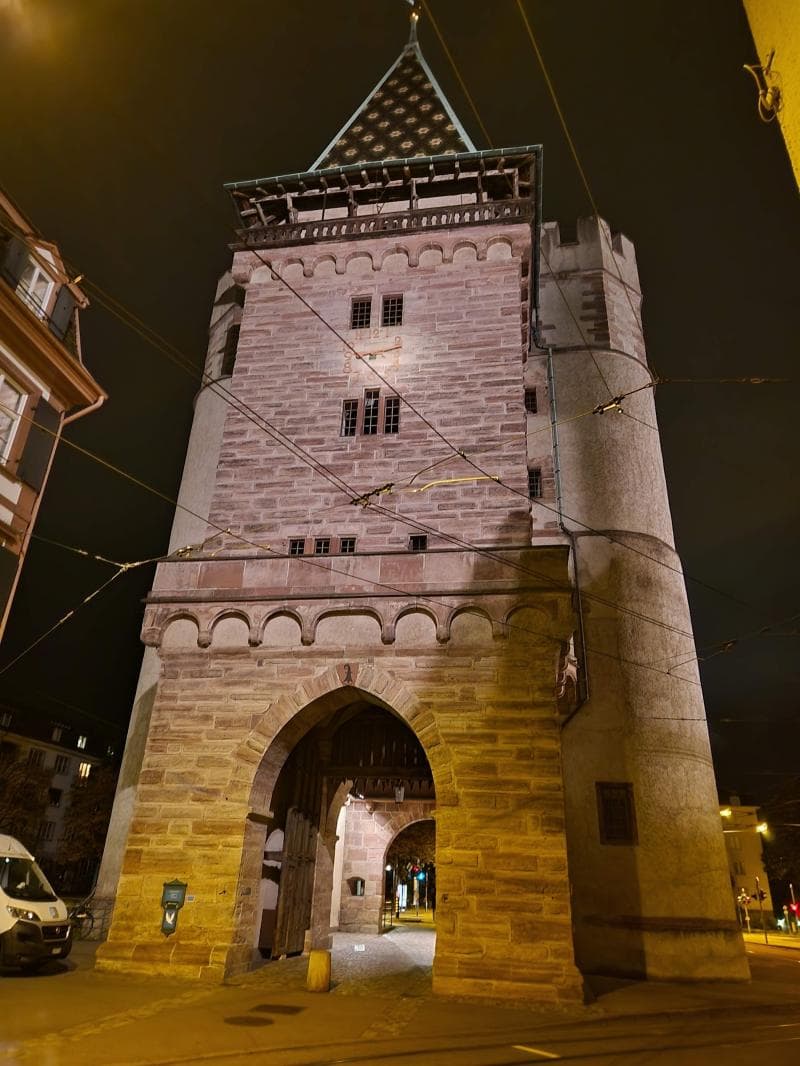
Explore the historic Defensive Walls Remains at Spalentor in Basel, Switzerland, and uncover centuries of medieval history, architecture, and cultural significance.
Overview
The Defensive Walls Remains, particularly prominent around the magnificent Spalentor (Spalen Gate) in Basel, Switzerland, offer a captivating glimpse into the city's rich medieval past. While much of Basel's extensive fortifications were systematically dismantled in the 19th century to make way for urban expansion and improved hygiene, a few select sections, including the iconic Spalentor and its adjacent wall segments, were fortunately preserved. These remnants stand today not merely as old stones, but as powerful monuments to a bygone era when city walls were essential for protection and control. Visiting these remains provides a tangible connection to the lives of medieval Baslers and allows a direct encounter with architectural history.
The Spalentor, often lauded as one of Switzerland's most beautiful city gates, acts as a primary focal point for understanding these defensive structures. It's not just a gate; it's a testament to medieval engineering and artistry, embodying the city's historical resilience. The surviving wall sections, built from local sandstone and limestone, showcase the scale and complexity of what was once a formidable defensive system, encompassing multiple rings and numerous towers designed to protect this important trading city on the Rhine.
History & Cultural Background
Basel's defensive history stretches back centuries, with the first city wall constructed around 1080 under Bishop Burkhard von Fenis. This was followed by an 'Inner Wall' around 1230. However, the most significant expansion began in 1362, leading to the completion of the 'Outer Wall' by 1398. This expansion was partly influenced by the devastating earthquake of 1356, which necessitated rebuilding and strengthening the city's defenses.
The Spalentor itself was constructed around 1400, becoming a crucial component of this outer defensive ring. It served as the primary western entrance, controlling access for goods and travelers arriving from the important Alsace region. The gates and walls were more than just physical barriers; they were symbols of the city's sovereignty and wealth. A poignant historical detail reveals that, following the Black Death in 1348, materials from destroyed Jewish cemeteries were incorporated into sections of the outer wall, a somber reminder of a darker chapter etched directly into the stone.
The decision in 1859 to demolish most of the city walls marked a turning point, prioritizing modern urban development over medieval fortifications. Despite this widespread demolition, the Spalentor and certain wall sections were spared, often due to their architectural beauty or significant historical value, ensuring that future generations could still appreciate Basel's defensive heritage.
What Makes It Special
The Defensive Walls Remains at Spalentor are special for several reasons. Firstly, their sheer survival is remarkable; while most European cities erased such medieval barriers, Basel retained these vital fragments. The Spalentor itself is celebrated for its architectural grandeur: a commanding central square tower flanked by two robust round towers, all adorned with intricate details like 15th-century sculpted figures of a Madonna and prophets facing outwards, and distinctive glazed roof tiles.
Beyond the gate, the visible stretches of the old city wall, built from local sandstone and limestone, offer a tangible sense of the past. Walking alongside these ancient stones, one can trace the immense scale of the medieval fortifications that once boasted over 40 towers. The interior passageway of the Spalentor still features grooves where a portcullis once slid, offering a direct, tactile connection to the defensive mechanisms of yesteryear.
The strategic location of the Spalentor, on what was once a main trade route, underscores its historical importance, not just as a defensive structure but as a gateway for commerce and cultural exchange. These remains provide a rare opportunity to witness the evolution of urban defense and the enduring spirit of a city that managed to preserve key elements of its heritage.
Stories, Fun Facts & Local Details
The Spalentor's continued existence is itself a story of local appreciation; it's said to have been saved from demolition because citizens deemed it 'too beautiful to lose.' This speaks volumes about Basel's regard for its historical landmarks. Imagine the bustling scene centuries ago: merchants entering with goods from Alsace, guards observing the landscape for potential threats, and residents passing through daily. The gate was not just a structure but a living part of the city's daily rhythm.
While the tower is generally not open to the public, occasional guided tours sometimes offer a rare peek inside, revealing timber floors, narrow staircases, and the vantage points guards once used. The wall's construction incorporated not only local stone but also, tragically, materials from Jewish gravestones after the Black Death, embedding a complex and somber narrative directly into its fabric. Today, the Spalentor and its nearby wall sections are integral to the character of Basel's Old Town, inspiring routes that connect the three preserved gates and encourage exploration of these historical traces.
Visitor Perspective
For the curious traveler, encountering the Defensive Walls Remains at Spalentor is a journey back in time. The area around the Spalentor is easily accessible and forms a natural starting point for exploring Basel's historic center. As you approach the Spalentor, its impressive stature immediately commands attention, inviting contemplation of its long history. Walking through the gate itself, under its imposing archway, provides a unique sensation of passing from the modern city into the echoes of the past.
Beyond the gate, you can find other segments of the original city wall, particularly noticeable in various parts of the Old Town. These fragments offer a quieter, more contemplative experience, allowing visitors to ponder the sheer effort and strategic thinking involved in medieval city defense. Consider taking a moment to sit on one of the nearby benches, observe the architecture, and imagine the centuries of history that have unfolded around these steadfast stones. The juxtaposition of the ancient walls with modern city life creates a compelling narrative, making the Defensive Walls Remains a truly enriching cultural experience in Basel.
Coordinates: 7.581446, 47.557936
View on Google Maps💬 How Travelers Describe This Place
Based on community votes
Must See
569Unique
476Interesting
465Photogenic
276Beautiful
128
Traveler Stories
Discover memorable experiences shared by travelers who have visited this place.
No traveler stories yet.
Be the first traveler to share what made this place memorable.

Tour
By
Spot
Discover amazing places around the world. Your journey starts here.
Explore
© 2026 TourBySpot. All rights reserved.