Decorative Tile Work
Dushanbe, Tajikistan
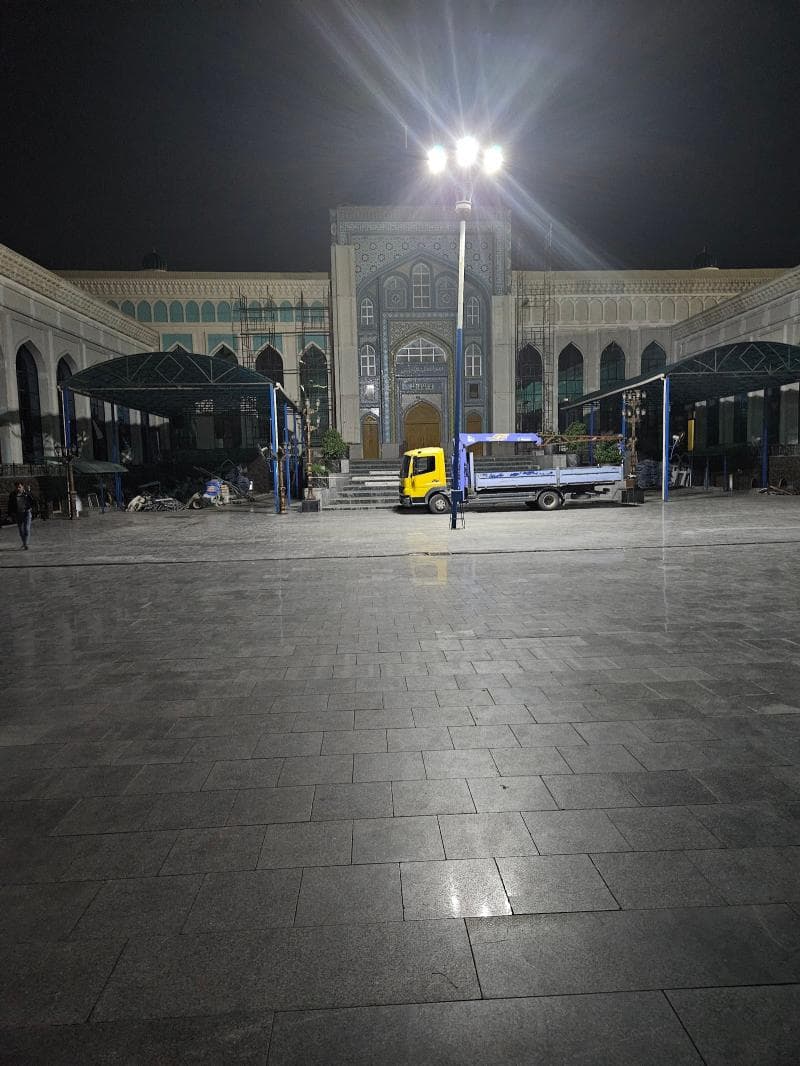
Discover the exquisite decorative tile work of Haji Yakoub Mosque in Dushanbe, Tajikistan, showcasing intricate Persian and Tajik artistry.
Overview
Nestled in the vibrant heart of Dushanbe, Tajikistan, the Haji Yakoub Mosque stands as a profound symbol of the nation's enduring Islamic heritage and architectural prowess. Among its many captivating features, the decorative tile work truly distinguishes it, offering visitors a vivid window into Central Asian artistry and Islamic devotion. These intricate designs are not merely embellishments; they are a visual language, telling stories of faith, history, and craftsmanship refined over centuries. Stepping into the mosque, particularly within its richly adorned spaces, one is immediately enveloped by an atmosphere where meticulous artistry meets profound spirituality. The tile work showcases a rich fusion of Persian and Tajik styles, reflecting the deep cultural tapestry of the region. Every curve, color, and geometric arrangement speaks volumes about the traditions and beliefs that have shaped Tajikistan's heritage.
History & Cultural Background
The Haji Yakoub Mosque boasts a rich history, with its origins tracing back to 1856 when its foundation was laid with the generous financial support of a local religious leader, Haji Yakub, and his mother. While founded in the mid-19th century, the main building, as largely seen today, was constructed between 1905 and 1910, establishing its enduring architectural form. Over the decades, the mosque has undergone numerous renovations and expansions, transforming it from its original, modest size into the grand complex it is now. A notable renovation took place in 1996 under the guidance of Master Said Ikrom of Konibodom, with further major restoration efforts in the late 1990s following the country's independence. Its history is deeply intertwined with Tajikistan's political and social evolution, serving as a critical focal point for Islamic culture, especially during the Soviet era when religious practices faced restrictions.
What Makes It Special
The decorative tile work of the Haji Yakoub Mosque is special for its blend of historical context and artistic expression. It prominently features patterned mosaic, known as 'mo'araq' tiles, which are a hallmark of fine craftsmanship in the region. Furthermore, the mosque incorporates square mosaic tiles, illustrating a thoughtful integration of both traditional and modern styles, creating a unique architectural identity. The intricate carvings and decorative elements found on its walls and columns are a testament to the skill of local artisans, reflecting a harmonious fusion of Persian and Tajik aesthetic principles. The tile work is deeply rooted in Tajik national traditions of cult construction and art. Islamic tile art historically avoided depictions of human and animal forms, instead favoring geometric patterns, calligraphy, and tessellation to signify the infinite nature of the divine. This tradition is profoundly evident in the mosque's decorative elements, which embody mathematical precision and spiritual symbolism.
Stories, Fun Facts & Local Details
The mosque bears the name of Haji Yakub, a revered Tajik religious figure whose story adds a layer of historical intrigue; he is said to have fled to Afghanistan. Interestingly, the mosque's current grandeur belies its humble beginnings; the original prayer area was considerably smaller, occupying only a fraction of its present footprint. One fascinating aspect of Islamic tile art, often present in places like the Haji Yakoub Mosque, is the concept of a 'deliberate flaw'. Some artisans in ancient Islamic traditions would intentionally include a small imperfection in their intricate tile patterns. This practice was rooted in the belief that only the divine could achieve true perfection, serving as a humble acknowledgment of human fallibility. While specific instances of this in the Haji Yakoub Mosque are not widely documented, it speaks to a broader cultural reverence often embedded in such detailed religious artworks. The mosque remains a living, breathing center of community life, accommodating up to 3,000 worshippers and serving as a pivotal center for Islamic education, housing the Islamic Centre of the Republic of Tajikistan.
Visitor Perspective
Approaching the Haji Yakoub Mosque offers a traveler an immediate sense of entering a sacred and historically significant space. The detailed carvings and magnificent central entrance invite contemplation even before stepping inside. Visitors often describe its atmosphere as remarkably peaceful and tranquil, providing an oasis amidst the city's bustle. It's a place where one can connect with a long tradition of Islamic learning and worship, experiencing firsthand the cultural heartbeat of Dushanbe. For those planning a visit, it is essential to dress modestly; women are typically expected to wear a headscarf as a sign of respect for the sacred space. The mosque is open year-round, and a visit during religious festivals such as Eid al-Fitr or Eid al-Adha can offer a unique and vibrant cultural experience, as the mosque comes alive with special decorations and joyful celebrations.
Coordinates: 68.784, 38.5878
View on Google Maps💬 How Travelers Describe This Place
Based on community votes
Photogenic
898Unique
618Beautiful
449Interesting
308Must See
22
Traveler Stories
Discover memorable experiences shared by travelers who have visited this place.
No traveler stories yet.
Be the first traveler to share what made this place memorable.

Tour
By
Spot
Discover amazing places around the world. Your journey starts here.
Explore
© 2026 TourBySpot. All rights reserved.