Cultural Artifacts
Vientiane, Laos
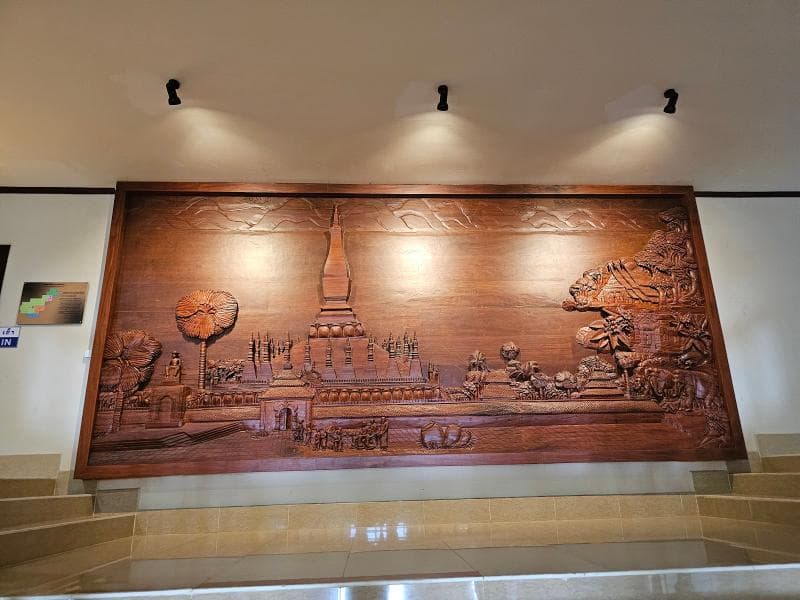
Explore cultural artifacts at the Lao National Museum in Vientiane, Laos, featuring ancient tools, Buddhist art, and revolutionary history.
Overview
The Cultural Artifacts section of the Lao National Museum in Vientiane, Laos, serves as a comprehensive gateway into the nation's rich and multifaceted past. Home to an extensive collection of some 8,000 artifacts, the museum offers a detailed journey through Lao history, from prehistoric times to the present day. Visitors can explore archaeological finds, ancient tools, pottery, and significant bronze artifacts. The exhibits delve into the profound influence of Buddhism with a notable display of religious sculptures, particularly revered Buddha images, alongside traditional costumes and intricate handicrafts. The museum's collection also meticulously documents the nation's political evolution through historical documents and objects, providing invaluable insights into the traditions and identity of the Lao people.
Relocated in 2017 to a modern complex approximately six kilometers from central Vientiane, the museum is dedicated to researching, preserving, and promoting Laos's historical and cultural heritage.
History & Cultural Background
The institution now known as the Lao National Museum has a compelling history that mirrors the country's own journey. It originated in 1980 as the Lao Revolutionary Exhibition Hall, housed within the former French Governor's Residence in central Vientiane—a significant colonial-era building constructed in 1925, where Laos declared its independence from France on October 12, 1945.
Over the years, the museum evolved, first being renamed the Revolutionary Museum in 1985, and then officially upgraded to the Lao National Museum in 2000. This evolution reflects its expanded mission beyond revolutionary history to encompass a broader cultural narrative. The new, purpose-built facility, completed between 2013 and 2017, was designed to provide enhanced storage, conservation, and exhibition spaces for its growing collections, marking a new chapter in the preservation of Lao heritage.
What Makes It Special
What truly sets the Cultural Artifacts at the Lao National Museum apart is its panoramic scope of Lao history and its dedication to illustrating the nation's cultural resilience. The ground floor traditionally presents a mix of ancient items, including dinosaur bones, pottery shards, and ancient Khmer sculptures, tracing the early history of the region.
A particularly interesting display includes an intact jar from the Plain of Jars, an archaeological site dating back over 2,000 years, offering a tangible link to Laos's mysterious ancient civilizations. The museum also showcases an impressive collection of ancient Buddha images, reflecting the profound role of Buddhism in Lao culture, each with unique styles and symbolism from different periods.
Beyond ancient history, the museum offers a rich introduction to Laos's ethnic diversity, with exhibits featuring traditional dress, tools, and household items from groups like the Lao Loum, H'Mong, and Khmu. These displays underscore how various ethnic communities have shaped the country's identity, providing a deeper understanding of Lao traditions and customs, including ceremonial practices and traditional music instruments like the bamboo khaen and pi nai oboe.
Stories, Fun Facts & Local Details
The museum's narrative places a significant emphasis on the country's turbulent modern history, particularly the struggle for independence and the Pathet Lao revolution. Visitors will find exhibits featuring pivotal moments in Laos's fight for independence, complete with photos, documents, and historical artifacts.
One of the most thought-provoking sections often highlights the legacy of unexploded ordnance (UXO) from the American War, a stark reminder of Laos's past as the most heavily bombed country per capita. These exhibits shed light on the ongoing impact on civilian lives, a somber but crucial aspect of understanding modern Laos.
While some older exhibits might have reflected a particular political viewpoint, the sheer breadth of artifacts allows for a layered understanding of Lao identity. The display of personal effects of revolutionary leaders, such as 'the gun used by Comrade Kaysone Phomvihane to protect himself during the fighting against the U.S. imperialists,' alongside his briefcase and even a 'bicep curl contraption,' offers a uniquely personal glimpse into figures who shaped the nation.
Visitor Perspective
For a curious traveler, the Cultural Artifacts section of the Lao National Museum offers an educational and often reflective experience. Many visitors appreciate that the information is provided in both Lao and English, making the historical narrative accessible.
The museum provides a quiet and contemplative environment, allowing for focused exploration of the artifacts. It's often recommended to allocate 1-2 hours to fully immerse oneself in the exhibits. While some visitors note that certain displays might be less comprehensive or organized than international museums, the unique cultural and historical insights offered here are invaluable. The air-conditioned modern space of the new building provides a comfortable setting for discovering Laos's rich heritage. It is a fundamental stop for anyone seeking to understand the country beyond its natural beauty.
Coordinates: 102.64313, 17.99948
View on Google Maps💬 How Travelers Describe This Place
Based on community votes
Interesting
703Beautiful
521Photogenic
291Must See
157Unique
28
Traveler Stories
Discover memorable experiences shared by travelers who have visited this place.
No traveler stories yet.
Be the first traveler to share what made this place memorable.

Tour
By
Spot
Discover amazing places around the world. Your journey starts here.
Explore
© 2026 TourBySpot. All rights reserved.