Crystal Palace
Madrid, Spain
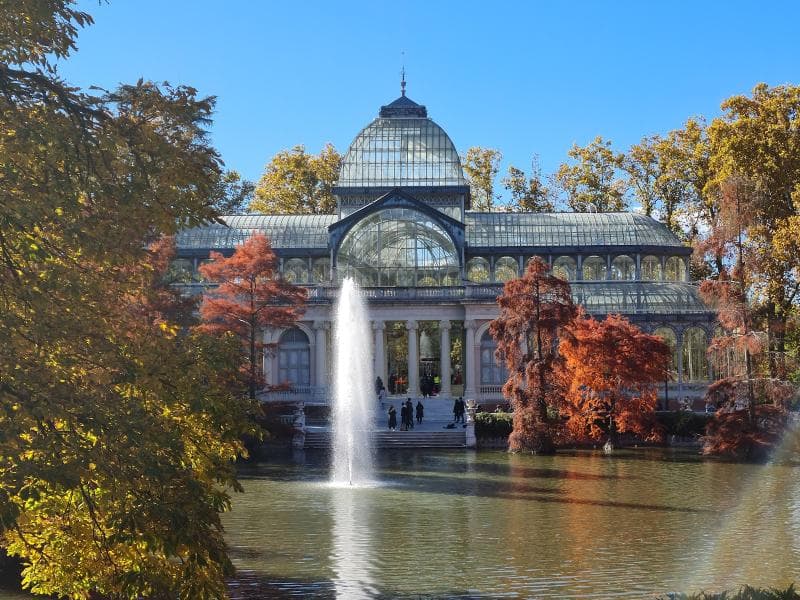
Explore Madrid's stunning Crystal Palace (Palacio de Cristal) in Retiro Park, Spain. Discover its unique glass and iron architecture, rich history, and art exhibitions.
Overview
Nestled within the verdant expanse of Retiro Park in Madrid, Spain, stands the captivating Crystal Palace, known locally as the Palacio de Cristal. This architectural marvel, an exquisite example of 19th-century iron-and-glass construction, emerges like a shimmering jewel amidst the lush greenery. Originally conceived as a grand conservatory, it has evolved into a prominent exhibition space managed by the Museo Nacional Centro de Arte Reina Sofía, hosting contemporary art installations that beautifully contrast with its historic setting. Its striking beauty and picturesque surroundings, including a tranquil lake, have made it one of Madrid's most photographed landmarks and a highlight of the UNESCO-listed ‘Landscape of Light’.
The Crystal Palace invites visitors to step into a realm where art, history, and nature converge, offering a serene escape and a feast for the eyes. Even when its interior is temporarily closed for renovations, its exterior charm and the reflections dancing on the adjacent water continue to draw admirers from around the globe.
History & Cultural Background
The story of Madrid's Crystal Palace begins in 1887, when it was designed by the Spanish architect Ricardo Velázquez Bosco. Its construction was remarkably swift, completed in just five months, to serve a very specific and grand purpose: to house the Philippine Islands Flora Exhibition. This event showcased the exotic plant life from the Philippines, which was then a Spanish colony, presenting it within a magnificent greenhouse setting. The inspiration for this ambitious project came from London's iconic Crystal Palace, built for the Great Exhibition of 1851, signifying a period of innovative use of iron and glass in architecture.
Beyond its initial role, the Palacio de Cristal has witnessed significant moments in Spanish history. In 1936, it served as the extraordinary venue for the inauguration of Manuel Azaña as president of the Second Republic, a testament to its grandeur and capacity. Over the decades, after its use as an exhibition hall for Fine Arts, the palace underwent restorations in 1975 and again between 1994 and 1998 to preserve its delicate structure and original appearance. Since 1990, it has been co-managed by the Reina Sofía Museum, becoming a prestigious center for temporary contemporary art exhibitions.
What Makes It Special
The Crystal Palace stands out as one of Spain's finest examples of iron-and-glass architecture. Its design, shaped like a Greek cross, features an impressive glass dome that rises over 22 meters high, allowing natural light to flood the interior and create an ever-changing play of light and shadow. The structure rests upon a brick base, beautifully adorned with ceramic decorations by the renowned Spanish ceramist Daniel Zuloaga, adding a distinctive artistic touch with colorful vegetal elements and grotesque figures.
What truly elevates its allure is its harmonious integration with the surrounding natural environment. It is gracefully situated beside a shimmering artificial lake, where swamp cypresses dip their roots into the water, creating surreal reflections, especially during autumn. The building's transparent walls essentially merge the interior space with the vibrant park outside, offering visitors a unique perspective and an immersive experience whether viewing art or simply enjoying the tranquil scenery.
Stories, Fun Facts & Local Details
A fascinating detail about the Crystal Palace is that, like its London inspiration, it was designed with the intention of being dismantled and re-erected elsewhere. However, it has remained steadfast in its original location within Retiro Park, much to the delight of Madrileños and visitors alike.
The artificial lake in front of the palace is not just a reflective surface; it's a small ecosystem teeming with life. Visitors can often spot ducks, geese, black swans, and even terrapins gracefully gliding across its waters, adding to the picturesque charm of the setting. Another unique architectural feature includes wrought iron details in the shape of angels' faces, which cleverly serve as supports for the rain gutters along the upper ledge of the building. The intricate ceramic tiles by Daniel Zuloaga that embellish the base are adorned with motifs of flowers, dragons, and stars.
Currently, the Crystal Palace is undergoing significant structural renovation works and is expected to remain closed for interior access until approximately 2027. However, the beauty of its exterior and its scenic surroundings can still be appreciated, and the park often features temporary artistic installations around the building.
Visitor Perspective
For any curious traveler, a visit to the Crystal Palace is an essential part of exploring Madrid's Retiro Park. While the palace's interior is temporarily closed for renovation, the opportunity to admire its majestic glass and iron facade from the outside is still highly rewarding. The reflective qualities of the lake make it a photographer's paradise, offering stunning vistas at any time of day, particularly during sunset when the light filters through its glass panels.
Located within one of Madrid's most cherished green spaces, the palace provides a perfect focal point for a leisurely stroll through Retiro Park. The park itself is a UNESCO World Heritage Site and offers a multitude of other attractions, from the main boating lake and formal gardens to statues and fountains, making a visit a full-day affair. The Crystal Palace is easily accessible, with the Retiro Metro station conveniently located nearby. Whether you're drawn by its architectural grandeur, its historical resonance, or simply its serene beauty, the Palacio de Cristal offers a memorable experience that captures the artistic and natural essence of Madrid.
Coordinates: -3.6822, 40.4135
View on Google Maps💬 How Travelers Describe This Place
Based on community votes
Must See
950Beautiful
287Photogenic
255Unique
231Interesting
86
Traveler Stories
Discover memorable experiences shared by travelers who have visited this place.
No traveler stories yet.
Be the first traveler to share what made this place memorable.

Tour
By
Spot
Discover amazing places around the world. Your journey starts here.
Explore
© 2026 TourBySpot. All rights reserved.