Crypt
Zurich, Switzerland
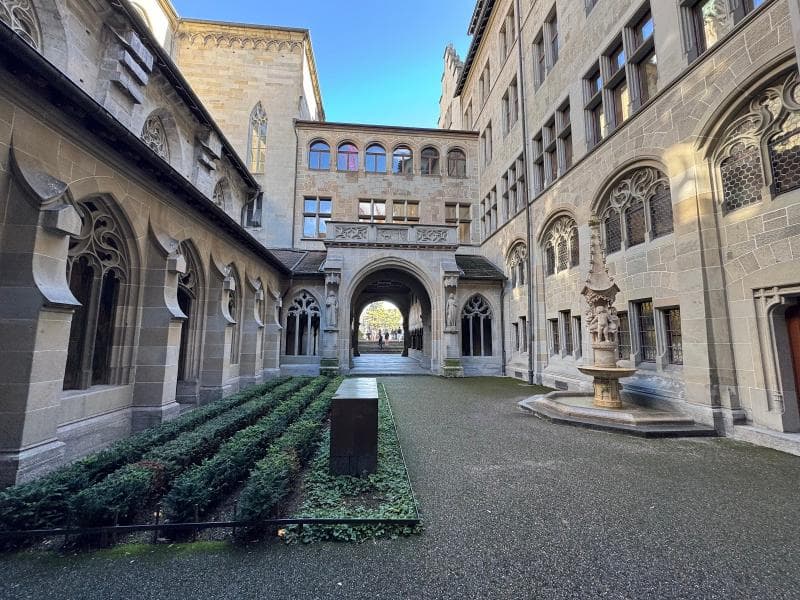
Explore the historic Crypt of Fraumünster Church in Zurich, Switzerland. Uncover 9th-century foundations, ancient relics, and medieval legends.
Overview
Deep beneath the famed Fraumünster Church in Zurich, Switzerland, lies the Crypt, an evocative sub-spot that serves as a tangible link to the city's ancient origins. It is the oldest surviving part of the church, with its foundations dating back to the 9th century when the Fraumünster Abbey was first established. Once sealed off for over a century, the Crypt was finally made accessible to the public in 2016, revealing a fascinating museum experience.
Today, visitors can explore a multimedia exhibition within the Crypt that narrates over 1200 years of Zurich's urban and ecclesiastical history. This includes detailed insights into the abbey's founding, its pivotal role during the Reformation, and the architectural evolution of the church to its present Gothic form. Entry to the Crypt is typically included in the general admission fee for Fraumünster Church, offering an essential complement to the church's more visible artistic treasures.
History & Cultural Background
The story of the Fraumünster Crypt is intertwined with the very beginnings of Zurich's historical significance. The original Fraumünster Abbey, or 'Women's Minster', was founded in 853 by King Louis the German, Charlemagne's grandson, for his daughter Hildegard. A simple basilica with a crypt beneath it was added in 874 by Hildegard's sister, Bertha.
The primary purpose of this early crypt was to house the sacred relics of Felix and Regula, the revered patron saints of Zurich. These early Christian martyrs, according to legend, were beheaded in the 3rd century but miraculously walked uphill carrying their own heads before collapsing at their chosen burial site. Their relics transformed the abbey into a significant pilgrimage destination. The abbesses of Fraumünster wielded immense power in medieval Zurich, granted imperial immediacy by Emperor Henry III in 1045, which allowed them to mint coins, collect tolls, and effectively govern the city, making them highly influential figures.
However, the abbey's prominence waned with the rise of the Reformation in 1524, when the last abbess, Katharina von Zimmern, handed control to the city, leading to the dissolution of the convent. For centuries, the Crypt's historical significance remained largely unseen, as it was sealed in 1900, only to be rediscovered and made accessible in 2016.
What Makes It Special
What truly distinguishes the Fraumünster Crypt is its role as a direct portal to Zurich's foundational history. It offers visitors the unique opportunity to stand within the very 9th-century foundations of the original abbey, providing a tangible connection to over 1200 years of the city's past. The Crypt's museum unveils archaeological finds and uses animations to illustrate the various construction phases of the monastery, showcasing its transformation from early Romanesque structures to its current Gothic appearance.
Before the Reformation, this sacred space safeguarded the abbey's holy relics, serving as a spiritual heart for the powerful Fraumünster convent. Its reopening in recent years has shed new light on the influential role of the abbesses who governed Zurich, offering a deeper understanding of the city's unique historical trajectory. It provides context not just to the church's religious past but also to Zurich's development as a political and economic center.
Stories, Fun Facts & Local Details
Beyond its historical artifacts, the Crypt is imbued with fascinating legends that have shaped Zurich's identity. One of the most compelling is that of Saints Felix and Regula, whose relics were once enshrined here. The tale describes them as Christian martyrs who, after being beheaded by Roman persecutors, miraculously rose and carried their own heads to the spot where they wished to be buried. These two, along with their servant Exuperantius, are venerated as Zurich's patron saints.
Another enchanting legend connected to the Fraumünster's founding involves King Louis the German's daughters, Hildegard and Bertha. It is said that a white stag with glowing antlers guided them each night through a dark forest to the site where the abbey was to be built, a divine sign that led to the establishment of the monastery. This captivating narrative is famously depicted in frescoes within the Fraumünster's cloister, adjacent to the church. A fun fact is how politically powerful the abbesses were; before Zurich was dominated by finance, it was partly governed by these influential women who held market rights and even minted coins, a testament to their executive power in medieval times.
Visitor Perspective
Visiting the Crypt offers a profound historical journey that complements the visual splendor of Fraumünster Church's main sanctuary. While many are drawn to the iconic Chagall windows above, the Crypt provides an intimate and grounded experience, literally taking you beneath the surface of centuries of history. An audio guide, typically included with admission, is highly recommended as it provides rich, multilingual explanations, bringing the ancient foundations and the stories of the Reformation to life.
Allow approximately 30 minutes to explore the Crypt's exhibition, which offers a quiet and contemplative space away from the busier areas of the church. It is important to note that the Crypt is not barrier-free, meaning it may not be accessible to visitors using wheelchairs. Despite this, the journey into this subterranean world is a rewarding one for anyone keen to delve into the deep cultural and religious heritage of Zurich. It offers a unique perspective on how the city evolved from a powerful abbey to the vibrant metropolis it is today.
Coordinates: 8.5413, 47.3696
View on Google Maps💬 How Travelers Describe This Place
Based on community votes
Must See
797Interesting
695Unique
396Beautiful
286Photogenic
22
Traveler Stories
Discover memorable experiences shared by travelers who have visited this place.
No traveler stories yet.
Be the first traveler to share what made this place memorable.

Tour
By
Spot
Discover amazing places around the world. Your journey starts here.
Explore
© 2026 TourBySpot. All rights reserved.