Crypt
Nice, France
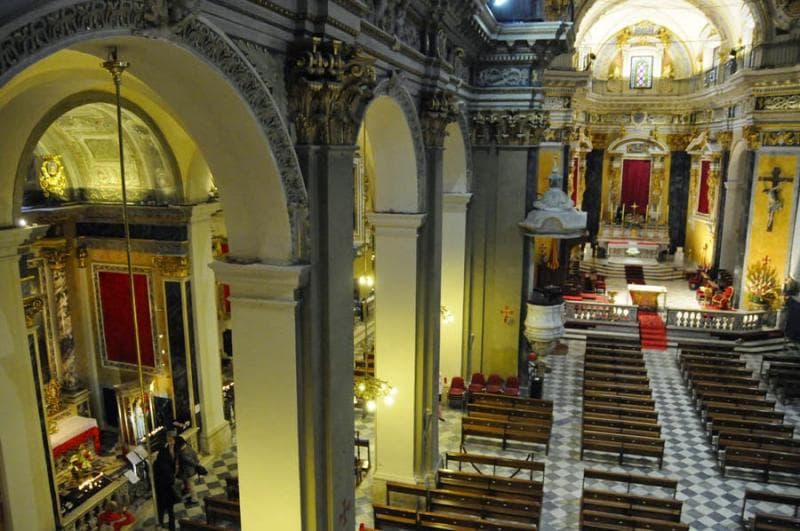
Explore the historic Crypt within Cathédrale Sainte-Réparate in Nice, France, revealing Roman archaeological remains and ancient foundations.
Overview
Beneath the resplendent Baroque grandeur of Cathédrale Sainte-Réparate in Nice, France, lies a lesser-known yet profoundly significant sub-spot: its historic crypt. This atmospheric underground area offers a unique journey back in time, providing a tangible connection to the ancient foundations upon which the magnificent cathedral was built. While the main cathedral dazzles with its ornate chapels, gilded altars, and vibrant frescoes, the crypt provides a stark and contemplative contrast, revealing layers of Nice's earliest documented history. It's a place where the echoes of Roman and medieval periods resonate, allowing visitors to explore archaeological remains that predate the 17th-century edifice above.
Visiting the crypt is an opportunity to delve into the very bedrock of Nice's heritage, experiencing the historical depth beneath the bustling Old Town. It serves as a quiet testament to the continuous human presence on this sacred ground, from ancient settlements to the revered Catholic cathedral that stands proudly today in Place Rossetti.
History & Cultural Background
The history of Cathédrale Sainte-Réparate's site is deeply intertwined with the evolution of Nice itself. Long before the current Baroque structure, consecrated in 1699, the area was home to earlier religious buildings, dating back to at least the 11th century. In 1060, the relics of Saint Reparata, a young Christian martyr from the 3rd century, arrived in Nice, leading to the construction of a chapel dedicated to her by 1075.
The current cathedral, initiated around 1650, was erected on the footprint of these preceding structures, a common practice that often preserved older foundations beneath the new construction. The crypt beneath Sainte-Réparate showcases archaeological remains, including vestiges from Roman times, offering a fascinating glimpse into these earlier periods. These layers represent the continuous habitation and religious significance of this precise location, providing physical evidence of Nice's ancient past beneath its Baroque present. The architectural shift from earlier simple chapels to the elaborate Baroque style reflects changing artistic trends and the growing importance of Nice as a religious and civic center over centuries.
What Makes It Special
The true distinction of Cathédrale Sainte-Réparate's crypt lies in its ability to transport visitors across millennia. Unlike the grand, visible artistry of the cathedral's main chapels, the crypt offers an intimate, raw encounter with history. It's a journey from the Baroque era down to the Roman period, revealing the archaeological foundations of ancient Nice. This direct contrast between the opulent decoration above and the unadorned, ancient stone below is profoundly moving, highlighting the enduring nature of the site's sanctity and strategic importance.
It provides invaluable context to the vibrant city above, showing that beneath the charming, lively streets of Vieux Nice, there are silent stories embedded in the earth. The presence of these Roman-era archaeological remains makes the crypt a unique repository of information about the city's origins, enabling a deeper appreciation for the historical continuity that characterizes this part of the French Riviera.
Stories, Fun Facts & Local Details
While specific 'fun facts' directly pertaining to the crypt itself are scarce, its existence is intrinsically linked to the legendary origins of Cathédrale Sainte-Réparate and Nice. The cathedral is dedicated to Saint Reparata, whose body, according to legend, was miraculously carried by angels in a boat to the shores of Nice following her martyrdom in Palestine. This miraculous arrival is said to be the origin of the 'Baie des Anges' (Bay of Angels) name for Nice's famous coastline. Her relics have been enshrined within the cathedral's high altar since 1690, directly above the very ground where these ancient archaeological remains are found.
This connection imbues the crypt with an additional layer of spiritual and historical significance. It signifies that for centuries, this particular spot has been a focal point of faith and community, witnessing countless generations build, worship, and leave their mark. The crypt's archaeological findings serve as a silent prelude to the stories of saints and miracles celebrated in the sacred space above, making the entire site a layered narrative of faith, history, and legend.
Visitor Perspective
For the curious traveler, a visit to the crypt is an essential complement to exploring the main cathedral. To access this historic area, visitors must navigate stairs, indicating it is a distinct subterranean space. It's advised to allow approximately 30-45 minutes to explore the main nave, chapels, and the crypt areas fully, ensuring ample time for reflection on the profound historical layers. The atmosphere within the crypt is often described as tranquil and contemplative, a quiet respite from the bustling activity of Place Rossetti and the cathedral's main floor. It offers a moment of quiet awe, as one stands amidst remnants of a civilization long past, beneath the impressive Baroque architecture. This underground journey provides a complete historical picture of one of Nice's most iconic landmarks, deepening the visitor's understanding and appreciation of its enduring legacy.
Coordinates: 7.27583, 43.69722
View on Google Maps💬 How Travelers Describe This Place
Based on community votes
Photogenic
964Unique
926Beautiful
646Interesting
482Must See
380
Traveler Stories
Discover memorable experiences shared by travelers who have visited this place.
No traveler stories yet.
Be the first traveler to share what made this place memorable.

Tour
By
Spot
Discover amazing places around the world. Your journey starts here.
Explore
© 2026 TourBySpot. All rights reserved.