Crooked Section
San Francisco, United States
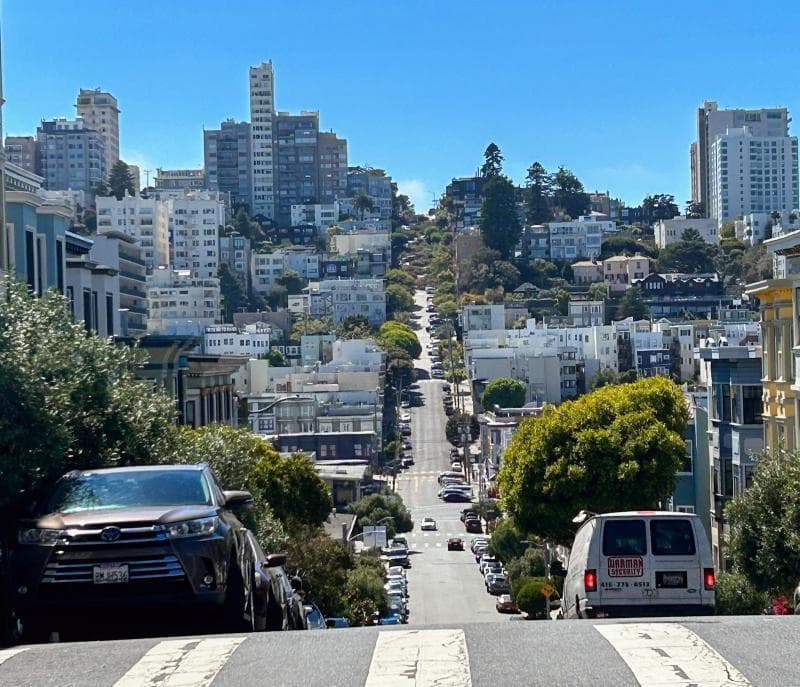
Explore San Francisco's Crooked Section of Lombard Street, famous for its 8 hairpin turns, vibrant gardens, and rich history in the United States.
Overview
Nestled within the vibrant Russian Hill neighborhood of San Francisco, United States, lies one of the city's most distinctive landmarks: the 'Crooked Section' of Lombard Street. This remarkable one-block stretch, often dubbed the 'Crookedest Street in the World,' is famed for its serpentine design, featuring eight sharp hairpin turns. It captivates millions of visitors annually with its unique urban engineering, picturesque landscaping, and breathtaking views, offering a truly iconic San Francisco experience.
History & Cultural Background
The story of Lombard Street's famous curves begins in the early 20th century, specifically around 1922. Originally, this section of Lombard Street was a straight, unpaved road with an incredibly steep 27 percent grade, making it dangerously challenging for both pedestrians and the automobiles of the era.
To address this perilous incline and improve accessibility, a local property owner, Carl Henry, proposed an ingenious solution: a series of switchbacks. His idea was to reduce the formidable grade to a more manageable 16 percent, making the street navigable and safer. City engineer Clyde Healy was instrumental in bringing this innovative design to fruition.
While initially a practical engineering solution, the street's aesthetic appeal blossomed over time. The addition of red brick paving and lush, vibrant landscaping, particularly the iconic hydrangea bushes planted in the 1950s, transformed it into the scenic marvel it is today. Interestingly, the name 'Lombard Street' itself has no historical ties to San Francisco, having been named after a street in Philadelphia.
What Makes It Special
What truly sets the Crooked Section of Lombard Street apart are its eight meticulously designed hairpin turns, winding downhill between Hyde and Leavenworth Streets. This one-way, downhill brick-paved road is a masterclass in urban adaptation, creating a visually stunning spectacle that seamlessly blends functionality with aesthetic charm.
The street is framed by beautifully manicured gardens, overflowing with colorful flowers, most notably the hydrangeas that bloom for much of the year, adding a vibrant splash of color to the red brickwork. These floral displays are diligently maintained, contributing significantly to the street's postcard-perfect appearance. From the top of this unique block, visitors are treated to expansive panoramic vistas that include the shimmering San Francisco Bay, the majestic Bay Bridge, Alcatraz Island, and the distinctive Coit Tower, offering an unforgettable backdrop for photographs.
Stories, Fun Facts & Local Details
Despite its widespread fame as 'The Crookedest Street in the World,' a delightful local detail reveals that Lombard Street isn't actually the city's most serpentine. That distinction technically belongs to Vermont Street on Potrero Hill. However, Lombard Street's dramatic setting, elegant design, and central location have cemented its status as the most celebrated and photographed.
The street has earned its place in popular culture, appearing in numerous films, television shows, and even being parodied in video games. Pixar's 2015 film 'Inside Out' also famously features this iconic street. It is, first and foremost, a residential street, with charming Victorian mansions and high-value real estate lining its curves. A sign at the top advises a slow speed limit of 5 mph for drivers, transforming the descent into a thrilling, yet controlled, ride.
Visitor Perspective
Experiencing the Crooked Section of Lombard Street is a highlight for many San Francisco visitors. Whether you choose to drive or walk, each offers a distinct perspective. Driving down the one-way street, with its eight tight turns, provides a unique and memorable navigational challenge, albeit a slow one at 5 mph.
For those who prefer a more leisurely exploration, walking is highly recommended. Pedestrian staircases flank both sides of the street, allowing visitors to pause, admire the intricate gardens, appreciate the Victorian architecture, and capture stunning photographs from various angles. The best views for a full perspective of the winding street are often found looking up from the bottom.
To avoid the bustling crowds that can reach up to two million visitors annually, consider visiting early in the morning or late in the afternoon. Public transportation, such as the Powell-Hyde cable car, offers convenient access, dropping passengers directly at the top of the crooked section, ready to embark on this famously twisted journey.
Coordinates: -122.41889, 37.80194
View on Google Maps💬 How Travelers Describe This Place
Based on community votes
Must See
886Beautiful
564Unique
201Interesting
121Photogenic
87
Traveler Stories
Discover memorable experiences shared by travelers who have visited this place.
No traveler stories yet.
Be the first traveler to share what made this place memorable.

Tour
By
Spot
Discover amazing places around the world. Your journey starts here.
Explore
© 2026 TourBySpot. All rights reserved.