Courtyard
Marseille, France
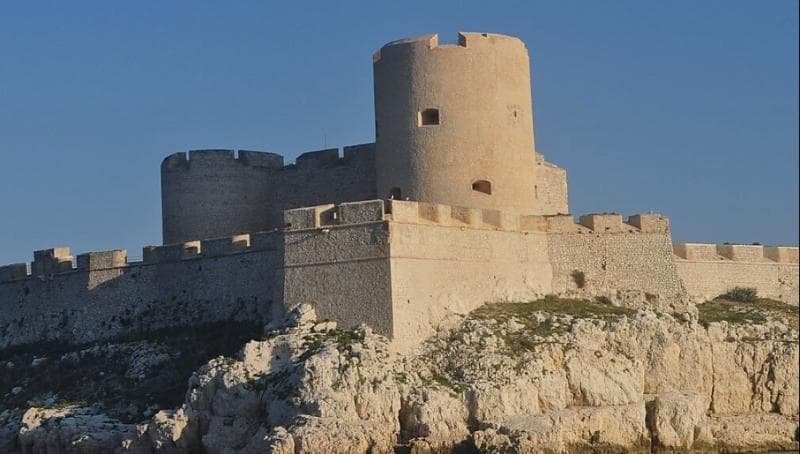
Explore the historic Courtyard of Château D’If in Marseille, France. Discover its prison past, revolutionary graffiti, and literary connections.
Overview
Perched on a small, rugged island off the coast of Marseille, France, the Château D’If stands as a silent sentinel over the Mediterranean Sea. While known primarily as an imposing fortress and notorious state prison, it is within its central space, often simply referred to as 'the Courtyard,' that much of its human story unfolded. This humble yet pivotal area, exposed to the harsh Provençal sun and the mistral winds, served as a crucial point of contact and confinement for centuries of prisoners, and now for curious visitors alike.
Originally conceived as a deterrent fortress by King Francis I in the 16th century to protect Marseille from sea invasions, the Château D’If soon transformed into an inescapable island penitentiary. The Courtyard, nestled within its robust walls, became a microcosm of the lives, or rather the curtailed existences, of those held captive.
History & Cultural Background
The construction of Château D’If began in 1524 and was completed by 1531, intended to fortify the strategic port of Marseille. However, its military prowess was never truly tested in battle, and by 1540, it began its grim second life as a prison. The isolated location, coupled with treacherous offshore currents, made it an ideal, escape-proof jail, drawing comparisons to Alcatraz.
Within the castle's structure, the Courtyard played a significant, albeit bleak, role in the daily lives of its inmates. It was here that prisoners, particularly those housed in the collective cells on the ground floor, might have had access to slightly better conditions than the dark, filthy dungeons below. Historical records indicate that a water tank in the yard provided a means for prisoners to drink and wash, a small comfort in an otherwise harsh existence.
This central space witnessed the passage of various real-life figures, including political and religious detainees like the Huguenots, revolutionaries, and opponents of different regimes. The walls of the Courtyard bear testament to this history, with numerous inscriptions left by prisoners, notably 96 pieces of graffiti from revolutionaries in 1848, serving as poignant reminders of their presence and defiance.
What Makes It Special
What truly distinguishes the Courtyard of Château D’If is its tangible connection to both history and legend. It is not merely an open space but a canvas etched with the echoes of despair and resilience. The preserved graffiti, scrawled by those who languished within these walls, offers a rare, unfiltered glimpse into their thoughts, beliefs, and perhaps even their hopes, providing a powerful human element to the formidable stone structure.
For many, the Château D’If is synonymous with Alexandre Dumas's classic novel, 'The Count of Monte Cristo'. While Edmond Dantès, the protagonist, is a fictional character, Dumas’s vivid descriptions of his imprisonment have indelibly linked the Courtyard and the entire fortress to a tale of injustice, endurance, and revenge. The Courtyard, in this context, becomes the threshold between his former life and his transformation.
The Courtyard also represents a profound contrast: a place of extreme confinement and isolation for its former occupants, now serves as a gathering point for visitors exploring the very history that entrapped so many. It invites contemplation on freedom, destiny, and the passage of time.
Stories, Fun Facts & Local Details
One of the most compelling aspects of the Courtyard is the sheer volume of prisoner graffiti. These inscriptions, dating back to the 19th century, were left by revolutionaries and other detainees, turning the cold stone walls into a public record of their captivity. It's a striking detail that allows visitors to literally trace the marks left by history.
While the legend of Edmond Dantès, the fictional hero of 'The Count of Monte Cristo', is what draws many to the Château, it's worth noting that the 'Man in the Iron Mask' was likely never held here, despite popular belief and local tradition. Nevertheless, these stories, whether real or imagined, contribute to the captivating aura of the Courtyard, blending historical fact with literary mystique.
The presence of a water tank in the Courtyard for prisoners to use highlights the basic, yet crucial, amenities provided, differentiating the slightly better conditions of these collective areas from the dire subterranean dungeons where survival was often measured in mere weeks. This small detail underscores the varying degrees of hardship experienced within the prison.
Visitor Perspective
Today, a visit to the Courtyard offers a unique and evocative experience. Stepping into this open space, surrounded by the three-story square structure and its towers, provides a palpable sense of the prison's imposing scale and isolation. Tour groups now fill the Courtyard, moving between interpretive plaques, a stark contrast to its former role as a restricted exercise yard.
From the Courtyard, visitors can look up at the formidable walls, imagining the lives of the prisoners within and the guards above. The atmosphere, especially when crowds thin, allows for reflection on the site's dark past. Exploring this historical courtyard offers a direct connection to the narratives of its former inhabitants and provides breathtaking panoramic views of the Mediterranean Sea and the Marseille coastline from higher vantage points within the château.
Coordinates: 5.325139, 43.279861
View on Google Maps💬 How Travelers Describe This Place
Based on community votes
Interesting
948Photogenic
913Beautiful
595Must See
358Unique
196
Traveler Stories
Discover memorable experiences shared by travelers who have visited this place.
No traveler stories yet.
Be the first traveler to share what made this place memorable.

Tour
By
Spot
Discover amazing places around the world. Your journey starts here.
Explore
© 2026 TourBySpot. All rights reserved.