Control Center
Hamburg, Germany
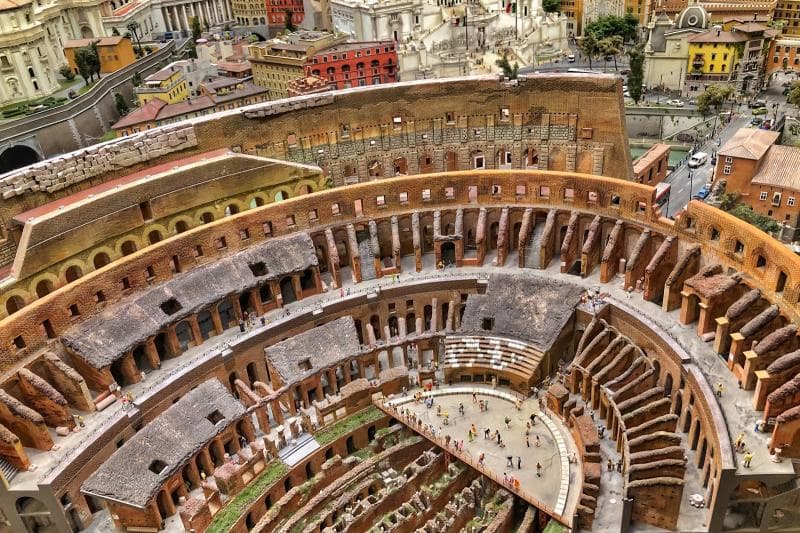
Discover the Control Center, the technological heart orchestrating Miniatur Wunderland's intricate world in Hamburg, Germany.
Overview
Deep within the enchanting realm of Miniatur Wunderland in Hamburg, Germany, lies a hidden world of immense complexity and fascination: the Control Center. While visitors marvel at the intricately detailed landscapes and bustling miniature life, it is this technological heart that orchestrates every single movement, every twinkling light, and every shift from day to night. Often described as the 'brain' of the largest model railway system in the world, the Control Center is where the magic truly happens, ensuring seamless operation across sprawling miniature continents and bustling cities. It manages an astonishing array of elements, from over 1,200 digitally controlled trains and more than 11,000 vehicles to over 500,000 LED lights that simulate the passage of time.
The Control Center represents a pinnacle of miniature engineering, transforming what might otherwise be a static display into a dynamic, living world. It is the nerve center from which technicians meticulously oversee the flow of traffic, the flight schedules of miniature aircraft, and the subtle environmental changes that captivate millions of visitors each year. Without this sophisticated system, the lifelike scenarios unfolding across the 1,694 square meters of model space simply wouldn't be possible.
History & Cultural Background
The genesis of Miniatur Wunderland itself, and by extension its sophisticated Control Center, can be traced back to the ambitious vision of twin brothers Frederik and Gerrit Braun, along with Stephan Hertz. Their dream, conceived in 2000, was to build the world's largest model railway. From the outset, they recognized that such an expansive and dynamic miniature world would require revolutionary control systems. The initial development of the car system alone, which built upon the existing Faller Car-System, became a monumental project. What began as a perceived addition quickly evolved into a 2,500-hour endeavor just for its computer control during the initial build. Further software development consumed an additional 3,500 hours, and vehicle construction another 2,000 hours, highlighting the immense dedication to technical innovation. This pioneering spirit established a culture of continuous development and technical excellence that remains at the core of Miniatur Wunderland's operations, making it a cultural landmark not just for its artistic display but also for its engineering prowess.
What Makes It Special
What truly sets the Control Center apart is its intricate, custom-developed software that grants 'intelligence' to each individual miniature element. Instead of relying on rigid, sequential programming, the system provides each vehicle with its 'own brain', allowing for remarkably fluid and realistic movements. This enables complex scenarios such as adherence to right-of-way rules, dynamic traffic light management with turning lanes and 'green waves', and even the realistic operation of emergency vehicles. The sheer scale of this digital orchestration is staggering: the control software comprises over 168,000 lines of source code, managing everything from the general PC program to specific fire brigade operations and the in-vehicle software itself. The system even orchestrates the subtle day-night cycle that sweeps across the miniature world every 15 minutes, adding another layer of realism.
Furthermore, the Control Center is powered by a network of more than 40 computers, running both Windows XP and Linux operating systems. These are centrally managed by IT administrators using advanced KVM (Keyboard, Video, Mouse) solutions, allowing them to access and control any part of the vast exhibition from a single console. This robust technical backbone ensures the exhibition can operate seamlessly for extended hours, often up to 20 hours a day, 365 days a year, with minimal downtime.
Stories, Fun Facts & Local Details
One fascinating detail is how the team tackled the incredibly complex task of controlling Knuffingen Airport, a fully functional miniature airport within the Wunderland. Its diverse operations required setting an astonishing 50,000 parameters by hand to ensure everything ran smoothly. This highlights the meticulous, almost artisanal, approach to even the most high-tech aspects of the exhibition. The developers also continuously refine their software, implementing 'forward-looking' driving algorithms for cars to prevent 'stop-and-go' traffic, a challenge that pushed the limits of computational power for hundreds of vehicles simultaneously.
Visitors are not merely passive observers of this technological marvel. Throughout Miniatur Wunderland, over 200 push buttons are strategically placed, allowing guests to interact directly with the miniature world and trigger specific actions. These can range from a 'killer barrier' at a car park to the production of chocolate in a miniature factory, offering a tangible connection to the controlled chaos that the Control Center expertly manages. While a full view of the technical heart is not always openly accessible, visitors can often catch glimpses of the control panels and monitoring screens, especially in designated areas or through special tours, providing a peek behind the curtain of this incredible spectacle.
Visitor Perspective
For the curious traveler, the Control Center, though largely behind the scenes, profoundly shapes the entire Miniatur Wunderland experience. Knowing that every tiny car, every moving train, and every flickering light is part of a grand, meticulously orchestrated ballet adds a layer of appreciation to the visit. It transforms the experience from merely observing miniature scenes to understanding the immense technical genius that brings them to life. While not a standalone exhibit, the 'Leitstand' (control stand) is occasionally visible, and its presence is felt throughout the exhibition. It inspires awe at the dedication and innovation required to sustain such a vibrant, complex, and ever-evolving miniature world. The technical prowess behind the scenes is as much a part of Miniatur Wunderland's charm as the miniature wonders themselves, leaving visitors with a deeper understanding of the creativity and engineering that underpins this unique Hamburg attraction.
Coordinates: 9.988, 53.545
View on Google Maps💬 How Travelers Describe This Place
Based on community votes
Must See
996Unique
673Photogenic
186Beautiful
143Interesting
80
Traveler Stories
Discover memorable experiences shared by travelers who have visited this place.
No traveler stories yet.
Be the first traveler to share what made this place memorable.

Tour
By
Spot
Discover amazing places around the world. Your journey starts here.
Explore
© 2026 TourBySpot. All rights reserved.